PVDF Pipe Manufacturer with International Quality Standards
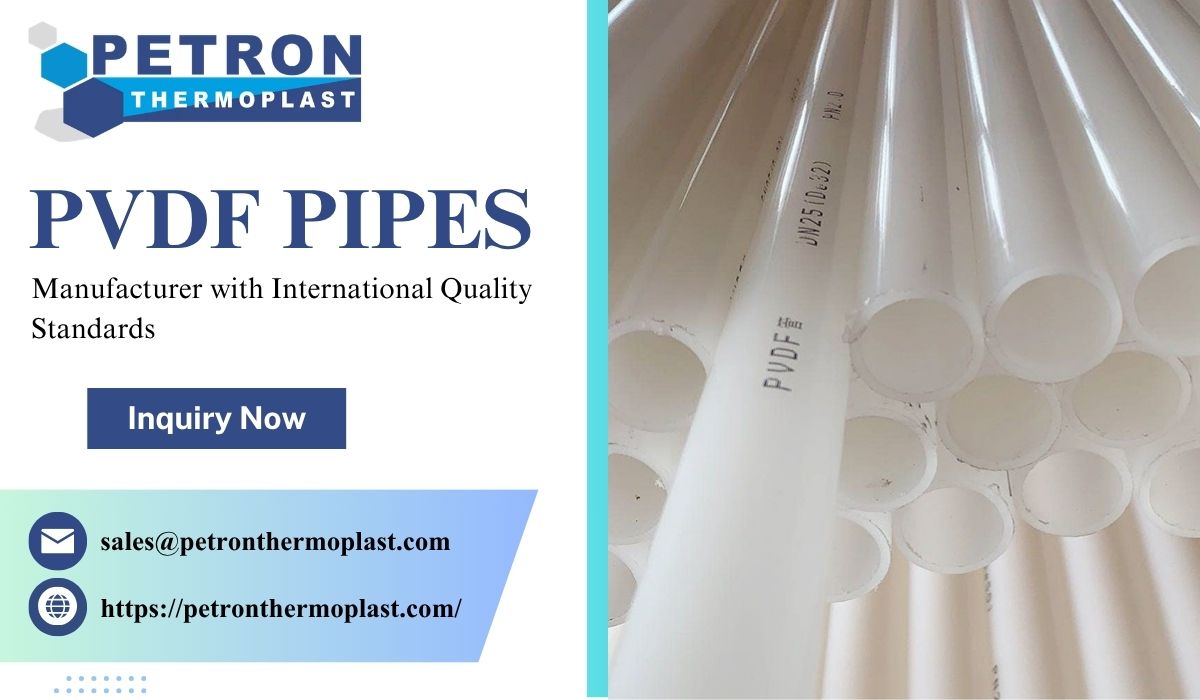
Polyvinylidene fluoride (PVDF) pipes are widely utilized in advanced industrial systems due to their superior chemical resistance, high thermal stability, and exceptional mechanical strength. In industries where fluid purity, corrosion resistance, and long-term operational reliability are critical, PVDF piping systems provide a technically robust solution. A PVDF pipe manufacturer with international quality standards ensures that these performance attributes are consistently delivered across demanding applications.
Material Overview of PVDF
PVDF is a high-performance fluoropolymer characterized by a semi-crystalline structure, offering a balanced combination of mechanical, thermal, and chemical properties. It is specifically engineered for applications involving aggressive chemicals, high temperatures, and stringent purity requirements.
Key Material Properties
- Density: 1.75 – 1.78 g/cm³
- Tensile Strength: 40 – 55 MPa
- Operating Temperature Range: -40°C to +140°C
- Melting Point: ~170°C
- Thermal Conductivity: ~0.19 W/m·K
- Coefficient of Linear Thermal Expansion: 1.2 × 10⁻⁴ /K
These properties make PVDF pipes suitable for continuous operation in chemically aggressive and thermally demanding environments.
Importance of International Quality Standards
Manufacturing PVDF pipes under internationally recognized standards ensures consistency, safety, and compliance across global industrial projects. A qualified PVDF pipe manufacturer adheres to strict quality control protocols, raw material traceability, and dimensional accuracy.
Common Standards Followed
- ISO 9001: Quality Management Systems
- ASTM D3222 / ASTM F1673: PVDF pipe specifications
- DIN 8077 / DIN 8078: Dimensional and pressure ratings
- ISO 10931: PVDF piping systems for industrial applications
Compliance with these standards ensures:
- Uniform wall thickness and dimensional tolerance
- Verified pressure ratings under defined conditions
- Resistance to environmental stress cracking
- Consistent performance in long-term service
Manufacturing Process of PVDF Pipes
A high-quality PVDF pipe manufacturer utilizes advanced extrusion technologies combined with stringent inspection procedures to maintain product integrity.
Key Manufacturing Steps
- Raw Material Selection
- Use of virgin PVDF resin with certified chemical composition
- Strict control over melt flow index and molecular weight distribution
- Extrusion Process
- Controlled heating and melting of PVDF resin
- Precision extrusion through calibrated dies
- Real-time monitoring of diameter and wall thickness
- Cooling and Sizing
- Controlled cooling in vacuum calibration tanks
- Ensures dimensional stability and surface finish
- Cutting and Finishing
- Automated cutting systems for uniform lengths
- Deburring and end-finishing for secure jointing
- Inspection and Testing
- Hydrostatic pressure testing
- Dimensional verification using laser measurement systems
- Surface inspection for defects and inclusions
Key Features of PVDF Pipes
- Chemical Resistance
PVDF pipes exhibit outstanding resistance to a wide range of chemicals, including:
- Strong acids (sulfuric acid, nitric acid)
- Halogens and oxidizing agents
- Organic solvents and hydrocarbons
This makes them suitable for chemical processing plants and corrosive fluid transport systems.
- High Temperature Performance
With a continuous service temperature up to 140°C, PVDF pipes maintain structural integrity under elevated thermal conditions, unlike conventional thermoplastics.
- High Purity Characteristics
PVDF offers low extractables and minimal leaching, making it ideal for:
- Semiconductor manufacturing
- Pharmaceutical processing
- Ultra-pure water systems
- Mechanical Strength and Durability
- High tensile strength and impact resistance
- Excellent creep resistance under sustained loads
- Long service life in harsh environments
- UV and Weather Resistance
PVDF pipes are inherently resistant to UV radiation and environmental degradation, making them suitable for both indoor and outdoor installations.
Industrial Applications of PVDF Pipes
Chemical Processing Industry
PVDF pipes are extensively used for transporting corrosive chemicals, acids, and solvents in process plants, ensuring safe and leak-free operation.
Water Treatment and Effluent Systems
Due to their resistance to aggressive media and biofouling, PVDF pipes are used in:
- Effluent treatment plants (ETP)
- Reverse osmosis systems
- Deionized water distribution
Semiconductor Industry
PVDF piping systems are preferred for ultra-pure chemical delivery systems due to their low contamination characteristics.
Pharmaceutical and Biotechnology
Used in cleanroom environments and sterile processing lines where material purity and compliance are critical.
Oil and Gas Sector
PVDF pipes are used for handling chemically aggressive fluids and high-temperature process streams.
Advantages Over Conventional Materials
| Property | PVDF Pipe | PVC/CPVC Pipes |
| Temperature Resistance | Up to 140°C | Up to 90°C |
| Chemical Resistance | Excellent | Moderate |
| UV Resistance | Excellent | Limited |
| Mechanical Strength | High | Moderate |
| Purity Level | High | Moderate |
Quality Control and Testing
A PVDF pipe manufacturer with international standards implements multi-stage quality assurance procedures:
- Hydrostatic Pressure Testing
- Thermal Cycling Tests
- Chemical Resistance Validation
- Non-Destructive Testing (NDT)
- Dimensional Accuracy Verification
Each batch is documented with traceability records, ensuring compliance with project-specific requirements.
Customization and Engineering Support
Leading manufacturers provide customized PVDF piping solutions based on:
- Diameter and pressure rating requirements
- Specific chemical compatibility
- Installation conditions and environmental exposure
Engineering support includes:
- System design consultation
- Material selection guidance
- Welding and installation recommendations
Installation and Jointing Methods
PVDF pipes can be installed using various joining techniques:
- Butt fusion welding
- Socket fusion welding
- Electrofusion welding
- Flanged connections
Sustainability and Lifecycle Performance
PVDF pipes offer long service life with minimal maintenance requirements. Their durability reduces system downtime and replacement costs. Additionally:
- Recyclable material properties
- Low environmental degradation
- Reduced lifecycle cost compared to metal systems
Conclusion
Petron Thermoplast – A PVDF pipe manufacturer with international quality standards delivers high-performance piping systems designed for critical industrial environments. Through advanced material engineering, precision manufacturing, and strict quality control, PVDF pipes ensure superior chemical resistance, thermal stability, and operational reliability.
For industries requiring long-term performance under aggressive conditions, PVDF piping systems represent a technically advanced and dependable solution aligned with global engineering standards.