

Spot Welder: A Comprehensive Guide for Modern Manufacturing
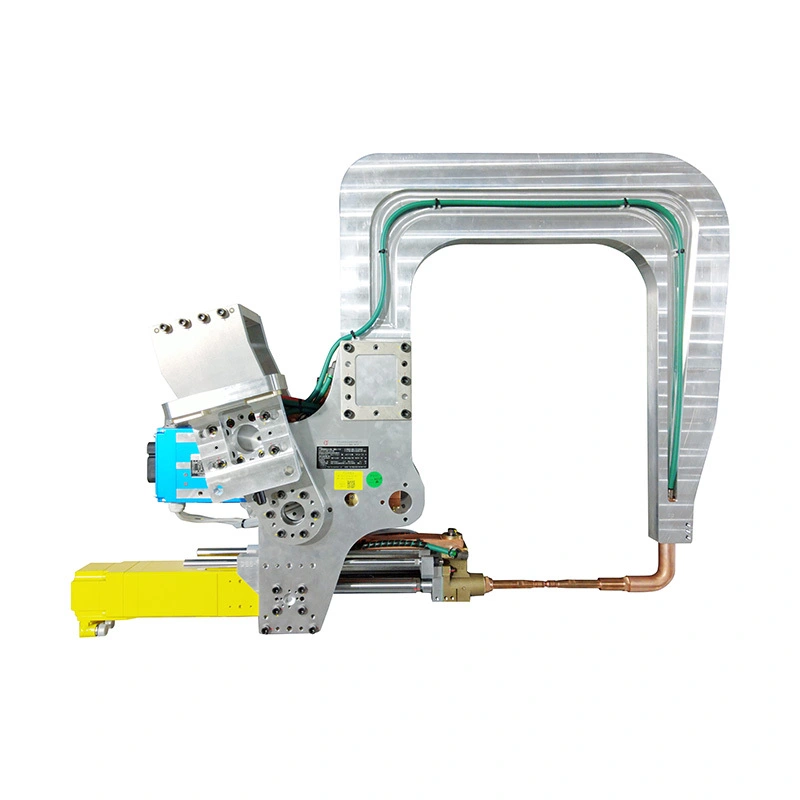
In today’s fast-paced manufacturing environment, precision, efficiency, and repeatability are critical. Among the core tools enabling high-quality metal joining is the spot welder a fundamental piece of equipment in resistance welding. For OEMs, automation integrators, and factory decision-makers, understanding the principles, applications, and best practices of spot welding is essential to maximize production efficiency.
Heron Welder, a global leader in industrial welding solutions, offers a wide range of advanced spot welding machines, controllers, and automated production lines tailored to diverse manufacturing needs.
What is a Spot Welder?
A spot welder is a type of resistance welding machine that joins two or more metal sheets by applying heat generated from electrical resistance at the contact point. The heat melts the metal locally, forming a strong, durable weld, commonly referred to as a “spot.”
Key components of a spot welder include:
- Electrodes: Copper tips that conduct current and apply pressure to the workpiece.
- Transformer: Converts electrical power to the required current for welding.
- Control System: Manages welding parameters such as current, time, and pressure.
Spot welders can be manual, semi-automatic, or fully automated, making them versatile for small-scale workshops or high-volume industrial lines.
How Spot Welding Works
Spot welding operates on the principle of resistance heating. When an electric current passes through the metal sheets, resistance at the interface generates heat. Simultaneously, mechanical pressure from the electrodes ensures proper fusion.
The process involves three main stages:
- Clamping: Electrodes press the metal sheets together.
- Welding: High current passes through the electrodes, generating heat and forming a molten weld nugget.
- Cooling: The weld solidifies under pressure, creating a strong joint.
Heron’s MFDC spot welders and capacitor discharge spot welding machines provide precise current control, ensuring consistent weld quality even on thin or coated metals.
Applications of Spot Welding
Spot welders are widely used across industries where metal joining speed, strength, and repeatability are critical:
Automotive Manufacturing
- Body panels, frames, and structural components.
- High-volume production lines benefit from automated spot welding cells.
Electrical & Electronics
- Battery packs, transformers, and switchgear assemblies.
- Thin-gauge metals and copper alloys require precise current control.
Appliance Manufacturing
- Washing machines, refrigerators, and HVAC units.
- Consistent weld quality ensures durability and safety.
Aerospace & Metal Fabrication
- Lightweight sheet metals and aluminum alloys.
- High-precision MFDC spot welders handle sensitive applications.
Heron’s automated spot welding solutions can integrate with robotic arms, conveyors, and quality monitoring systems, enabling manufacturers to increase throughput while maintaining stringent quality standards.
Advantages of Modern Spot Welders
Investing in advanced spot welding equipment offers multiple benefits:
- Efficiency: High-speed welding reduces production time.
- Consistency: Programmable parameters ensure uniform welds across batches.
- Versatility: Capable of welding different metals, gauges, and coatings.
- Automation-ready: Easily integrated into robotic or automated lines for high-volume production.
Heron’s spot welders are engineered for reliability and low maintenance, making them ideal for both OEM production and industrial automation setups.
Spot Welding vs. Other Resistance Welding Methods
Understanding how spot welding compares to other resistance welding methods helps manufacturers select the right equipment:
| Welding Method | Key Difference | Typical Applications |
|---|---|---|
| Spot Welding | Single point weld | Automotive panels, battery tabs |
| Projection Welding | Multiple weld points simultaneously | Nuts, studs, structural parts |
| Seam Welding | Continuous weld along seam | Fuel tanks, pipes, metal drums |
| Capacitor Discharge (CD) | High-speed, low-heat weld | Thin metals, electronics, foil |
Heron provides all types of resistance welding systems, allowing manufacturers to select solutions optimized for their production requirements.
Best Practices for Spot Welding
To achieve optimal weld quality and longevity, follow these key practices:
- Proper Electrode Maintenance: Regular cleaning and shaping of copper tips prevent uneven welds.
- Consistent Clamping Force: Ensures uniform heat generation and nugget formation.
- Parameter Optimization: Adjust current, time, and electrode pressure according to material type and thickness.
- Material Preparation: Remove coatings or contaminants that may interfere with electrical contact.
- Quality Monitoring: Use weld monitoring systems to track nugget size, current, and force.
Heron’s advanced controllers and welding guns simplify parameter management, ensuring repeatable, high-quality welds every cycle.
FAQs About Spot Welders
1. Can spot welding be used on aluminum?
Yes. Aluminum requires higher current and specialized MFDC spot welders to manage heat efficiently. Heron offers systems designed specifically for aluminum joining.
2. What thickness of metal can a spot welder handle?
Spot welders are versatile, typically welding from 0.2 mm thin sheets to several millimeters of steel, depending on the machine type and power.
3. How do I integrate a spot welder into an automated line?
Heron provides robotic spot welding cells with integrated controllers, conveyors, and safety systems for seamless automation.
4. What is the difference between MFDC and conventional spot welders?
MFDC welders offer precise control over current, making them ideal for thin or coated metals, while conventional AC welders are suited for standard steel applications.
5. How often should electrodes be replaced?
Electrode life depends on usage, material, and maintenance. Regular inspection ensures consistent weld quality.
Conclusion
A spot welder is an indispensable tool for modern manufacturing, combining speed, precision, and reliability. Whether you are producing automotive panels, electronic assemblies, or industrial appliances, understanding the principles, applications, and best practices of spot welding ensures superior quality and operational efficiency.
Heron Welder offers a comprehensive range of resistance welding machines, including manual, semi-automatic, and fully automated spot welders, along with controllers and welding guns, tailored for industrial production. Our solutions are designed to integrate with robotic automation and production lines, helping manufacturers optimize productivity and maintain consistent quality.
Contact Heron today to explore customized spot welding and automation solutions for your manufacturing needs. Request a quote or consultation to discover how Heron can help elevate your production capabilities.