Rotary vs Linear Pneumatic Actuator – Key Differences Explained
In industrial automation, pneumatic actuators play a crucial role in controlling valves and ensuring smooth process operations. When selecting the right actuator, understanding the difference between rotary and linear types is essential. The comparison of Rotary vs Linear Pneumatic Actuator helps industries choose the most suitable solution based on application requirements, movement type, and operational efficiency.
Both actuator types use compressed air to generate motion, but their working mechanisms and applications differ significantly. This article explains the key differences, advantages, and applications of Rotary vs Linear Pneumatic Actuator systems in a simple and practical way.
What is a Pneumatic Actuator?
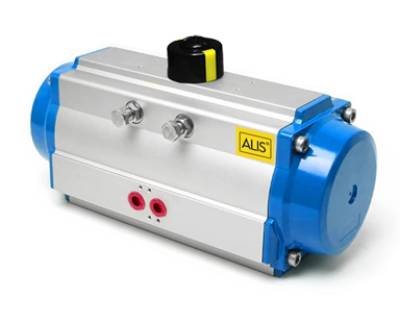
A pneumatic actuator is a device that converts compressed air into mechanical motion. It is widely used in industrial automation for operating valves, dampers, and other control systems.
When comparing Rotary vs Linear Pneumatic Actuator, the main difference lies in the type of motion produced—rotational or linear.
What is a Rotary Pneumatic Actuator?
A rotary pneumatic actuator produces rotational motion, usually in a quarter-turn (90°) or half-turn (180°). It is commonly used for valves that require rotational movement.
Key Features
- Produces rotary motion
- Compact design
- Fast operation
- Suitable for quarter-turn valves
Common Applications
- Ball valves
- Butterfly valves
- Plug valves
In the context of Rotary vs Linear Pneumatic Actuator, rotary actuators are ideal for applications requiring quick open/close operations.
What is a Linear Pneumatic Actuator?
A linear pneumatic actuator produces straight-line motion. It is used in applications where valves or systems require vertical or horizontal movement.
Key Features
- Produces linear motion
- High thrust capability
- Suitable for precise control
- Used in control valve applications
Common Applications
- Globe valves
- Gate valves
- Control valves
When analyzing Rotary vs Linear Pneumatic Actuator, linear actuators are preferred for applications requiring precise flow regulation.
Key Differences Between Rotary vs Linear Pneumatic Actuator
1. Type of Motion
- Rotary actuators provide rotational motion
- Linear actuators provide straight-line motion
This is the fundamental difference in Rotary vs Linear Pneumatic Actuator systems.
2. Valve Compatibility
- Rotary actuators are used for ball and butterfly valves
- Linear actuators are used for globe and gate valves
3. Speed of Operation
- Rotary actuators are faster
- Linear actuators are slower but more controlled
4. Precision and Control
- Rotary actuators are ideal for on/off applications
- Linear actuators provide better control for throttling
5. Design and Size
- Rotary actuators are compact
- Linear actuators are larger due to stroke length
6. Force and Torque
- Rotary actuators provide torque
- Linear actuators provide thrust
Comparison Table
| Feature | Rotary Pneumatic Actuator | Linear Pneumatic Actuator |
|---|---|---|
| Motion | Rotary (90°/180°) | Linear (Straight) |
| Application | Ball & Butterfly Valves | Globe & Gate Valves |
| Speed | Fast | Moderate |
| Control | On/Off | Precise Control |
| Size | Compact | Larger |
| Output | Torque | Thrust |
This table simplifies the understanding of Rotary vs Linear Pneumatic Actuator differences.
Advantages of Rotary Pneumatic Actuator
- Compact and lightweight
- Faster operation
- Easy installation
- Ideal for automation systems
In Rotary vs Linear Pneumatic Actuator, rotary actuators are preferred for quick and repetitive operations.
Advantages of Linear Pneumatic Actuator
- High precision control
- Suitable for throttling applications
- Strong force output
- Better for complex processes
When comparing Rotary vs Linear Pneumatic Actuator, linear actuators excel in applications requiring accuracy and control.
Industrial Applications
Oil & Gas Industry
Both types are used depending on valve requirements.
Water Treatment Plants
Rotary actuators for flow control and linear actuators for precise dosing.
Chemical Industry
Linear actuators for accurate chemical handling.
Power Plants
Used for steam and fluid control systems.
How to Choose the Right Actuator
When deciding between Rotary vs Linear Pneumatic Actuator, consider the following:
- Type of valve
- Required motion (rotary or linear)
- Level of control needed
- Space availability
- Operating conditions
Selecting the right actuator ensures efficient and reliable performance.
Future Trends
Modern automation is integrating smart technologies into pneumatic systems. The future of Rotary vs Linear Pneumatic Actuator includes:
- IoT-enabled monitoring
- Smart positioners
- Energy-efficient designs
- Remote control systems
These advancements are improving performance and reliability.
Conclusion
Understanding the differences between Rotary vs Linear Pneumatic Actuator is essential for selecting the right solution for industrial automation. Rotary actuators are best suited for quick, on/off operations, while linear actuators provide precise control for complex processes.
By evaluating application requirements, industries can choose the most efficient actuator type, ensuring safe, reliable, and cost-effective operations. The comparison of Rotary vs Linear Pneumatic Actuator helps engineers and decision-makers optimize their systems for better performance and productivity.