

Flooring Visualization Tool: See Your Floors Before You Buy & Make Smarter Decisions
Stop Guessing Your Floors—Start Seeing Them
Choosing the right flooring has always been one of the toughest decisions in any home or commercial project. You scroll through endless catalogs, visit showrooms, and carry samples around—yet still feel unsure. Will that oak finish look too dark? Will that marble pattern overwhelm your space?
This is exactly where a flooring visualization tool changes everything.
Instead of imagining how a floor might look, you can now see it instantly in your own space. No guesswork. No surprises. Just clarity.
In this article, we’ll break down how a flooring visualization tool works, why it’s transforming the industry, and how brands and customers are using it to make faster, more confident decisions.
What Is a Flooring Visualization Tool?
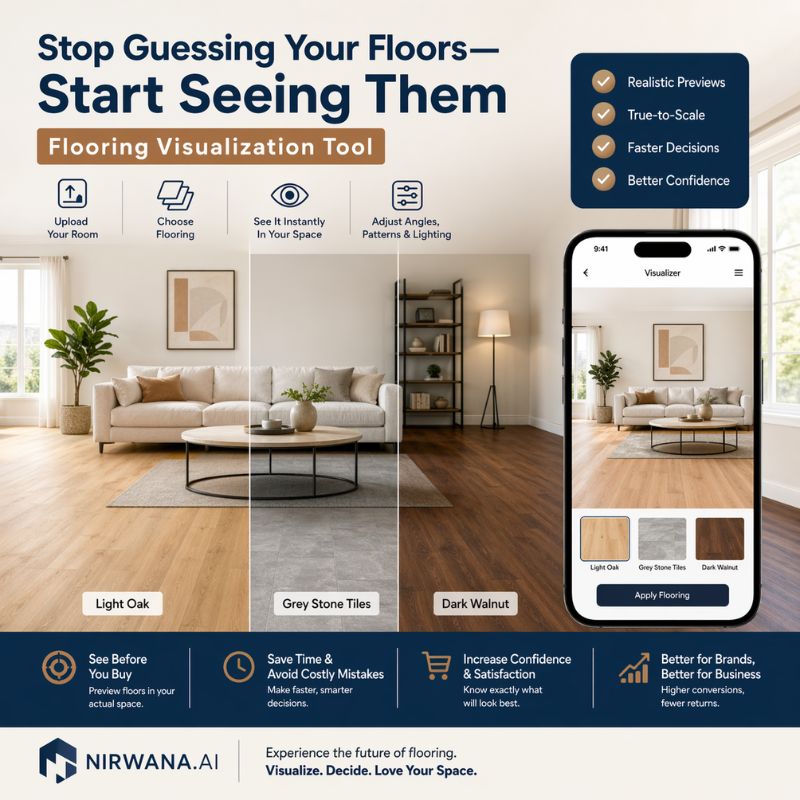
A flooring visualization tool is a digital solution that allows users to preview different flooring options—like tiles, hardwood, vinyl, or marble—directly in a room image.
How It Works
- Upload a photo of your room (or choose a preset room)
- Select a flooring product
- Instantly apply it to the floor surface
- Adjust angles, patterns, and lighting
Within seconds, you get a realistic preview of how that flooring will actually look in your space.
Why Traditional Flooring Selection Falls Short
Before visualization tools, the buying process was filled with uncertainty.
Common Challenges:
- Samples look different under home lighting
- Catalog images don’t reflect real environments
- Hard to imagine scale, pattern, and alignment
- Time-consuming back-and-forth between options
Even experienced designers struggle with these limitations. For homeowners, it’s even harder.
This gap between imagination and reality often leads to delayed decisions—or worse, wrong purchases.
How a Flooring Visualization Tool Solves These Problems
A modern flooring visualization tool removes uncertainty by bridging the gap between imagination and reality.
1. Realistic Previews in Your Own Space
Instead of relying on imagination, users can see flooring applied to their actual room. This creates instant clarity.
2. True-to-Scale Visualization
Good tools maintain accurate proportions, ensuring that tile sizes, plank widths, and patterns appear correctly.
3. Lighting & Texture Accuracy
Advanced tools simulate natural lighting, shadows, and reflections—so what you see is close to what you get.
4. Faster Decision-Making
When customers can visualize outcomes instantly, they make decisions much faster.
Real-World Example: From Confusion to Confidence
Imagine a homeowner trying to choose between three flooring options:
- Light oak wood
- Grey stone tiles
- Dark walnut laminate
Without a visualization tool, they rely on small samples and guesswork.
With a flooring visualization tool, they upload a photo of their living room and apply each option. Within minutes:
- They see that dark walnut makes the room feel smaller
- Grey stone adds a modern touch but feels cold
- Light oak brightens the entire space
Decision made—confidently and quickly.
Why Flooring Brands Are Adopting Visualization Tools
This isn’t just a consumer trend—it’s a major shift for flooring businesses as well.
1. Higher Conversion Rates
When customers can see products in real spaces, they’re more likely to buy.
2. Reduced Returns
Misaligned expectations are one of the biggest reasons for returns. Visualization eliminates that gap.
3. Better Customer Experience
Brands offering a flooring visualization tool stand out instantly in a competitive market.
4. Stronger Sales Support
Sales teams can use visualization to present options during meetings or showroom visits.
How Nirwana.ai Is Elevating Flooring Visualization
Platforms like Nirwana.ai are pushing this technology even further by combining AI with high-quality rendering.
With Nirwana.ai, users don’t just overlay textures—they experience:
- Realistic lighting and shadow adjustments
- Accurate material reflections
- Seamless pattern alignment for tiles and planks
This level of detail ensures that what customers see isn’t just a preview—it’s a near-real representation of the final outcome.
For brands, this means better engagement, faster decisions, and stronger trust with customers.
Key Features to Look for in a Flooring Visualization Tool
Not all tools are created equal. If you’re considering one, here’s what truly matters:
1. Ease of Use
The tool should be simple enough for anyone to use—no technical skills required.
2. High-Quality Rendering
Low-quality overlays defeat the purpose. Look for tools that offer photorealistic results.
3. Product Integration
Your full catalog should be easily integrated and selectable.
4. Mobile Compatibility
Many users will access the tool on their phones—this is non-negotiable.
5. Speed
Instant previews are key. Delays break the experience.
The Future of Flooring: Visualization-First Buying
The flooring industry is moving toward a “visualization-first” buying journey.
Customers today expect:
- Instant previews
- Personalized experiences
- Digital-first interactions
A flooring visualization tool isn’t just a feature anymore—it’s becoming a necessity.
Brands that adopt early gain a clear competitive advantage, while those who delay risk falling behind.
Practical Use Cases Across Industries
For Homeowners
- Test multiple flooring styles before renovation
- Avoid costly mistakes
- Gain confidence in decisions
For Interior Designers
- Present ideas visually to clients
- Reduce revision cycles
- Improve client satisfaction
For Retailers & Manufacturers
- Showcase full product catalogs digitally
- Enable remote selling
- Increase engagement on websites
Conclusion: Make Smarter Flooring Decisions with Confidence
Choosing flooring no longer has to be a stressful guessing game.
With a flooring visualization tool, you can see exactly how your choices will look before making a purchase. It’s faster, smarter, and far more reliable than traditional methods.
As technology continues to evolve, tools like Nirwana.ai are setting new standards for realism and usability—helping both customers and brands make better decisions.
If you’re still relying on samples and imagination, it might be time to upgrade your approach.
Start visualizing—and start choosing with confidence.