
Floating vs Bracket Shelves: Which One Should You Choose for Your Home?
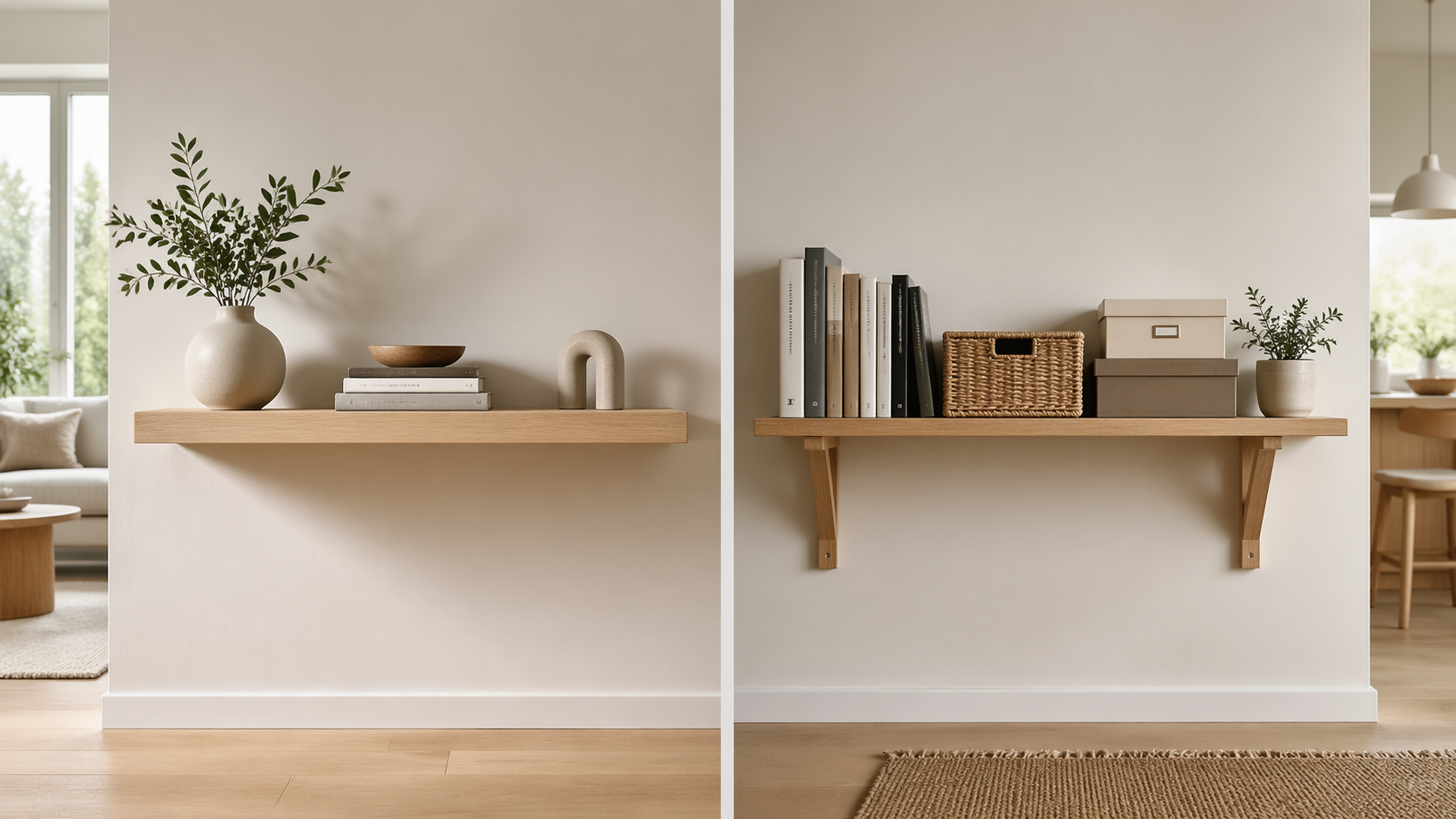
When choosing wall shelves, most people focus on style first — but the real decision usually comes down to how the shelf is supported.
Floating shelves give you a clean, minimal look. Bracket shelves feel more structured and visibly supported. Both can work well, but they solve different needs depending on your space, wall type, and what you plan to place on them.
This guide breaks it down in a practical way so you can choose based on real use, not just appearance.
What’s the Difference Between Floating and Bracket Shelves?
- Floating shelves hide their support inside the shelf, so no brackets are visible
- Bracket shelves use visible supports underneath or on the sides
This difference affects more than just design — it impacts strength, installation, and flexibility.
Floating Shelves: Clean Look, Minimal Setup
Floating shelves are often chosen for their seamless appearance. They sit flush against the wall and work well in spaces where you want a lighter, uncluttered look.
Where they work best
- Living rooms with minimal or Scandinavian styling
- Bedrooms where you want a softer visual feel
- Display areas with lighter items
What to consider
- Installation needs to be accurate — hidden brackets must align properly
- Load capacity depends heavily on wall type and fixing quality
- Not always ideal for heavy storage
In most cases, floating shelves work best when the load is predictable and not constantly changing.
Bracket Shelves: Practical and More Forgiving
Bracket shelves take a more functional approach. The support is visible, which makes them easier to install and more adaptable over time.
Where they work best
- Kitchens (plates, jars, daily-use items)
- Home offices (books, equipment)
- Storage-focused areas
What to consider
- Brackets become part of the design
- Slightly heavier visual presence
- Easier to adjust or reinstall if needed
If you’re prioritising usability over a completely clean look, bracket shelves are often the safer choice.
Which One Holds More Weight?
This is where most people get confused.
- Floating shelves can hold weight, but only if installed correctly
- Bracket shelves tend to handle heavier loads more reliably
In general:
- Light to medium load → floating shelves work well
- Medium to heavy load → bracket shelves are more dependable
The real deciding factors are:
- Wall type (brick vs plasterboard)
- Fixings used
- How weight is distributed
Installation: What’s Easier in Real Life?
Floating shelves
- Require precise drilling and alignment
- Less forgiving if measurements are slightly off
Bracket shelves
- Easier to install and level
- More forgiving for DIY setups
If you’re installing shelves for the first time, bracket shelves are usually easier to manage.
What Actually Works Better in Real Homes?
Instead of asking “which is better,” it’s more useful to think about how the shelf will be used.
Choose floating shelves if:
- You want a clean, minimal wall
- You’re styling with lighter items
- The shelf is mainly for display
Choose bracket shelves if:
- You need reliable, everyday storage
- You’re placing heavier items
- You want flexibility over time
In many homes, a mix of both works best — floating shelves for display areas and bracket shelves where storage matters more.
A Common Mistake Most People Make
A shelf that looks good in photos doesn’t always work the same way in real use.
- Deep floating shelves can feel bulky without visible support
- Lightweight bracket shelves can still look clean if spaced well
- Wall type makes a big difference, especially in UK homes with plasterboard
If you’re choosing purely based on appearance, it’s easy to overlook how the shelf will actually perform.
Making the Right Choice for Your Space
Once you know what you’ll place on the shelf and where it’s going, the decision becomes much clearer.
If you’re still deciding between floating and bracket options, it helps to compare how both styles work in real setups. You can explore wall shelves designed across different support styles to see what fits your space better.
FAQs
Are floating shelves strong enough for books?
They can be, but it depends on installation and wall type. For heavier book setups, bracket shelves are usually more reliable.
Do bracket shelves always look bulky?
Not necessarily. Slim brackets and balanced spacing can still create a clean look.
Which shelves are easier to install for beginners?
Bracket shelves are generally easier to install because they are more forgiving with alignment and adjustments.
Can I mix both types in one room?
Yes. Floating shelves can work well for display, while bracket shelves handle heavier storage.
What to Do Next
Think about how the shelf will actually be used, not just how it looks. Once that’s clear, choosing between floating and bracket shelves becomes a straightforward decision.