


Eliminate Storage Failures with Advanced FRP Storage Tanks
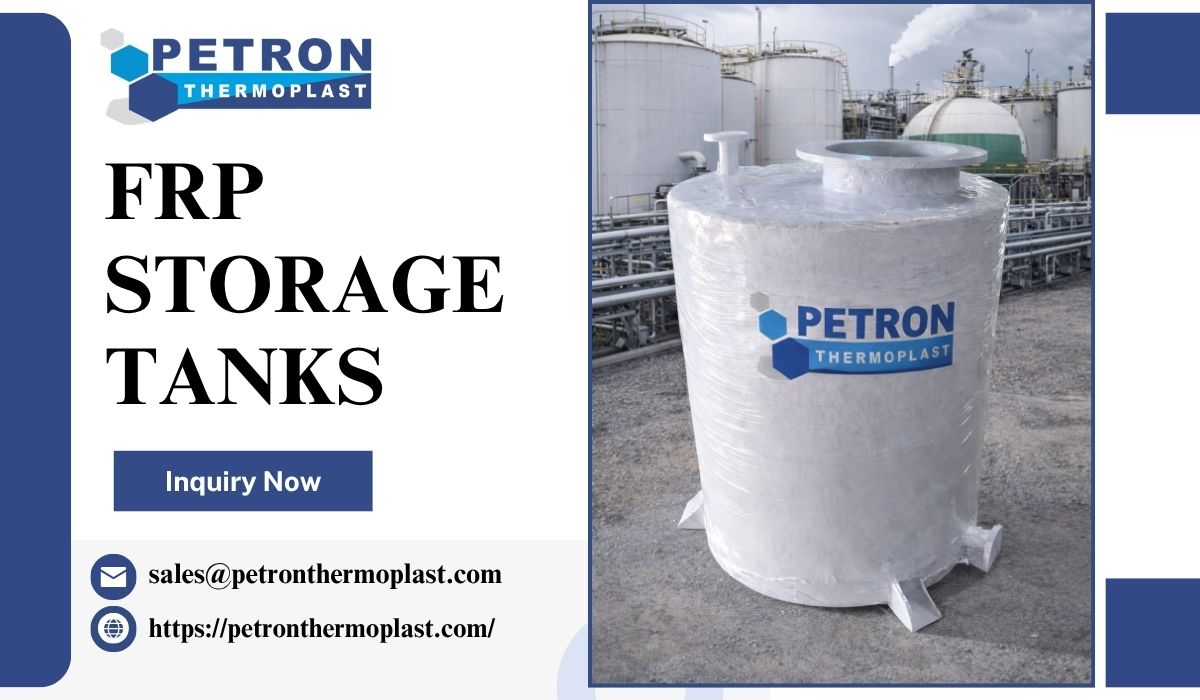
Industrial storage systems are critical components in chemical processing, water treatment, oil and gas, and manufacturing operations. Failures in storage tanks can lead to hazardous leaks, environmental damage, production downtime, and increased operational costs. Traditional materials such as mild steel and concrete often fail under prolonged exposure to corrosive chemicals and harsh environmental conditions.
To address these challenges, industries are increasingly adopting advanced FRP storage tanks, engineered for high durability, corrosion resistance, and long-term reliability. This article provides a comprehensive technical overview of FRP (Fiber Reinforced Plastic) storage tanks, focusing on their design, performance characteristics, and role in eliminating storage failures.
Understanding Storage Failures in Industrial Systems
Storage tank failures typically occur due to multiple factors:
Corrosion and Chemical Attack
Metal tanks are highly susceptible to corrosion when exposed to acids, alkalis, and aggressive chemicals, leading to structural degradation.
Material Fatigue
Continuous exposure to pressure, temperature variations, and chemical reactions can weaken traditional materials over time.
Leakage and Joint Failure
Improper fabrication or material incompatibility can result in leaks, posing safety risks.
Environmental Degradation
UV exposure, moisture, and temperature fluctuations can deteriorate conventional storage materials.
Poor Design and Fabrication
Inadequate structural design or low-quality manufacturing processes contribute to premature failure.
What are FRP Storage Tanks?
FRP storage tanks are composite structures made by reinforcing polymer resin with glass fibers. This combination provides exceptional strength, corrosion resistance, and lightweight properties.
Typical Construction Layers:
- Inner Corrosion Barrier: Protects against chemical attack
- Structural Layer: Provides mechanical strength
- Outer Protective Layer: Shields against environmental factors
These tanks are manufactured using processes such as filament winding, hand lay-up, or contact molding, depending on the application.
Key Material Properties of FRP
✔ Superior Corrosion Resistance
FRP tanks are resistant to:
- Strong acids (HCl, H₂SO₄, HNO₃)
- Alkalis
- Salts and industrial chemicals
✔ High Strength-to-Weight Ratio
- Lightweight compared to metal tanks
- High structural integrity
✔ Thermal Stability
- Suitable for a wide range of operating temperatures
- Minimal thermal expansion
✔ Non-Conductive Material
- Electrically non-conductive
- Suitable for specialized industrial environments
✔ UV and Weather Resistance
- Ideal for outdoor installations
- Resistant to environmental degradation
How Advanced FRP Storage Tanks Eliminate Failures?
Corrosion-Free Operation
Unlike steel or metal tanks, FRP does not corrode, eliminating one of the primary causes of tank failure.
Leak-Proof Construction
Advanced fabrication techniques ensure:
- Seamless construction
- High-quality joints
- Zero leakage
Custom Engineered Design
FRP tanks can be tailored based on:
- Chemical compatibility
- Storage capacity
- Operating conditions
Structural Reinforcement
Modern FRP tanks are designed with:
- Reinforced walls
- Ribbed structures
- Multi-layer construction
Resistance to Environmental Stress
FRP tanks maintain performance under:
- UV exposure
- Temperature fluctuations
- Moisture conditions
Industrial Applications of FRP Storage Tanks
Chemical Processing Plants
- Storage of corrosive chemicals
- Integration with process systems
Water and Wastewater Treatment
- Chemical dosing tanks
- Effluent storage systems
Oil and Gas Industry
- Storage of chemicals and additives
- Offshore and onshore applications
Power Plants
- Chemical storage for cooling and treatment processes
Pharmaceutical and Food Industries
- Safe and hygienic storage solutions
Mining and Metallurgical Industries
- Handling of aggressive chemicals
FRP vs Conventional Storage Materials
| Property | FRP | Steel | Concrete | HDPE |
| Corrosion Resistance | Excellent | Poor | Moderate | Good |
| Weight | Lightweight | Heavy | Very Heavy | Lightweight |
| Maintenance | Low | High | Moderate | Low |
| Service Life | Long | Moderate | Moderate | Moderate |
| Cost Efficiency | High (Lifecycle) | Low (Initial) | Moderate | Moderate |
Design Considerations for FRP Storage Tanks
Chemical Compatibility
Resin selection is critical to ensure resistance to stored chemicals.
Temperature Conditions
Design must account for operating temperature ranges.
Tank Capacity and Dimensions
Customized based on process requirements and installation space.
Installation Environment
Consider indoor or outdoor placement, including UV exposure.
Safety Features
- Venting systems
- Overflow protection
- Secondary containment
Quality Assurance and Testing
Advanced FRP storage tanks undergo rigorous testing:
- Hydrostatic testing
- Leak testing
- Structural integrity analysis
- Resin and laminate quality checks
These ensure compliance with international standards and long-term reliability.
Why Choose Petron Thermoplast?
For industries aiming to eliminate storage failures with advanced FRP storage tanks, Petron Thermoplast offers high-performance solutions engineered for industrial excellence.
Key Strengths:
- High-quality raw materials and resins
- Advanced fabrication techniques (filament winding, hand lay-up)
- Custom-designed tanks for specific applications
- Strong focus on quality control and testing
- Capability for bulk and large-scale supply
- Timely delivery for industrial projects
- Technical support for design and installation
Petron Thermoplast provides durable and reliable storage solutions that meet the demands of modern industries.
Installation Best Practices
- Ensure proper foundation and load distribution
- Use compatible piping and fittings
- Install adequate venting systems
- Conduct pre-operation inspection
Maintenance Guidelines
- Periodic inspection for structural integrity
- Cleaning to prevent chemical buildup
- Monitoring operating conditions
- Prompt repair of any damage
Future Trends in FRP Storage Technology
- Development of advanced resin systems
- Integration with smart monitoring sensors
- Increased adoption in global infrastructure
- Focus on sustainability and long lifecycle materials
These advancements are expected to further enhance the reliability and performance of FRP storage tanks.
Conclusion
Storage tank failures can have serious operational and safety consequences in industrial environments. By adopting advanced FRP storage tanks, industries can effectively eliminate risks associated with corrosion, leakage, and material degradation.
With superior chemical resistance, structural strength, and long service life, FRP storage tanks provide a reliable and cost-effective solution for modern storage requirements. Petron Thermoplast delivers precision-engineered FRP storage tanks designed to meet industrial challenges, ensuring safe, efficient, and long-lasting storage systems.