

What Is a Weld Saver and Why Does Your System Need One?
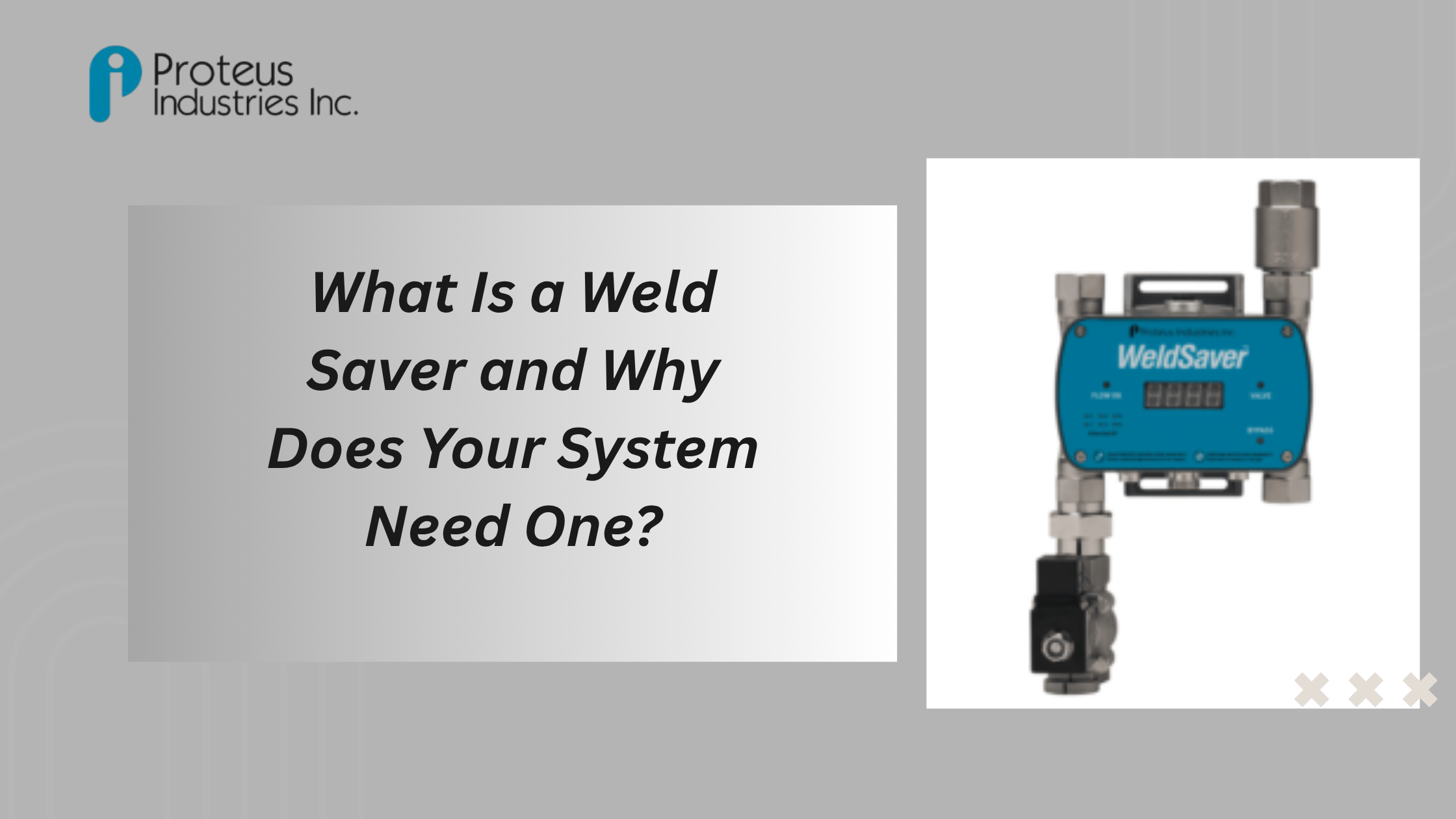
In industrial welding, some tools are nice to have, while others are truly essential.
A weld saver is definitely one of the essentials.
Even though this device is vital for safety, efficiency, and the long life of welding systems, it is still one of the most overlooked and least understood pieces of equipment in many industrial settings.
We are here to change that.
No matter if you run a busy automotive line, a precision metal shop, or any operation that uses resistance welding, this guide will explain what a weld saver is, how it works, and why your system needs one.
Let us get into it.
What Is a Weld Saver?
A weld saver — also known as A weld saver, sometimes called a weld coolant monitor or weld saver flow monitor, is a device made to monitor the cooling water flow in resistance welding systems. to understand why that matters.
Resistance welding, which joins metal parts by passing electrical current through them, generates a lot of heat. That heat must be removed. In almost every resistance welding system, cooling water does the job. A steady flow of water moves through the welding electrodes, cables, and transformers to absorb and carry away the heat produced during welding.
Cooling water flow is essential. It is what keeps your welding equipment running smoothly and prevents overheating, damage, or even complete failure.
A weld saver keeps track of the cooling water flow at all times. If something goes wrong, it acts right away to protect your equipment.
How Does a Weld Saver Work?
A weld saver works in a simple way, and that simplicity is part of what makes it so reliable.
The device is installed in your welding system’s cooling water circuit. It constantly checks the water flow using flow sensing technology. It recognizes the normal flow rate that keeps your equipment running safely within its temperature limits.
The moment the flow drops below the safe minimum threshold — whether due to a blocked line, a failed pump, a kinked hose, a leak, or any other cause — the weld saver detects it immediately.
And here is where it earns its name.
Instead of letting the weld cycle continue without enough cooling—which would let heat build up in the electrodes, cables, and transformer to dangerous levels—the weld saver quickly signals the welding controller to stop the weld cycle.
Welding does not resume until the cooling flow is safe again. This prevents heat damage, equipment failure, costly downtime, and safety issues.
The whole process happens in milliseconds. Before the heat has a chance to cause any damage the weld saver has already interveThis all happens in milliseconds. The weld saver steps in before heat can cause any damage.er is not pretty.
If you do not have a weld saver watching your cooling water flow, your welding system is working without a safety net. If the cooling flow drops for any reason, the weld cycle keeps going and heat keeps building up in your equipment.
Electrode Damage: Welding electrodes are precise parts made to work within a certain temperature range, and cooling water keeps them there. Without enough cooling, electrodes overheat, deform, and wear out quickly. This leads to poor weld quality, more frequent replacements, and much higher costs.
Cable and Transformer Damage: Welding cables and transformers are expensive and important. If they overheat for too long, insulation breaks down, internal parts get damaged, and they can fail completely. Replacing them is costly, and the downtime is even more expensive.
Production Downtime: If welding equipment fails from heat damage, the production line stops. In high-volume manufacturing, every minute of downtime is costly. One cooling flow failure can cause hours or even days of lost production.
Safety Hazards: Overheated welding equipment is not just costly—it is also a safety risk. Heat damage can cause electrical faults, fire hazards, and other dangers in the workplace.
All of this is All of these problems can be prevented with a weld saver.atures of a Quality Weld Saver
Not every weld saver is the same. Here is what you should look for in a good one.
Accurate Flow Sensing: The core of any weld saver is its flow sensing technology. A good weld saver uses accurate, reliable sensors that catch real changes in flow—not false alarms or missed problems. Precision is a must.
Fast Response Time: When cooling flow drops, your weld saver must react right away—in milliseconds, not seconds. The faster it responds, the better the protection. Choose a device with a response time fast enough to stop heat damage before it starts.
Adjustable Flow Setpoints: Different welding jobs need different cooling levels. A good weld saver lets you set the minimum flow that fits your equipment and application, so you get protection tailored to your needs.
Reliable Output Signal: The weld saver must communicate clearly with your welding controller. Look for a device with a strong, reliable signal that works well with your current control system.
Durable Construction Industrial welding environments are demanding.Durable Construction: Industrial welding is tough work. Your weld saver should be built to handle heat, vibration, and the stress of real manufacturing—not just lab conditions.ard to install and configure — getting your system protected quickly without requiring extensive downtime or specialized expertise.
Industries That Depend on Weld Savers
Weld savers are essential in any industry that uses resistance welding, which includes a wide range of manufacturing operations.
Automotive Manufacturing: This industry uses resistance welding more than almost any other. Automotive lines weld thousands of joints each day, so reliable cooling protection is absolutely critical.
Metal Fabrication — Fabrication shops that use spot welding, seam welding, orMetal Fabrication: Shops that use spot, seam, or projection welding rely on consistent weld quality, which depends on steady cooling.appliance production relies heavily on resistance welding — and on the cooling systems that keep that welding equipment performing reliably.
Aerospace: Precision welding in aerospace requires total consistency. Cooling failures that affect weld quality are not acceptable in an industry where safety is critical.
Electronics Manufacturing: Precision resistance welding in electronics needs tight process control, which only reliable cooling monitoring can provide.
Why a Weld Saver Is a Smart Investment
Let’s look at this in simple financial terms.
A weld saver is a small investment compared to the cost of the equipment it protects. Welding electrodes, cables, and transformers are expensive. The cost of unexpected downtime is much higher than any protective device.
The math is simple. A weld saver pays for itself the first time it stops a cooling failure from damaging your equipment. After that, it keeps saving you money every day your system runs without heat problems.
It is more than just protection—it is a smart financial choice.
Protect Your Welding System
At Proteus Industries, we have been designing and making precision flow monitoring solutions, including top weld savers, for decades.
We understand the demands of real industrial welding. We know how to build weld savers that work reliably every day, even in tough conditions. We are committed to protecting your equipment, your production, and your team.
Ready to protect your welding system with a weld saver you can trust? Contact Proteus Industries today and let our experts help you find the right solution for your welding needs.
Your welding equipment is too valuable to run without protection. With the right weld saver from Proteus Industries, you never have to.
Proteus Industries — Weld Saver Solutions Built for Real Industrial Demands.