Used Dryers and Coolers in Industrial Processing Operations
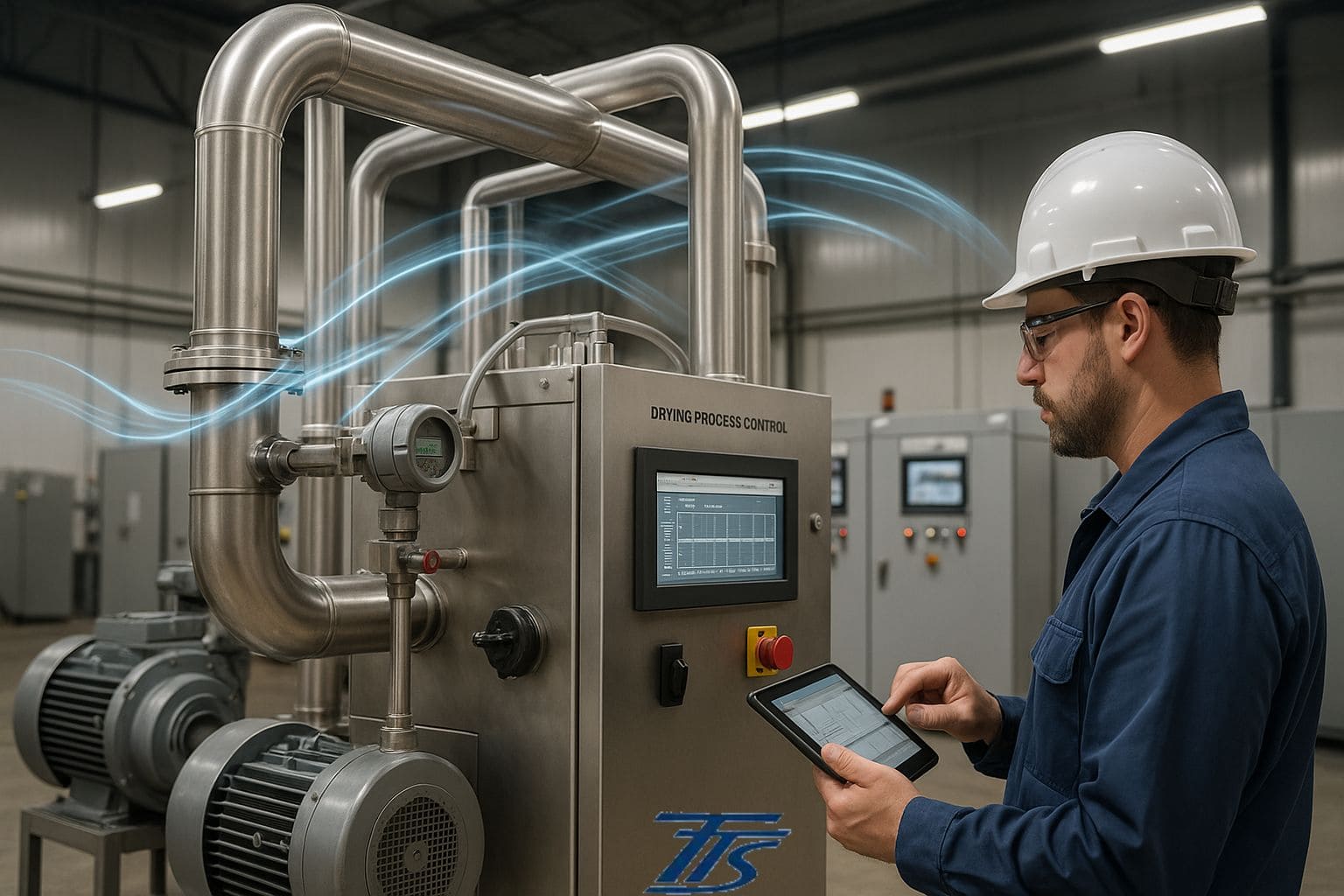
In industrial processing environments, controlling moisture content and material temperature is essential for maintaining product quality, operational efficiency, and equipment reliability. Excess moisture can lead to material handling issues, inconsistent product characteristics, corrosion, and storage problems, while insufficient cooling after high-temperature processes can cause degradation, safety risks, and downstream inefficiencies. Dryers and coolers are therefore critical components across a wide range of industries. As capital budgets tighten and operational flexibility becomes increasingly important, many organizations are turning to used dryers and coolers as a practical, technically sound solution.
What Are Industrial Dryers and Coolers?
Industrial dryers are systems designed to remove moisture from bulk materials, powders, granules, slurries, or other processed products through controlled heat transfer and airflow. Their primary function is to achieve a target moisture level that ensures material stability, flowability, and suitability for further processing, packaging, or storage.
Industrial coolers perform the complementary function of reducing material temperature after drying or other heat-intensive operations. Cooling prevents thermal damage, improves material handling safety, and prepares products for subsequent processing stages. In many production lines, dryers and coolers operate as sequential units, forming a continuous thermal conditioning system that stabilizes materials before they move downstream.
Why Used Dryers and Coolers Are a Smart Industrial Choice
Used dryers and coolers offer significant advantages for industrial buyers seeking reliable performance without the high capital expenditure associated with new equipment. Thermal processing equipment is typically engineered for long service life, often operating continuously in demanding environments. As a result, well-maintained used units frequently retain substantial operational value.
One of the primary benefits of used equipment is cost efficiency. Acquiring a used dryer or cooler can reduce upfront investment considerably, allowing capital to be allocated toward process improvements, maintenance programs, or capacity expansion in other areas. This is particularly relevant for industries with cyclical demand or project-based operations.
Availability is another key factor. New dryers and coolers often involve long lead times due to custom engineering, fabrication, and testing. Used equipment, by contrast, is usually available for quicker deployment, enabling faster response to production demands, replacement needs, or facility upgrades.
Types and Variations of Industrial Dryers and Coolers
Industrial dryers and coolers are available in multiple configurations, each suited to specific materials and operating conditions.
Rotary dryers are among the most widely used systems for bulk solids. Their rotating cylindrical design provides uniform exposure to heat and airflow, making them suitable for high-capacity, continuous operations involving minerals, aggregates, fertilizers, and chemicals.
Fluid bed dryers use controlled air velocity to suspend and dry fine particles. These systems offer precise temperature and moisture control and are commonly used in applications involving powders, granules, and heat-sensitive materials.
Flash dryers are designed for rapid moisture removal from fine or slurry-like feedstocks. They operate with very short residence times and are often used where high evaporation rates are required.
Tray and batch dryers are typically used in lower-volume or specialty applications where controlled, staged drying is necessary. These systems allow for greater flexibility but are generally less suited to continuous, high-throughput operations.
Industrial coolers follow similar design principles. Rotary coolers are frequently paired with rotary dryers, while fluid bed coolers provide efficient cooling for finely divided materials requiring uniform temperature reduction.
Industries That Use Dryers and Coolers
Dryers and coolers are essential across a broad range of industrial sectors. In chemical processing, they are used to condition intermediates, resins, catalysts, and specialty compounds. The food and agricultural industries rely on drying and cooling systems to stabilize grains, feed products, powders, and ingredients prior to storage or packaging.
Mining and mineral processing operations use dryers and coolers to prepare ores, sands, and concentrates for transport, separation, or further refinement. Fertilizer production depends heavily on controlled drying and cooling to maintain granule integrity and prevent caking.
Pharmaceutical, biotechnology, and specialty materials industries require precise thermal control to meet quality standards and regulatory requirements. Plastics, polymers, and recycling operations also depend on effective drying and cooling to ensure consistent material properties and efficient downstream processing.
Key Benefits in Industrial Operations
Properly selected dryers and coolers contribute directly to operational stability and product consistency. Effective moisture control improves material flow, reduces blockages, and minimizes variability in downstream processes. Adequate cooling enhances workplace safety, protects equipment, and reduces the risk of thermal degradation.
From an energy perspective, many industrial dryers and coolers are designed to operate efficiently at scale. Used units, when properly maintained and integrated, can deliver comparable energy performance to new equipment, particularly when paired with modern controls or heat recovery systems.
Reliability is another important benefit. Industrial-grade dryers and coolers are typically constructed with heavy-duty components intended for continuous operation. Used equipment with a documented service history often demonstrates proven performance under real-world conditions.
Buying Considerations for Used Dryers and Coolers
When evaluating used dryers and coolers, buyers should begin with a clear understanding of process requirements. Capacity, throughput, residence time, and operating temperature ranges must align with production needs. Equipment that is improperly sized can lead to inefficiencies, excessive energy use, or process limitations.
Material compatibility is critical, especially in corrosive, abrasive, or high-temperature applications. The construction materials of the dryer or cooler should be suitable for the product being processed and the operating environment.
Inspection of mechanical and thermal components is essential. Drums, shells, burners, fans, bearings, seals, and drive systems should be assessed for wear and remaining service life. Availability of technical documentation, including original specifications and maintenance records, adds confidence in the equipment’s suitability.
Integration considerations should also be addressed. Used dryers and coolers must be compatible with existing utilities, controls, and upstream or downstream equipment. Any required modifications should be evaluated as part of the total project cost.
Maintenance and Longevity Best Practices
Consistent maintenance is key to maximizing the service life of used dryers and coolers. Routine inspection and lubrication of mechanical components help prevent unexpected failures. Wear-prone parts such as bearings, seals, and drive elements should be monitored closely.
Thermal systems benefit from regular cleaning to prevent material buildup, which can reduce heat transfer efficiency and create safety risks. For combustion-based systems, proper burner tuning and airflow balance are essential for safe and efficient operation.
Instrumentation and control systems should be calibrated periodically to ensure accurate temperature and moisture regulation. Even older equipment can achieve reliable performance when supported by structured preventive maintenance programs and, where appropriate, updated monitoring solutions.
Conclusion
Used dryers and coolers provide a practical, cost-effective solution for industrial facilities requiring reliable thermal processing equipment. When selected with attention to process requirements, equipment condition, and integration factors, they can deliver consistent performance across a wide range of applications. With disciplined maintenance and operational oversight, used dryers and coolers remain valuable assets that support long-term production efficiency and process stability.