


Tile Visualization Software for Brands: Help Customers See Before They Buy
Choosing tiles should feel exciting, but for most customers it feels stressful. A small showroom sample rarely tells the full story. Lighting changes everything. Room size affects perception. And once tiles are installed, mistakes are expensive to fix. This gap between imagination and reality is exactly where modern tile visualization software for brands is transforming the buying experience.
Instead of asking customers to “picture it,” brands can now show tiles directly inside the customer’s own room in seconds. This shift is not just about convenience — it is changing how tile companies sell, how customers decide, and how quickly deals close. Let’s explore how this technology works and why forward-thinking tile companies are making it part of their sales strategy.
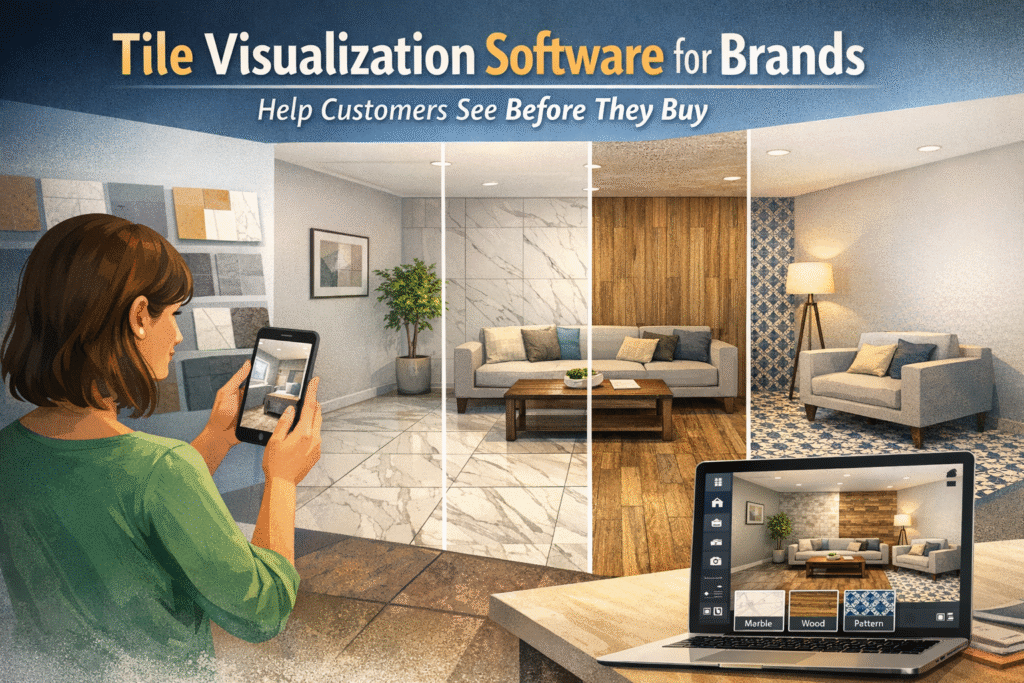
What Is Tile Visualization Software for Brands?
Tile visualization software for brands is a digital tool that allows customers, designers, and sales teams to preview tile designs inside real or sample spaces instantly. Users upload a room photo or select a predefined layout, choose tiles from the brand’s catalog, and see the result rendered with realistic perspective, lighting, and scale.
Unlike simple mockups, modern systems detect surfaces automatically — walls, floors, backsplashes — and apply the tile with accurate alignment and proportions. This creates a realistic preview that helps customers feel confident before purchasing.
For tile manufacturers and retailers, this means turning their digital catalog into an interactive selling experience rather than a static list of products.
Why Traditional Tile Selling Creates Friction
Samples Don’t Show the Full Picture
A 1-foot tile sample cannot represent how an entire living room or bathroom will look. Customers often struggle to imagine patterns, grout lines, and reflections across large areas.
Decision Delays Hurt Sales
When buyers are unsure, they postpone decisions. They take photos, ask family members, revisit stores, and compare alternatives. Each delay increases the risk of losing the sale to competitors.
Showroom Limitations Reduce Product Visibility
Physical displays can only show a limited number of tile combinations. Brands with hundreds or thousands of SKUs cannot realistically present all variations physically.
Tile visualization software for brands solves these problems by letting customers test unlimited designs instantly.
How Tile Visualization Software Improves Brand Conversions
1. Turns Browsing Into Interactive Experience
Instead of scrolling through tile images, customers actively experiment. They try marble-look tiles in the kitchen, wood-finish tiles in the living room, or textured patterns in bathrooms. This interactive process increases engagement and emotional connection to the product.
The longer customers interact with tiles in their own space, the more likely they are to move toward purchase.
2. Builds Confidence Before Installation
One of the biggest fears buyers have is choosing the wrong tile. Visualization tools remove that uncertainty. When customers can clearly see the result beforehand, hesitation drops significantly.
Sales teams often notice that customers who use visualization tools ask fewer basic questions and move faster toward order confirmation.
3. Supports Both Online and Showroom Sales
Tile visualization software for brands works equally well on websites, tablets in showrooms, and even during field sales visits. A sales representative visiting a construction site can simply upload the room photo and demonstrate options on the spot.
This flexibility creates a consistent buying experience whether the customer is online, in-store, or working with an architect.
Real-World Example of Visualization Driving Sales
Imagine a homeowner renovating their bathroom. They shortlist three tile styles but cannot decide. Normally, this situation leads to days of hesitation.
With visualization software, the sales executive uploads the bathroom image and applies all three tile options live. Within minutes, the customer sees how each design affects brightness, mood, and perceived space size.
What could have taken a week of indecision becomes a confident choice within one meeting.
This is why many modern tile companies see visualization not as a marketing tool, but as a direct sales accelerator.
Key Features Brands Should Look For
Automatic Surface Detection
Advanced tools identify floors, walls, and surfaces automatically instead of requiring manual drawing. This makes the experience smooth even for non-technical users.
Realistic Lighting and Perspective Adjustment
A good tile visualization software for brands should adapt tile reflections, shadows, and angles according to the uploaded room image. Without this realism, previews feel artificial and lose trust.
Large Catalog Integration
Brands should be able to upload their full tile inventory, including sizes, finishes, textures, and patterns. The software should make switching between products seamless.
Mobile-Friendly Experience
Many customers browse on phones. If visualization works smoothly on mobile devices, engagement increases dramatically.
Benefits Beyond Customer Experience
Tile visualization software for brands also improves internal efficiency.
Sales teams spend less time explaining designs and more time closing deals. Marketing teams can run digital campaigns where customers try tiles instantly instead of just viewing images. Customer support queries drop because buyers already understand what they are purchasing.
In many cases, visualization tools also reduce product returns, since customers are less likely to feel surprised by the final installed result.
How Forward-Thinking Tile Brands Are Using It Today
Leading tile companies are embedding visualization directly into their websites so visitors can try products immediately. Others install touchscreen kiosks in showrooms, allowing walk-in customers to explore designs independently.
Some brands are even integrating visualization into WhatsApp or email-based sales workflows, where customers send room photos and receive instant previews from the sales team.
Platforms like Nirwana.ai are helping brands implement these experiences without requiring complex technical setups, allowing even mid-sized tile manufacturers to offer enterprise-level digital tools.
As competition grows in the tile industry, this kind of interactive selling is becoming less of a luxury and more of an expectation.
The Future of Tile Buying Is Visual First
Customer behavior has changed dramatically. People now expect to see how products will look before they purchase — whether it’s furniture, paint, or flooring. Tiles are no different.
Tile visualization software for brands aligns perfectly with this shift toward visual decision-making. Instead of relying on imagination, buyers rely on realistic previews.
Brands that adopt visualization early often notice stronger online engagement, faster showroom conversions, and improved customer satisfaction. Solutions such as Nirwana.ai are helping tile companies move toward this visual-first approach while keeping the buying journey simple for customers.
Conclusion
Tile buying should never feel uncertain or stressful. When customers can instantly see tiles in their own space, decisions become faster, easier, and more confident. Tile visualization software for brands bridges the gap between product selection and real-world results, helping companies create a smoother, more modern buying journey.
If your tile brand wants to reduce hesitation, improve conversions, and offer customers a more interactive shopping experience, exploring visualization technology could be the next smart step.