Seven Days of Darkness, Lifetimes of Defiance: Inside Sins of Survival’s Terrifying Premise
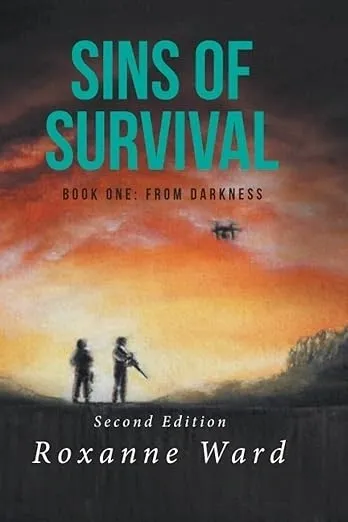
The apocalypse in Sins of Survival, book one of the From Darkness series, does not arrive as a single, clean catastrophe. It arrives over seven relentless days. A meteorite storm darkens the sky, scars the planet, and fractures civilization beyond repair. But when the dust settles, the true terror begins. The world doesn’t end. It reorganizes itself around fear.
This premise is what makes Sins of Survival so unsettling. Roxanne Ward imagines a future where humanity survives the initial disaster only to inherit something far worse — a permanent state of moral compromise.
A World Reshaped by Power, Not Hope
In the aftermath, governments collapse, and power consolidates. What replaces democratic systems is hierarchy. Resources are controlled. Movement is monitored. Survival is rationed. Society restructures itself into classes defined by usefulness and obedience. Ward’s dystopia is terrifying precisely because it feels plausible. There are rules. There are systems. There are consequences. This is not anarchy. It is an order stripped of empathy. The seven days of destruction create lifetimes of control, and resistance becomes an act of quiet rebellion rather than loud revolution.
Darkness as a Psychological Condition
The darkness in Sins of Survival is not just environmental. It is psychological. People learn to live with constant threats, constant surveillance, and constant scarcity. Over time, that pressure reshapes values. Morality becomes flexible. Silence becomes currency. Survival becomes justification.
Ward’s premise explores how long-term fear rewires behavior. The transformation of once moral individuals into desperate survivors is not sudden. Dependent on the meager distribution of resources, Ward’s characters “adapted to each new horror” with quiet obedience. They learn which questions are dangerous and which truths are better left unspoken. In this world, defiance is not dramatic. It is exhausting. And that makes it all the more powerful.
Seven Days That Redefined Humanity
The meteorite storm is brief compared to what follows, but its impact is absolute. Those seven days erase the illusion of permanence. Institutions fail, and infrastructure crumbles. Trust collapses. What remains is a population forced to redefine normal.
This redefinition is central to the novel’s premise. Ward is less interested in how the disaster happened than in how people live afterward. The real story unfolds in the long shadow of the event — in how systems calcify, how fear becomes routine, and how survival itself becomes a burden carried across generations.
Defiance as a Way of Living
In Sins of Survival, defiance is choosing to remember who you were. It is refusing to fully surrender compassion, even when compassion is punished. Resistance takes many forms, and not all of them look heroic.
This is where Ward’s premise becomes deeply human. Defiance is not framed as victory. It is framed as persistence. A refusal to let darkness fully rewrite identity. In a world shaped by seven days of destruction, every act of moral resistance becomes a lifetime commitment.
A Premise That Feels Uncomfortably Close
What makes Sins of Survival resonate is how close its premise feels to reality. The mechanisms of control, the language of necessity, the absence of rights — all is feasible, and none of it feels distant. Ward’s world is speculative, but its foundations are familiar.
Seven days of darkness may have shattered the planet, but the lifetimes of defiance that follow reveal something far more frightening: humanity’s ability to adapt to almost anything. Sins of Survival asks a quiet, unsettling question at its core — not whether people can endure catastrophe, but whether humanity can.
Grab your copy today.