
PVDF Pipe Fittings for Heavy Duty Piping Systems
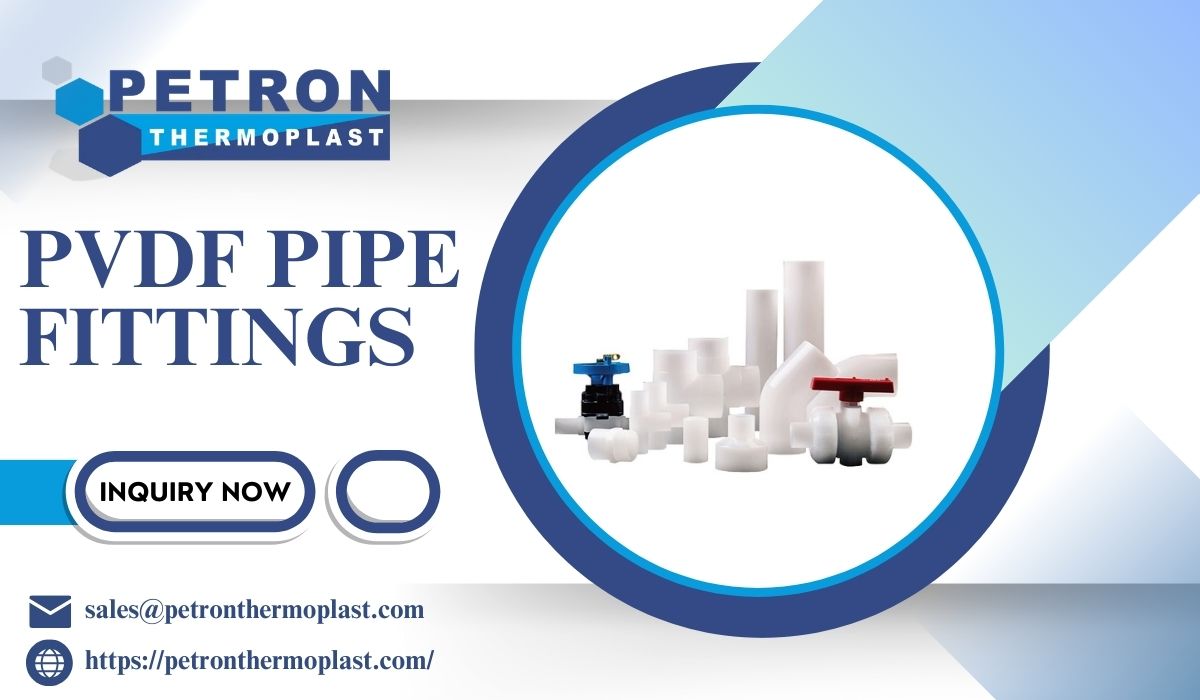
In modern industrial environments, piping systems are expected to operate under extreme conditions—high temperatures, aggressive chemicals, fluctuating pressures, and continuous flow cycles. Choosing the right material for such demanding applications is critical to ensuring safety, efficiency, and long-term reliability. Among advanced thermoplastic materials, Polyvinylidene Fluoride (PVDF) has emerged as one of the most trusted choices for heavy-duty piping systems.
This blog explores the advantages, applications, and technical features of PVDF pipe fittings and explains why leading manufacturers like Petron Thermoplast are increasingly supplying PVDF solutions for critical industrial projects.
Understanding PVDF Pipe Fittings
PVDF (Polyvinylidene Fluoride) is a high-performance fluoropolymer known for its exceptional chemical resistance, mechanical strength, and thermal stability. PVDF pipe fittings are specially designed connectors and components used to join, redirect, or control fluid flow in piping systems.
Common PVDF fittings include:
- Elbows
- Tees
- Reducers
- Couplers
- Flanges
- End caps
- Union joints
- Adaptors
These fittings play a vital role in building reliable and leak-proof piping networks in industries where conventional plastic or metal systems may fail.
Why PVDF Is Ideal for Heavy-Duty Applications?
- Outstanding Chemical Resistance
PVDF exhibits excellent resistance to:
- Acids (sulfuric, nitric, hydrochloric)
- Alkalis and solvents
- Chlorinated compounds
- Oxidizing agents
This makes PVDF fittings suitable for chemical processing plants, wastewater treatment units, and pharmaceutical facilities where corrosive fluids are common.
- High Temperature Tolerance
Unlike standard thermoplastics, PVDF can withstand continuous operating temperatures up to 140°C. It maintains structural integrity and performance even under thermal stress, making it ideal for hot fluid transfer systems.
- Superior Mechanical Strength
PVDF fittings offer high tensile strength and impact resistance. They can endure mechanical loads, vibrations, and pressure variations without cracking or deformation, which is essential for heavy-duty industrial pipelines.
- Low Permeability and Purity
PVDF has very low gas and liquid permeability, ensuring minimal contamination and leakage. This property is especially important in high-purity applications such as semiconductor manufacturing and pharmaceutical production.
- Excellent UV and Weather Resistance
For outdoor installations, PVDF provides long-term resistance to UV radiation, moisture, and environmental aging. This ensures stable performance even in harsh climatic conditions.
Key Features of PVDF Pipe Fittings
PVDF pipe fittings for heavy-duty systems are engineered with advanced manufacturing techniques to deliver consistent quality. Key features include:
Precision Engineering
High dimensional accuracy ensures perfect alignment and easy installation, reducing the risk of leakage or misalignment.
Smooth Internal Surface
The low-friction inner surface minimizes pressure loss, prevents scaling, and reduces the accumulation of sediments.
Long Service Life
PVDF fittings can last for decades with minimal maintenance, lowering replacement and downtime costs.
High Pressure Rating
These fittings are designed to handle high working pressures, making them suitable for industrial fluid transfer systems.
Compatibility with Welding and Jointing Methods
PVDF fittings support multiple joining techniques such as:
- Butt fusion welding
- Socket fusion welding
- Electrofusion
- Flanged connections
This flexibility allows engineers to design customized piping layouts.
Applications of PVDF Pipe Fittings in Heavy-Duty Systems
Chemical Processing Plants
PVDF fittings are widely used in chemical industries for transferring aggressive chemicals, solvents, and acids. Their corrosion resistance ensures long-term safety and compliance.
Pharmaceutical and Biotechnology Industries
In sterile environments, PVDF fittings help maintain fluid purity and prevent contamination. They are used in:
- Water for Injection (WFI) systems
- Clean-in-place (CIP) lines
- Process fluid transfer
Semiconductor Manufacturing
High-purity PVDF piping systems are critical in semiconductor fabrication, where even minor contamination can affect product quality.
Power Plants and Energy Sector
PVDF fittings are used in cooling systems, chemical dosing lines, and effluent treatment plants in power generation facilities.
Water and Wastewater Treatment
Due to their resistance to chemicals and biological growth, PVDF fittings are ideal for:
- Chlorination systems
- Desalination plants
- Effluent treatment units
Oil, Gas, and Petrochemical Industry
In petrochemical plants, PVDF fittings handle corrosive by-products and specialty chemicals used in refining and processing operations.
Advantages Over Traditional Materials
PVDF vs. Metal Fittings
| Feature | PVDF | Metal |
| Corrosion Resistance | Excellent | Limited |
| Weight | Lightweight | Heavy |
| Maintenance | Low | High |
| Installation | Easy | Complex |
| Service Life | Long | Moderate |
PVDF fittings eliminate issues such as rust, scaling, and chemical attack commonly associated with metal pipelines.
PVDF vs. UPVC/CPVC
While UPVC and CPVC are suitable for moderate conditions, PVDF outperforms them in:
- High-temperature environments
- Strong chemical exposure
- High-purity applications
For critical processes, PVDF provides superior reliability and safety.
Manufacturing Quality and Standards
Reputed manufacturers follow strict quality control procedures to ensure the performance of PVDF pipe fittings. These include:
- Raw material testing
- Dimensional inspection
- Pressure testing
- Chemical resistance verification
- Thermal stability evaluation
PVDF fittings are often produced in compliance with international standards such as ASTM, DIN, and ISO, ensuring consistent performance across global projects.
Installation and Maintenance Best Practices
Proper Installation
For maximum performance, PVDF fittings should be installed by trained technicians using recommended welding or jointing methods. Proper alignment and surface preparation are essential for leak-free connections.
Regular Inspection
Although PVDF fittings require minimal maintenance, periodic inspections help detect early signs of wear or stress, especially in high-pressure systems.
Cleaning and Flushing
Routine flushing prevents residue buildup and maintains smooth internal surfaces, ensuring efficient flow.
Avoid Mechanical Damage
During installation and operation, fittings should be protected from sharp impacts and excessive bending.
Sustainability and Environmental Benefits
PVDF piping systems support sustainable industrial operations by offering:
- Long lifecycle, reducing waste
- Low maintenance requirements
- Recyclable material properties
- Reduced leakage and contamination
These factors help industries meet environmental compliance standards and reduce operational risks.
Role of Petron Thermoplast in PVDF Solutions
As a leading manufacturer of industrial thermoplastic products, Petron Thermoplast delivers premium-quality PVDF pipe fittings tailored for heavy-duty applications. The company focuses on:
- Advanced manufacturing infrastructure
- Strict quality control systems
- Custom fabrication services
- Technical support and project consultation
- On-time delivery for large-scale projects
By offering customized solutions, Petron Thermoplast helps clients optimize system performance while minimizing downtime and lifecycle costs.
Selecting the Right PVDF Pipe Fittings
When choosing PVDF fittings for heavy-duty piping systems, consider the following factors:
- Operating Temperature and Pressure
- Chemical Compatibility
- System Design and Layout
- Connection Method
- Regulatory Compliance
- Supplier Reputation and Support
Working with an experienced manufacturer ensures that all technical requirements are addressed effectively.
Future Trends in PVDF Piping Systems
With increasing automation and process optimization, demand for high-performance piping materials is rising. Future developments in PVDF systems include:
- Smart monitoring integration
- Enhanced fusion technologies
- Improved material formulations
- Greater customization options
These innovations will further strengthen PVDF’s position in heavy-duty industrial applications.
Conclusion
PVDF pipe fittings have become an indispensable component in modern heavy-duty piping systems. Their exceptional resistance to chemicals, high temperatures, and mechanical stress makes them ideal for demanding industrial environments. From chemical processing and pharmaceuticals to power generation and water treatment, PVDF fittings deliver unmatched reliability and performance.
By partnering with trusted manufacturers like Petron Thermoplast, industries can access high-quality PVDF solutions that enhance operational efficiency, ensure safety, and reduce long-term costs. Investing in PVDF pipe fittings is not just a material choice—it is a strategic decision for building durable, future-ready industrial infrastructure.