


Protruding vs Recessed Nipples: Key Differences
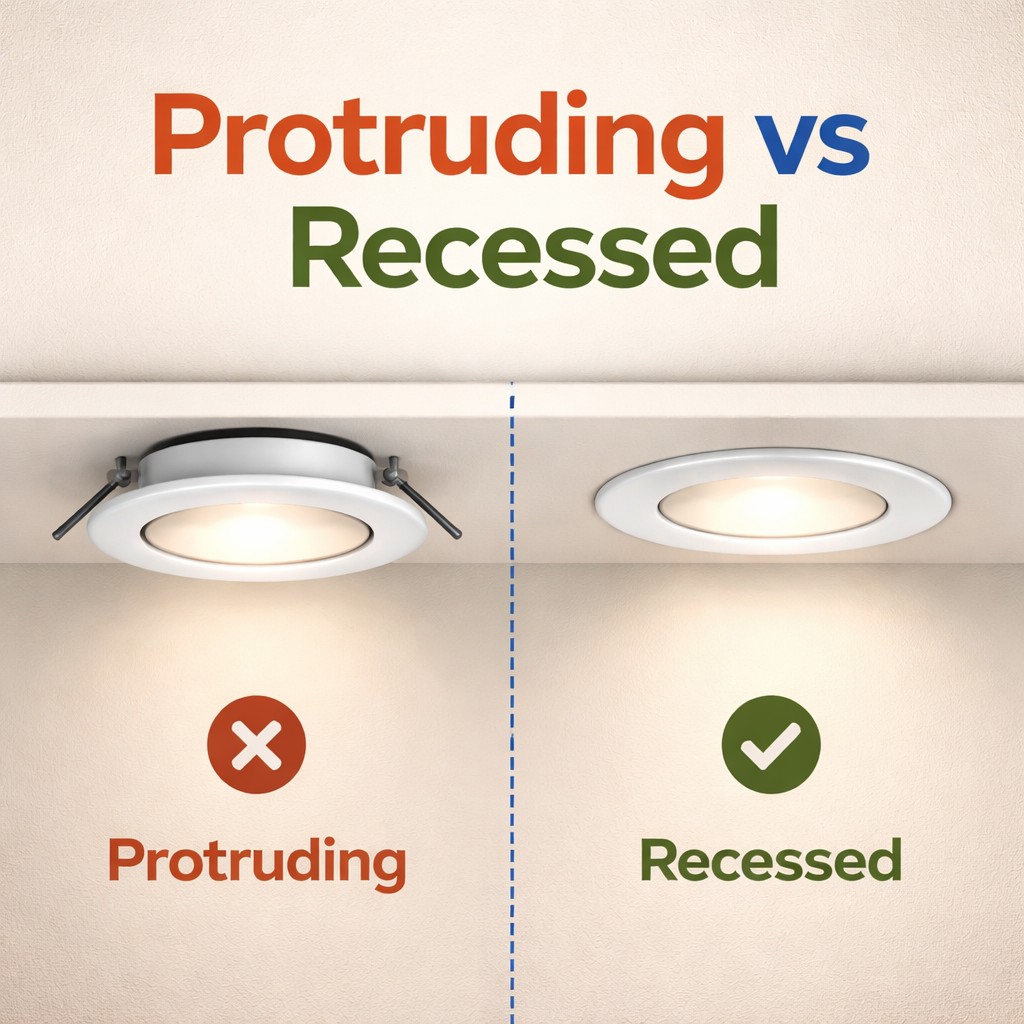
Many people ask about the difference between protruding and recessed lighting nipples. The short answer is simple. One sticks out. The other sits inside. In lighting parts, this small detail can change how your fixture looks and works. This guide explains Protruding vs Recessed nipples in a clear and simple way.
If you install a small fixture like a spotlight 1 inch model, the nipple style can affect spacing, fit, and safety. So it is important to understand the basics before you choose.
What Is a Lighting Nipple?
In lighting, a nipple is a small threaded metal pipe. It connects parts of a light fixture.
It may:
- Connect a canopy to a ceiling box
- Hold a lamp holder in place
- Join two metal parts together
- Adjust fixture height
Most nipples are made from:
- Brass
- Steel
- Zinc-coated metal
They come in many lengths and thread sizes.
Protruding vs Recessed Nipples Explained
When we talk about Protruding vs Recessed, we mean how the threaded pipe sits inside the fixture.
What Is a Protruding Nipple?
A protruding nipple sticks out past the surface.
You can see the threaded pipe extending beyond the fixture part.
It often:
- Shows visible threads
- Extends below a canopy
- Creates extra spacing
This style is common when you need extra length for mounting.
What Is a Recessed Nipple?
A recessed nipple sits inside the fixture body.
It does not stick out.
It often:
- Sits flush with the surface
- Is hidden inside the canopy
- Gives a clean look
This style is used when design and smooth finish matter.
Why This Difference Matters
This small part can affect:
- Safety
- Stability
- Appearance
- Installation ease
A wrong choice can cause:
- Loose fittings
- Crooked fixtures
- Wire stress
- Visible gaps
Even a few millimeters can change the final result.
Why the Problem Exists
Many installers do not think about nipple type.
They may:
- Use whatever part is available
- Cut threaded pipe by hand
- Guess the needed length
This can lead to:
- Too much thread showing
- Not enough thread for locking nuts
- Uneven mounting
The confusion also happens because product listings do not always explain the difference clearly.
How the Right Choice Works
Choosing the correct type depends on three things:
1. Fixture Design
Modern lights often need hidden hardware.
Minimal designs usually use recessed types.
Industrial or vintage lights may use protruding styles.
2. Mounting Depth
Check:
- Ceiling box depth
- Canopy thickness
- Lock nut space
Measure first. Do not guess.
3. Safety and Stability
You need enough thread for:
- Two lock nuts
- Proper grounding
- Secure tightening
Too short is unsafe. Too long looks bad.
Who This Is For
This guide helps:
- Electricians
- Interior designers
- DIY homeowners
- Lighting retailers
- Builders
If you install ceiling lights, wall lights, or pendant fixtures, this applies to you.
Key Benefits of Choosing Correctly
Understanding Protruding vs Recessed nipples gives you real benefits.
Clean Look
Recessed types hide hardware.
This creates:
- Smooth finishes
- Modern style
- Professional results
Better Fit
Protruding types help when:
- The junction box sits deep
- Extra spacing is needed
- You adjust fixture drop
Stronger Installation
Correct sizing reduces:
- Movement
- Wire tension
- Long-term loosening
Easier Maintenance
When parts fit correctly:
- You can remove fixtures safely
- Threads do not strip
- Parts last longer
Real-Life Example
Imagine installing a small hallway spotlight.
The canopy is thin.
If you use a long protruding nipple:
- Threads stick out
- The fixture looks unfinished
But if you use a recessed type:
- Everything sits flat
- The canopy touches the ceiling
- The finish looks clean
Now think about a heavy pendant light.
If the nipple is too short:
- Lock nuts cannot tighten fully
- The light may wobble
In this case, a protruding type is safer.
Common Mistakes People Make
Many issues happen because people ignore Protruding vs Recessed details.
Here are common mistakes:
- Not measuring thread length
- Leaving too many visible threads
- Using one lock nut instead of two
- Over-tightening and stripping threads
- Mixing different thread sizes
Even professionals sometimes rush this step.
Safety Tips and Warnings
Lighting parts may look small, but they hold weight and carry wires.
Follow these tips:
- Always turn off power before work
- Use proper thread size (usually 1/8 IPS in lighting)
- Do not force mismatched threads
- Avoid cutting threads unevenly
- Check for grounding continuity
If threads are damaged, replace the nipple.
Never use a bent or rusted part.
Cost and Pricing
Lighting nipples are low-cost parts.
Prices usually depend on:
- Material
- Length
- Finish
Basic steel pieces are inexpensive.
Brass or plated finishes cost more.
Custom sizes may cost extra.
But remember:
A cheap wrong part can cause expensive repairs later.
So choose based on fit, not just price.
Prevention and Best Practices
To avoid problems:
Measure First
Use a ruler or caliper.
Measure:
- Box depth
- Canopy thickness
- Nut space
Keep Spare Sizes
Professionals often carry:
- 1/2 inch
- 1 inch
- 1.5 inch
- 2 inch
This saves time on site.
Match the Fixture Style
Modern design → usually recessed. Industrial style → sometimes protruding works.
Do a Dry Fit
Before wiring:
- Assemble parts
- Check alignment
- Confirm thread exposure
Fix problems before final tightening.
When to Seek Professional Help
You should call a licensed electrician if:
- The fixture feels unstable
- Threads do not align
- The ceiling box is damaged
- Wires are too short
- The light is heavy and complex
Electrical safety is more important than saving time.
Expert Insight
From years of working with lighting hardware, one thing is clear.
Small parts control big results.
Many fixture problems are not about design.
They are about mounting details.
When comparing Protruding vs Recessed, always think about:
- Structure first
- Look second
A hidden part still carries weight.
Quality brands such as Nuordic Lighting Company often design fixtures with specific mounting depths in mind. So always follow manufacturer guidance before changing hardware.
Soft Recommendation
If you are unsure, choose the style that matches the fixture’s original design.
Do not modify hardware unless necessary.
If you order replacement parts online, read product descriptions carefully.
Look for:
- Thread size
- Length measurement
- Material type
Simple attention to detail prevents most issues.
Conclusion
Understanding Protruding vs Recessed nipples is simple once you see the difference. One extends outward. One stays hidden inside. The right choice improves safety, stability, and appearance. Measure carefully, match the design, and never ignore small hardware details.
FAQs
What is the main difference between protruding and recessed lighting nipples?
One sticks out past the surface, and the other sits flush inside the fixture.
Which type looks more modern?
Recessed styles usually create a cleaner and more modern finish.
Are both types safe?
Yes, both are safe when properly sized and installed.
Can I cut a nipple to adjust length?
Yes, but threads must be clean and even after cutting.
Does nipple length affect stability?
Yes, incorrect length can cause loose or unstable fixtures.
