
Key Components and Equipment for Electrospinning
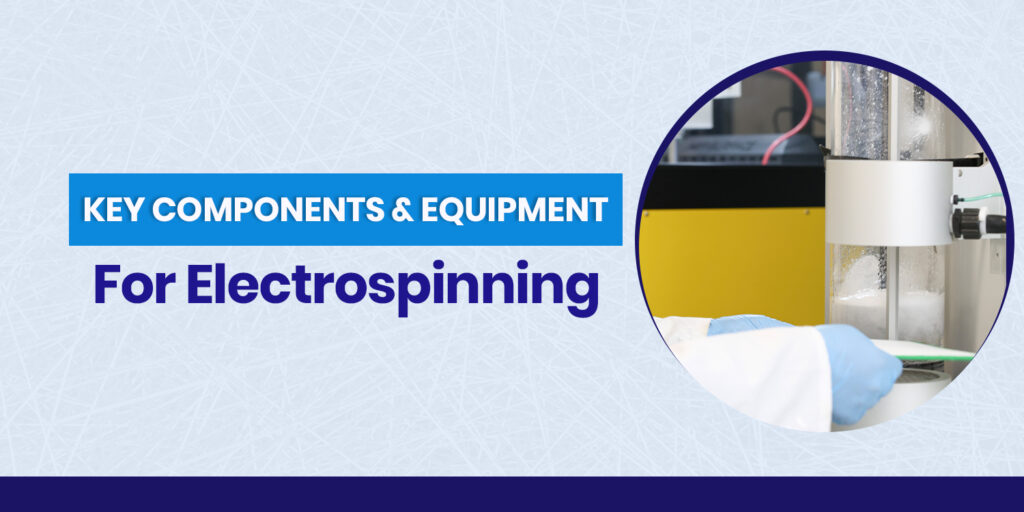
Electrospinning may look simple from the outside, but behind every smooth nanofiber mat is a carefully balanced setup of components and equipment. Whether you’re working in a research lab or scaling up for industrial use, understanding the core tools behind Nanofiber Electrospinning is essential for achieving consistent, high-quality results.
At Electrospintek, we believe that mastering the equipment is just as important as mastering the materials. Let’s break down the key components that power this fascinating process.
High-Voltage Power Supply: The Driving Force
The high-voltage power supply is the heartbeat of the electrospinning system. It creates the strong electric field that stretches the polymer solution into ultra-thin fibers. In Nanofiber Electrospinning, voltage control plays a critical role in determining fiber diameter, stability of the jet, and overall uniformity.
A stable power source helps prevent sudden sparks or erratic jets, which can ruin fiber formation. Modern systems often include digital controls and built-in safety features, making operation both safer and more predictable.
Syringe Pump and Spinneret: Precision in Motion
The syringe pump feeds the polymer solution at a controlled rate. Even a tiny change in flow rate can alter fiber thickness or cause bead formation. This is why precision pumps are vital in Nanofiber Electrospinning setups.
Attached to the syringe is the spinneret, typically a metallic needle. This is where the magic begins—the polymer solution forms a Taylor cone before being drawn into nanofibers. Different spinneret designs, including multi-needle and coaxial configurations, allow for advanced fiber structures and layered materials.
Collector System: Where Fibers Take Shape
The collector is where nanofibers finally land and form a nonwoven mat. It can be as simple as a flat aluminum plate or as complex as a rotating drum for aligned fibers. In Nanofiber Electrospinning, collector design directly affects fiber orientation, density, and surface texture.
Rotating collectors are often used for applications requiring directional strength, while static collectors work well for random fiber mats. Some advanced systems even use patterned collectors to create structured surfaces.
Enclosure and Environmental Control
Electrospinning is surprisingly sensitive to its surroundings. Humidity, temperature, and airflow can all influence fiber formation. An enclosed chamber helps maintain stable conditions and reduces contamination from dust or stray air currents.
In Nanofiber Electrospinning, even subtle environmental shifts can lead to wispy, uneven fibers. Controlled enclosures ensure repeatable results, especially for delicate biomedical or filtration applications.
Safety Systems: Quiet Guardians
Working with high voltage and volatile solvents demands respect. Safety enclosures, grounding systems, and emergency shutoff mechanisms protect operators and equipment alike.
Electrospintek integrates thoughtful safety features into electrospinning equipment, allowing researchers and manufacturers to focus on innovation without unnecessary risk. In Nanofiber Electrospinning environments, safety is not optional it’s foundational.
Auxiliary Tools and Monitoring Equipment
Beyond the core components, several supporting tools enhance performance. These include real-time cameras, humidity sensors, and automated controls that fine-tune parameters during spinning. Some systems also incorporate solution heaters or controlled airflow modules to improve fiber uniformity.
In advanced Nanofiber Electrospinning workflows, monitoring tools provide valuable feedback, helping operators optimize performance and reduce trial-and-error.
Why the Right Equipment Matters
Electrospinning is both a science and an art. The right components transform a fragile process into a reliable production method. With high-quality equipment, Nanofiber Electrospinning becomes more predictable, scalable, and efficient.
At Electrospintek, we design electrospinning systems with adaptability in mind so researchers, startups, and manufacturers can explore bold ideas without being limited by their tools.
Final Thoughts
Understanding the key components of electrospinning equipment helps demystify the process and unlock better results. From the power supply to the collector and safety systems, every part plays a role in shaping high-performance nanofibers.
As Nanofiber Electrospinning continues to influence filtration, healthcare, energy, and textiles, investing in the right equipment is not just practical it’s strategic. With the right setup and a curious mindset, the possibilities are remarkably vast.