How Startups Are Investing in Custom AI Agents in 2026

In 2026, “custom AI agents” autonomous, goal-oriented systems that can plan, act, and integrate with external tools have moved from research demos and marketing buzz into the practical toolkit of startups. Founders aren’t just experimenting with chatbots anymore; they’re building custom agents tailored to narrow business problems: automating workflows, negotiating with APIs, triaging customer issues, and even running parts of marketing or finance ops end-to-end. Several clear drivers explain why this shift is happening now.
Startups Are Investing in Custom AI Agents
1. Agents deliver measurable automation and leverage existing stacks
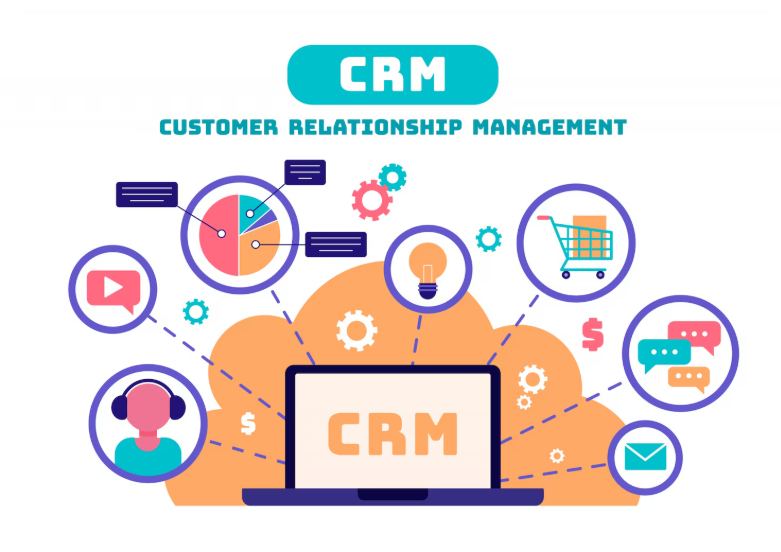
Startups live and die by efficiency and focus. An AI agent development can orchestrate multiple systems CRM, billing, analytics, email, and more and perform complex multi-step tasks that used to require several people or a long engineering project. For example, domain-specific agents can reconcile invoices, validate compliance checklists, or auto-optimize ad campaigns by iterating on creatives and bids across platforms with minimal human intervention. Practical wins like hours saved per week, faster cycle times, and fewer human errors translate directly into runway preservation and faster product iteration. Reports from enterprise and startup ecosystems are filled with examples of no-code and low-code agent platforms specifically targeting supply chain, legal, and marketing workflows.
2. The economics: cheaper models + modular architectures
In 2026, the cost of building agentic solutions has dropped for two reasons. First, LLM and multimodal model providers expanded pricing tiers and on-prem/bring-your-own-model options, letting startups choose tradeoffs between cost, latency, and control. Second, developer tooling for agents frameworks that handle memory, tool use, and task planning matured, reducing integration time. That combination lets a small engineering team assemble a specialized agent faster and at lower run rates than hiring multiple specialists to manage the same work. The result: a higher ROI on engineering hours and predictable, usage-based cloud costs.
3. Distinct competitive advantage through data and customization
Many startups possess unique data customer behavior, industry rules, product telemetry that generic AI services can’t exploit safely or efficiently. Custom agents allow startups to bake proprietary signals and business logic into decision loops: prioritize leads based on lifetime value prediction, escalate only tricky support tickets to humans, or auto-create investor reports using the company’s internal metrics. This “model + data” moat is attractive to early investors: a well-trained agent encodes both process and domain knowledge that’s costly to replicate. VCs and founders increasingly view agentic capabilities as defensible product differentiation rather than a temporary feature.
4. Funding and market momentum are real
Investor appetites followed capabilities. Agentic AI startups attracted sizable venture funding in 2026, particularly for workplace and industry-specific agents that promise measurable cost savings or revenue uplift. Industry trackers reported billions flowing into agent startups in the first half of the year alone an unmistakable signal that investors expect real market adoption and strong multiples for winners in the space.
5. Real customer examples show agentic value
Startups aren’t the only ones building agents specialist vendors and platform companies are too, and some early use cases are compelling. Adtech firms, for instance, are deploying “agentic” systems that autonomously run and optimize campaigns across Google, Meta, and TikTok by adjusting creatives, budgets, and copy in near real-time something manual teams can’t match at scale.
6. Risk management: privacy, compliance, and control
While agentic AI promises automation, it also raises governance questions and startups are responding by building custom agents precisely because they can enforce company-specific safety, logging, and compliance rules. Running agents on private models or behind stricter data controls lets startups balance automation gains with regulatory and customer expectations. Furthermore, custom agents provide audit trails and policy hooks that are easier to maintain than trying to retrofit compliance around a black-box SaaS tool.
7. The limits why agents aren’t a magic bullet
It’s important to be realistic. Analysts and consultancies caution that fully autonomous agents are still being refined; broad generalist autonomy remains hard to scale safely across many domains. AI Image Generation perform best when constrained to narrow, well-instrumented tasks and when humans remain in the loop for edge cases and policy decisions. Adoption also requires investment in monitoring, continuous retraining, and sensible failure modes. Startups that treat agents as orchestrators that augment human teams not replace them wholesale are seeing the best outcomes.
8. How startups are prioritizing agent projects
Successful founders prioritize three types of agent projects:
- High-frequency, low-risk tasks: automations that run repeatedly (e.g., ETL, invoice reconciliation) where mistakes are easy to detect and roll back.
- Revenue-impacting workflows: lead qualification, pricing experiments, or ad optimization where small percentage improvements compound.
- Customer-facing personalization: agents that tailor onboarding, up-sell paths, or troubleshooting, improving retention and NPS.
This triage approach lets startups capture value quickly while limiting exposure to hard-to-recover errors.
9. What’s next: convergence with edge, multimodal, and vertical AI
Looking forward through 2026, agents will become more multimodal (running voice, vision, and text together), let startups deploy portions to the edge for latency-sensitive tasks, and increasingly be built as vertical-specific platforms (legal agents, healthcare agents, retail operations agents). Analyst forecasts already predict rapid market growth for AI chatbot development over the coming years a projection that’s driving both product roadmaps and fundraising.
Conclusion
Startups are investing in custom AI agents in 2026 because agents finally check the boxes founders care about: measurable ROI, faster time-to-value, defensible product advantages, and greater control over data and compliance. The technology isn’t flawless it needs careful design, monitoring, and human oversight but when applied narrowly and thoughtfully, custom agents can transform repetitive workflows into scalable, productized advantages. For startups racing to optimize resources and differentiate in crowded markets, that transformation is worth the investment.