
How Brake Imbalance Affects Steering Stability
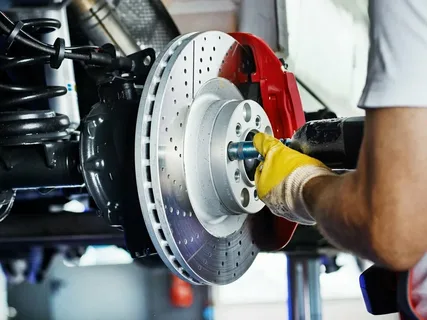
In 2026, the synergy between a vehicle’s braking and steering systems has become more integrated than ever. While we often think of these as separate functions, they are physically linked through the front suspension geometry. A brake imbalance where one wheel provides more stopping power than its counterpart does not just increase your stopping distance; it creates a dangerous torque that can physically jerk the steering wheel out of your hands.
For drivers in the Charlotte area, where sudden highway stops and sharp urban turns are common, maintaining this balance is a critical safety priority. Consulting an Auto Brakes Repair Service in Charlotte, NC is the only way to ensure that your steering stability isn’t being compromised by hidden hydraulic or mechanical faults.
The Mechanical Pull: How Uneven Friction Dictates Direction
When your vehicle is in motion, it possesses a massive amount of forward momentum. To stop, the brakes convert this energy into heat. If the brake on the left front wheel is working at 100 percent capacity while the right front wheel is only working at 70 percent, the vehicle will naturally ‘pivot’ around the stronger brake.
This creates a physical ‘pull’ toward the side with the stronger braking force. In a split second, your steering wheel will rotate toward the stronger brake, forcing you to fight the car just to stay in your lane. This imbalance turns a routine stop into an emergency handling situation, as you must manually counteract the car s desire to veer off the road.
Sticking Calipers and the Constant Drag Factor
The most frequent culprit behind brake-induced steering instability is a sticking caliper. In the 2026 driving landscape, calipers are precision instruments that must retract perfectly to allow the wheel to spin freely. If a caliper piston or slide pin becomes seized due to corrosion or debris, the pad may remain in light contact with the rotor even when your foot is off the pedal.
This constant drag creates a subtle but persistent pull toward the affected side during normal driving. However, when you actually apply the brakes, the imbalance becomes violent. The overheated, dragging brake may either ‘grab’ more aggressively or ‘fade’ entirely, causing the steering to dart unpredictably. This unpredictable behavior is a hallmark of caliper failure and requires immediate professional intervention.
Suspension Geometry and the Leverage of Braking Force
The front wheels of your car are attached to the chassis via a complex network of ball joints, control arms, and tie rods. This system is designed to handle the ‘load transfer’ that occurs when the nose of the car dives during braking. When the braking force is perfectly equal, the suspension compresses evenly.
However, a brake imbalance puts an asymmetrical load on these components. If one side is braking harder, it ‘pulls’ on the steering knuckle with more force than the other. If your suspension bushings are already worn, this imbalance is magnified. The resulting ‘play’ in the steering allows the wheel to oscillate or vibrate, a phenomenon often described as ‘brake judder.’ In 2026, these vibrations are not just a nuisance; they are a sign that your suspension is being overstressed by an imbalanced braking system.
The Role of Clogged Brake Hoses in Steering Pull
A less obvious but equally dangerous cause of steering instability is a collapsed internal lining in a brake hose. Over time, the rubber inside the hose can degrade and create a ‘one-way valve’ effect. This allows high-pressure fluid to reach the caliper when you step on the pedal, but prevents the fluid from returning when you let go.
This traps pressure at the wheel, causing the brake to stay applied. Because the pressure is trapped on only one side, the car will pull toward that wheel every time you accelerate or coast. Because the exterior of the hose may look perfectly healthy, this issue is often missed during a casual inspection. Only a technician who understands hydraulic flow can diagnose this silent killer of steering stability.
Contamination and the Friction Coefficient Mismatch
Stability is also dependent on the ‘grip’ of the pads themselves. If one side of your braking system becomes contaminated with oil, grease, or leaking brake fluid, that wheel will lose its ability to generate friction. This is common in older vehicles where an axle seal or a caliper seal has failed.
The contaminated pad will simply ‘slide’ over the rotor surface, while the dry pad on the other side of the axle grips firmly. This creates an immediate and severe pull toward the ‘clean’ side of the car. In the rainy or humid conditions of North Carolina, even a small amount of contamination can lead to a total loss of steering control during a hard stop on wet pavement.
Why ‘Matching Sets’ Are Non-Negotiable for Stability
In the 2026 automotive market, there are hundreds of different brake pad compounds available. Each has a unique ‘friction coefficient’—a measure of how hard it bites. A major cause of steering pull is the ‘mismatched set.’ This happens when a homeowner replaces only one side of the brakes or uses a different brand of pad on the left than on the right.
Even if both pads are new, the difference in their chemical makeup means they will respond to heat and pressure differently. One side will always be slightly stronger than the other, leading to a permanent, ‘built-in’ steering imbalance. Safety standards dictate that brakes must always be replaced in complete axle sets to ensure perfectly symmetrical performance and absolute steering stability.
Digital Stability Control and Brake Imbalance
Modern vehicles in 2026 are equipped with Electronic Stability Control (ESC) and Traction Control systems. These systems monitor wheel speed and steering angle thousands of times per second. If the system detects that the car is veering due to a brake imbalance, it may attempt to ‘correct’ the problem by applying the brakes on the opposite side or reducing engine power.
While these electronic ‘nanny’ systems can save lives, they are not a fix for a mechanical problem. If your ESC light is flashing every time you brake, it means the computer is working overtime to compensate for a physical imbalance in your hardware. Relying on the computer to fix a mechanical pull is dangerous, as the system can eventually reach its limit, leaving you to handle a heavy, veering vehicle on your own.