

From Traditional Land Units to Modern Metrics: A Practical Area Conversion Guide
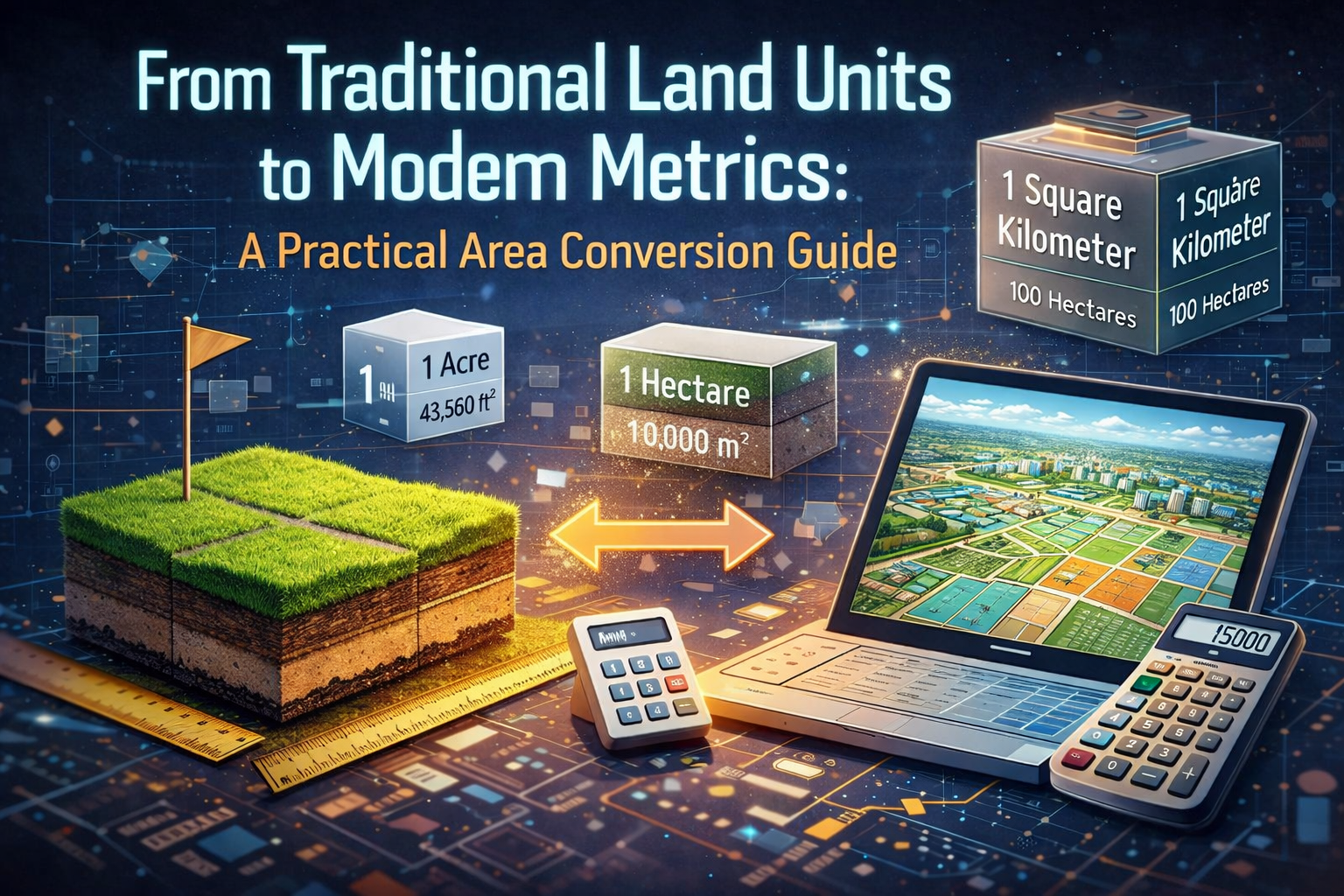
Land has always been more than just soil and boundaries. It represents livelihood, investment, heritage, and opportunity. Yet one of the biggest challenges in dealing with land—especially in countries like India—is understanding measurement units.
For buyers, sellers, developers, and even digital marketers working in the property niche, clarity in area measurement is not optional—it is essential. This practical guide explains how traditional land units evolved, how modern metrics simplified property dealings, and how smart digital strategies, including AI SEO, are helping land conversion tools reach the right audience.
Why Land Measurement Still Causes Confusion
Unlike standardized international units, traditional land measurements vary from state to state. A bigha in Punjab is not equal to a bigha in West Bengal. The same term can represent different dimensions depending on region, district, or even local custom.
This creates three major challenges:
- Legal ambiguity during documentation
- Pricing confusion during negotiation
- Search visibility issues online due to inconsistent terminology
For example, someone searching for bigha to square meter conversion might be looking for clarity before purchasing agricultural land. If your website or tool fails to address this specific query accurately, you lose both trust and traffic.
Understanding both traditional and modern systems is the first step toward clarity.
A Brief History of Traditional Land Units
Traditional land units were designed around agricultural needs rather than mathematical precision. Many were originally based on:
- The amount of land a pair of oxen could plough in a day
- The size of seeds required to sow a field
- Tax collection systems of regional kingdoms
Units like bigha, kanal, and marla became embedded in cultural and administrative practices. However, they were never standardized nationally.
With modernization and urbanization, this variation became problematic—especially for interstate transactions and digital property platforms.
The Rise of Modern Metrics
The introduction of the metric system brought uniformity. Units like:
- Square meter
- Square yard
- Hectare
- Acre
are now widely accepted in official land records and government documents.
The advantages of modern metrics include:
- Consistency across regions
- Compatibility with international standards
- Easier digital documentation
- Reduced legal disputes
However, traditional units did not disappear. Instead, the market now operates in a hybrid model where both systems coexist.
This coexistence creates a demand for accurate and accessible land measurement conversion tools.
Why Area Conversion Tools Matter in 2026
Today’s property buyers do not rely solely on brokers. They research online, compare rates, and verify measurements independently. A well-designed land unit converter offers:
- Instant clarity
- Reduced calculation errors
- Improved user trust
- Better lead generation for real estate businesses
If you run a land conversion website or a property blog, you are not just offering calculations—you are solving confusion.
And this is where AI SEO becomes highly relevant.
The Role of AI SEO in Area Conversion Content
Search behavior is evolving. Users now type detailed, intent-driven queries like:
- “How to convert bigha into square meters in Punjab”
- “Accurate agricultural land area conversion calculator”
- “Traditional land unit to metric conversion guide India”
Modern AI SEO tools help analyze such patterns and identify high-intent, long-tail keywords. Instead of stuffing generic keywords, smart optimization focuses on:
- Search intent
- Geographic variation
- Semantic keyword relationships
- User-friendly content structure
For example, instead of repeating the same phrase multiple times, a well-optimized article may include related terms such as:
- land area conversion calculator
- regional land measurement guide
- agricultural land unit conversion
- metric land measurement system
Search engines today reward clarity, helpfulness, and contextual depth—not repetition.
How to Convert Traditional Units to Modern Metrics
When converting land units, always consider regional variations. Here is a simple process:
Step 1: Identify the Region
Since units vary, confirm the state or district where the land is located.
Step 2: Verify the Local Standard
Government land record portals often specify official equivalents.
Step 3: Apply the Correct Formula
For example:
1 hectare = 10,000 square meters
1 acre = 4,046.86 square meters
However, traditional units require localized conversion factors.
Step 4: Double-Check with Official Records
Before making financial decisions, cross-check measurements with certified documents.
Providing this step-by-step clarity increases the reliability of your content and aligns with Google’s helpful content guidelines.
Common Mistakes in Land Area Conversion
Even experienced investors make mistakes when dealing with measurement conversions. Here are the most common ones:
1. Ignoring Regional Differences
Assuming one standard applies everywhere can lead to serious miscalculations.
2. Relying on Outdated Information
Conversion standards may change based on government notifications.
3. Manual Calculation Errors
Small arithmetic errors can significantly impact land pricing.
4. Keyword Over-Optimization in Content
From a digital publishing perspective, stuffing keywords harms rankings. Instead, focus on structured, informative writing.
How to Create High-Ranking Conversion Content
If you are building a land measurement website, follow these best practices:
Use Clear Headings
Structured formatting improves readability and search visibility.
Add Practical Examples
Instead of vague explanations, show real-world use cases.
Answer Related Questions
Include FAQs such as:
- How many square meters are in one acre?
- Is bigha the same across all Indian states?
- Which unit is used in official land registration?
Optimize for Long-Tail Queries
Target phrases like:
- convert agricultural land to square meters
- state-wise land measurement conversion
- rural property area calculator
These keywords attract more qualified traffic than broad, competitive terms.
User Experience: The Hidden Ranking Factor
Google increasingly prioritizes user experience signals such as:
- Time spent on page
- Bounce rate
- Content clarity
- Mobile responsiveness
A land conversion guide should be:
- Simple
- Accurate
- Mobile-friendly
- Easy to scan
Avoid technical jargon unless necessary. The goal is not to impress with complexity but to empower with clarity.
The Future of Land Measurement and Digital Search
As government records continue to digitize and property technology advances, standardized metrics will become even more dominant. However, traditional terms will likely remain part of everyday conversation. While modern real estate platforms and government portals often use standardized metrics like square meter to bigha or acres, many property transactions still reference traditional units such as bigha, biswa, kanal, or marla.
This dual-language reality creates ongoing demand for educational content and reliable conversion tools.
AI-powered search analysis will continue to refine how users discover such resources. Businesses that combine:
- Accurate technical information
- Intent-focused optimization
- Clear user guidance
will gain sustainable visibility.
Final Thoughts
Understanding land measurement is not just about numbers—it is about confidence. Whether you are a farmer verifying acreage, a developer evaluating investment potential, or a digital entrepreneur building a property-focused platform, clarity in area conversion builds trust.
Traditional units reflect history and culture. Modern metrics provide precision and legal consistency. Bridging the two through practical guides and smart optimization ensures users get what they need—quickly and accurately.
By combining structured educational content with AI SEO best practices, you can create resources that not only rank well but genuinely help people make informed land decisions.
In an era where information overload is common, clarity becomes your strongest competitive advantage.