

CPVC Ball Valves for Multinational Manufacturing Units
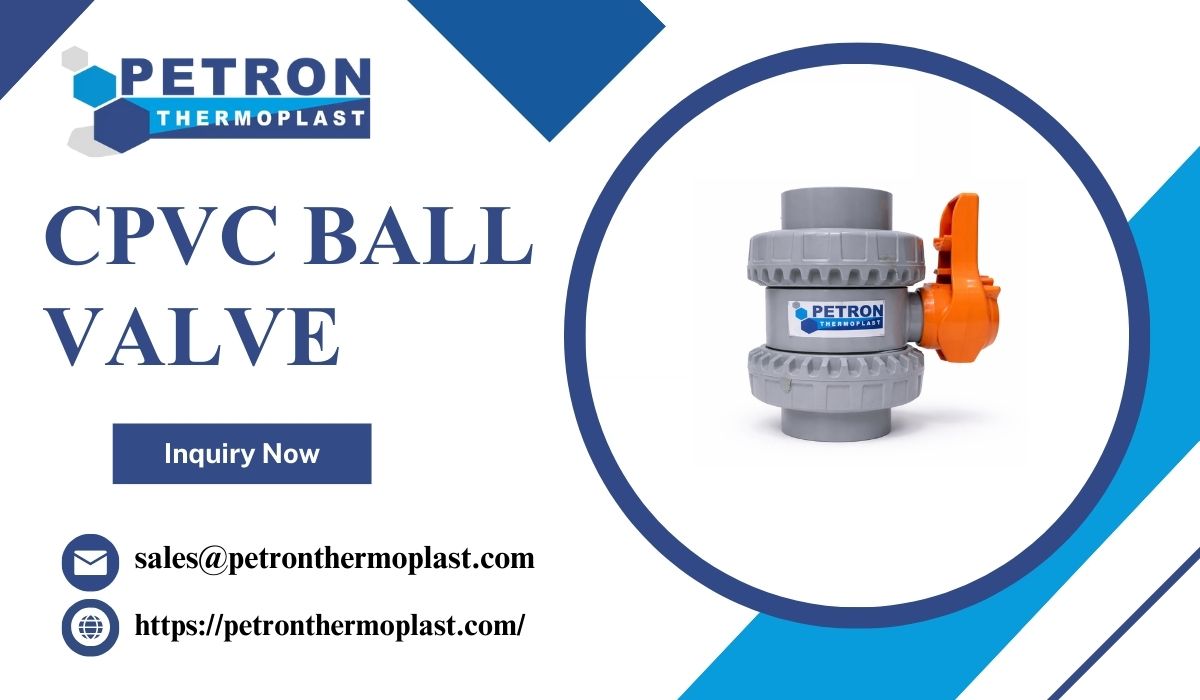
Among the various components used in industrial pipelines, ball valves play a crucial role in regulating and isolating fluid flow. CPVC ball valves have emerged as one of the most preferred choices for multinational manufacturing units due to their excellent chemical resistance, high-temperature stability, and cost efficiency. Designed for long-term industrial use, these valves support smooth operations in chemical, pharmaceutical, power, water treatment, and process industries.
As a trusted manufacturer and exporter, Petron Thermoplast supplies high-quality CPVC (Chlorinated Polyvinyl Chloride) ball valves that meet international standards and support the operational needs of global manufacturing facilities. This blog explores the importance, features, applications, and advantages of CPVC ball valves for multinational manufacturing units.
Understanding CPVC Ball Valves
A CPVC ball valve is a quarter-turn valve that controls fluid flow using a rotating spherical ball with a central bore. When the bore aligns with the pipeline, fluid flows freely; when turned perpendicular, the flow is completely shut off.
CPVC is produced by chlorinating PVC resin, which increases its temperature resistance and chemical stability. This makes CPVC ball valves suitable for handling hot water, corrosive chemicals, and industrial fluids that may damage conventional materials.
These valves are widely used in industrial piping systems where precise flow control, safety, and durability are essential.
Importance of CPVC Ball Valves in Multinational Manufacturing
Multinational manufacturing units often operate large-scale plants with continuous production cycles. Any failure in flow control systems can result in production losses, safety risks, and financial setbacks. CPVC ball valves help address these challenges effectively.
- Consistent Global Performance
CPVC ball valves are designed to perform reliably across different climates and operating conditions. Whether installed in tropical, desert, or temperate regions, they maintain stable performance.
- Compliance with International Standards
High-quality CPVC valves are manufactured according to ASTM, ISO, and other global standards. This ensures easy approval and integration into multinational projects.
- Reduced Downtime
With strong resistance to corrosion and wear, CPVC ball valves require fewer repairs and replacements, minimizing unplanned downtime.
- Cost Control for Large Operations
For global companies managing multiple plants, cost efficiency is critical. CPVC valves offer an optimal balance between performance and affordability.
Key Features of CPVC Ball Valves
- Excellent Chemical Resistance
CPVC ball valves are resistant to acids, alkalis, salts, solvents, and industrial chemicals. This makes them suitable for chemical processing, pharmaceutical manufacturing, and electroplating plants.
- High Temperature Tolerance
CPVC can handle higher temperatures than standard PVC, making it ideal for hot water systems and heated process pipelines.
- Smooth Internal Flow Path
The smooth bore of CPVC valves reduces friction losses, improves flow efficiency, and prevents scale buildup.
- Leak-Proof Design
Precision molding and high-quality sealing components ensure tight shut-off and leak-free operation.
- Lightweight Construction
Compared to metal valves, CPVC valves are lightweight, making handling, transportation, and installation easier.
- Low Operating Torque
CPVC ball valves require minimal force to operate, reducing operator fatigue and improving safety.
- Corrosion-Free Performance
Unlike metal valves, CPVC valves do not rust or corrode, even in aggressive industrial environments.
Applications in Multinational Manufacturing Units
- Chemical and Petrochemical Plants
CPVC ball valves are widely used in chemical handling systems for acids, solvents, and process fluids. Their chemical resistance ensures long-term reliability.
- Pharmaceutical and Biotechnology Facilities
In pharmaceutical plants, maintaining purity and hygiene is essential. CPVC valves provide contamination-free flow control for water, chemicals, and intermediates.
- Power Generation Plants
Power stations use CPVC valves in cooling systems, water treatment units, and chemical dosing lines.
- Food and Beverage Processing
CPVC ball valves are used in cleaning-in-place (CIP) systems and auxiliary pipelines where hot water and chemicals are involved.
- Electronics and Semiconductor Manufacturing
Ultra-pure water and specialty chemical lines require precise flow control. CPVC valves help maintain system cleanliness.
- Automotive and Heavy Engineering Plants
These facilities use CPVC valves in surface treatment, cooling, and chemical processing systems.
- Water and Wastewater Treatment Units
CPVC valves regulate flow in filtration, disinfection, and chemical dosing systems in industrial water treatment plants.
Advantages for Multinational Operations
Enhanced Operational Reliability
CPVC ball valves provide stable performance under continuous duty conditions, supporting uninterrupted production cycles.
Standardization Across Locations
Using standardized CPVC valves across global plants simplifies procurement, maintenance, and training.
Reduced Maintenance Costs
Corrosion resistance and durable construction minimize maintenance frequency and spare part requirements.
Longer Service Life
With proper installation, CPVC ball valves can operate efficiently for many years, reducing replacement costs.
Improved Safety
Leak-proof design and chemical compatibility reduce the risk of spills, contamination, and workplace accidents.
Simplified Logistics
Lightweight valves lower transportation costs and handling risks during international shipping.
Environmental Sustainability
CPVC requires less energy for production than many metals and is recyclable, supporting sustainable manufacturing practices.
Manufacturing and Quality Assurance
For multinational manufacturing units, quality consistency is essential. Leading manufacturers follow strict production and inspection processes.
Raw Material Selection
High-grade CPVC compounds are used to ensure strength, chemical stability, and thermal resistance.
Precision Manufacturing
Injection molding and CNC machining ensure dimensional accuracy and uniform wall thickness.
Assembly and Sealing
High-quality seals, seats, and stems are assembled to guarantee leak-free performance.
Testing and Inspection
Each batch undergoes rigorous quality checks, including:
- Hydrostatic pressure testing
- Leak testing
- Dimensional inspection
- Temperature resistance testing
- Visual examination
Certification and Documentation
Manufacturers provide technical datasheets, test reports, and compliance certificates required for global projects.
Installation and Maintenance Best Practices
Installation Guidelines
- Ensure correct alignment with pipelines
- Use compatible fittings and connectors
- Avoid over-tightening
- Follow recommended torque values
- Check flow direction before installation
Maintenance Tips
- Inspect valves periodically for wear
- Clean deposits and residues
- Replace damaged seals promptly
- Monitor operating pressure and temperature
Proper installation and routine maintenance significantly enhance valve lifespan and performance.
Choosing the Right Supplier for Global Projects
Selecting a reliable supplier is crucial for multinational manufacturing units. A trusted manufacturer should offer:
- Technical support and consultation
- Custom valve solutions
- Consistent product quality
- Export packaging and logistics support
- After-sales service
- Global compliance documentation
With strong engineering expertise and export capabilities, Petron Thermoplast supports multinational clients with dependable CPVC ball valve solutions.
Challenges in Multinational Manufacturing and CPVC Solutions
Diverse Operating Conditions
CPVC valves perform well in varying climates and chemical environments, making them suitable for global facilities.
Regulatory Variations
International standard-compliant CPVC valves simplify approvals across different regions.
Supply Chain Management
Standardized CPVC products ensure steady supply and reduce inventory complexity.
Long-Term Cost Management
Low maintenance and long service life help control operational expenses across multiple plants.
Future Trends in CPVC Valve Technology
With increasing automation and digitalization, CPVC valve technology is evolving. Future developments include:
- Smart valves with monitoring sensors
- Improved sealing materials
- Higher pressure-rated designs
- Enhanced UV and heat resistance
- Eco-friendly manufacturing processes
These innovations will further strengthen the role of CPVC ball valves in global manufacturing systems.
Conclusion
CPVC ball valves have become an essential component in multinational manufacturing units due to their durability, chemical resistance, thermal stability, and cost efficiency. Their ability to perform reliably in diverse operating environments makes them ideal for global industrial operations.
By ensuring safe flow control, minimizing maintenance, and supporting long-term performance, CPVC ball valves contribute significantly to operational excellence and productivity.
Partnering with a trusted manufacturer like Petron Thermoplast ensures access to high-quality products, technical expertise, and customized solutions. With the right CPVC ball valves in place, multinational manufacturing units can achieve greater efficiency, safety, and long-term value in their global operations.