
Building the Privacy-Powered AI Future: The Role of Zero-Knowledge Infrastructure in Decentralized Compute
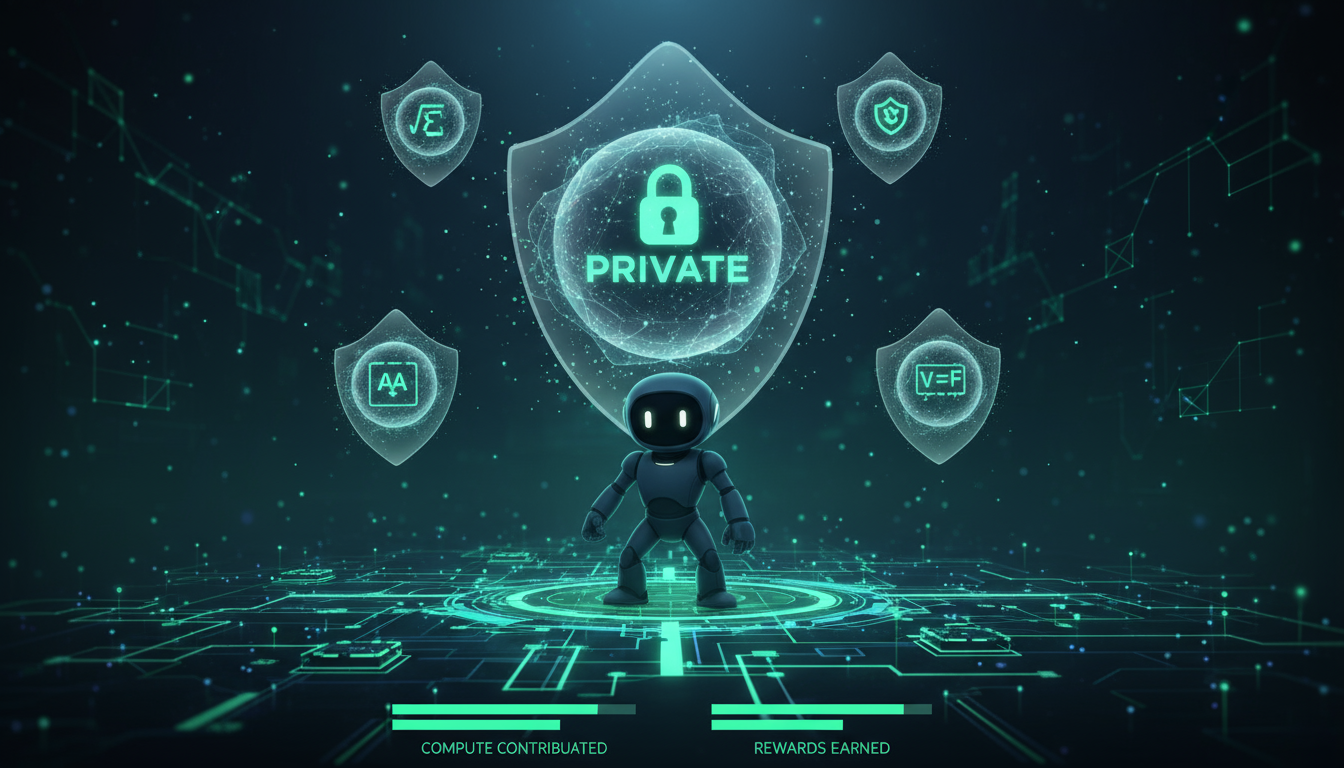
Artificial intelligence is quickly becoming the foundation of modern technology. It powers digital healthcare, risk analysis in banking, autonomous logistics, scientific research, identity verification, and countless everyday applications. Yet for all its capability, there is a core challenge that continues to grow louder: AI requires vast amounts of personal, sensitive, and business-critical data to function. As AI systems become stronger, the demand for data becomes even greater—raising questions about trust, ownership, surveillance, and security.
This problem has created a global tension. How can we unlock the potential of AI without sacrificing data sovereignty? How can we ensure that individuals, organizations, and developers keep control of the information that powers intelligent systems?
The answer emerging today is rooted in advanced cryptography and decentralized computing. It is based on the ability to verify knowledge without exposing data—an approach made possible by zero knowledge rollups, a breakthrough in both blockchain architecture and privacy-preserving computation.
A Network Designed to Empower Contributors, Not Exploit Data
Unlike traditional AI systems that depend on centralized cloud providers, this new model distributes compute across a global network of contributors. Participants can join through a crypto-based entry point that positions them not as passive holders, but as meaningful builders in a shared digital infrastructure.
Computing power is supplied through specialized hardware nodes known as Proof Pods. These compact but powerful devices allow participants to contribute processing resources directly to the network. The key difference is control: instead of sending raw data to third-party servers, computations are executed privately and results are verified cryptographically. Contributors maintain sovereignty, transparency, and influence in how the network evolves.
The Proof Pods are intentionally limited in supply, allowing early contributors to hold long-term value in the network’s growth. This transforms participation from investment speculation into infrastructure ownership.
A Blockchain Engineered Specifically for AI Workloads
Most blockchains are not optimized for computational intensity. Their design focuses on transparency and distributed consensus—but AI requires something different: speed, scalability, and privacy. To meet this demand, a new blockchain architecture has been developed that is modular, high-performance, and privacy-native from the foundation upward.
This blockchain does not record personal data or expose computation details to public validators. Instead, it verifies correctness through cryptographic proof systems. This is where zk rollups play a defining role.
zk rollups allow large-scale computation to be executed off-chain while still being verified as accurate on-chain—without revealing the underlying data or model structure. Instead of forcing the network to inspect or store sensitive information, it simply verifies that the computation was done correctly.
This makes the blockchain a decentralized verification engine, not a storage repository for private information.
The Privacy-Preserving AI Advantage
AI today is extremely powerful, but also extremely invasive. Centralized cloud systems gather, categorize, and analyze everything—from health records to personal identity profiles to financial behavior and biometric signatures. Even when data is anonymized, it can often be reverse-engineered.
Privacy-preserving AI breaks this pattern entirely.
- Healthcare can use predictive models without exposing patient history.
- Banks can detect fraud without revealing personal account data.
- Citizens can verify identity requirements without handing over scanned documents.
- Businesses can train models on proprietary datasets without risking leaks.
This is not a theoretical improvement—it is a structural evolution of how AI will operate moving forward.
The Economic Engine: A Token That Powers Real Compute
To keep the network secure, fair, and functional, the ecosystem operates with a native token. This token is used to:
- Reward contributors who supply computing power
- Compensate validators who secure network consensus
- Enable private transactions between users and applications
- Support decentralized AI services and infrastructure
Unlike speculative cryptocurrencies with no clear utility, this token has a direct and intrinsic economic role. Its value is tied to real computational supply and demand, meaning the more the network is used, the more integral the token becomes.
Developers, enterprises, researchers, and everyday users benefit as the ecosystem expands.
Why This Matters Now
The timing could not be more important. As global reliance on artificial intelligence accelerates, so does awareness of data privacy risks. Regulatory environments are tightening. Consumers are demanding guarantees of confidentiality. Organizations are seeking secure, scalable infrastructure that does not require handing control to tech monopolies.
Meanwhile, decentralized networks are becoming more efficient than ever, making distributed infrastructure truly viable on a global scale.
The convergence of these forces—AI adoption, privacy necessity, decentralized computation, and zero knowledge rollups—marks the beginning of a new era.
This is not just a technological shift—it is a cultural one.
It redefines digital ownership.
It protects user sovereignty.
It establishes intelligence without surveillance.
And it creates a new model of value creation powered by communities—not corporations.
Frequently Asked Questions (FAQs)
1. What is the main purpose of Zero-Knowledge Proof technology in this network?
Zero-Knowledge Proofs enable the network to verify the correctness of computations without revealing the private data behind them. This ensures AI systems remain powerful while data stays confidential.
2. How do Proof Pods contribute to the ecosystem?
Proof Pods act as decentralized compute nodes. They provide the processing power needed for AI tasks while allowing the operator to retain full control of their hardware and data participation.
3. What makes this network different from traditional AI cloud platforms?
Centralized platforms require trust in external organizations and surrendering data control. This network operates through decentralized computation and cryptographic verification, eliminating forced trust.
4. How does the token gain value?
The token is tied directly to real compute usage. As more applications, organizations, and contributors use the network, demand naturally increases.
5. Why are zk rollups important for scalability?
They allow complex computations to happen privately and efficiently, off-chain, while still producing verifiable results on-chain. This dramatically boosts performance without sacrificing privacy.