Affordable Ultrasound Services: Everything You Need to Know
Affordable Ultrasound Services: Everything You Need to Know
Ultrasound scans are one of the most common diagnostic tools in modern healthcare, offering safe, non-invasive, and effective ways to visualize internal organs, tissues, and fetal development. Many people search for affordable ultrasound services when they need reliable medical imaging without breaking the bank. In this guide, we will explore why ultrasounds are so essential, what to expect during a scan, the benefits they offer, and how patients can access cost-effective diagnostic care.
Whether you are preparing for pregnancy monitoring, abdominal imaging, or preventive health checks, understanding your options can help you make informed choices about your health.
What is an Ultrasound Scan?
An ultrasound scan, also called sonography, is a medical imaging technique that uses high-frequency sound waves to capture live images of the inside of your body. Unlike X-rays, ultrasounds do not use radiation, making them safer, especially for pregnant women and babies.
These scans can detect and monitor conditions in the abdomen, pelvis, heart, blood vessels, and musculoskeletal system. They are also essential in prenatal care, allowing parents to see their unborn child and doctors to track the baby’s development.
Types of Ultrasound Scans
1. Abdominal Ultrasound
Used to examine organs such as the liver, gallbladder, pancreas, spleen, and kidneys.
2. Pelvic Ultrasound
Often used in gynecology and obstetrics to monitor reproductive health and pregnancy progress.
3. Doppler Ultrasound
Helps evaluate blood flow in arteries and veins, detecting blockages or clots.
4. Musculoskeletal Ultrasound
Useful for diagnosing joint, tendon, and muscle injuries.
5. Echocardiogram
A detailed scan of the heart to check its function and detect structural abnormalities.
Benefits of Ultrasound Scans
Ultrasounds are widely preferred for several reasons:
- Safe and Non-Invasive: No exposure to radiation.
- Painless Procedure: Involves only the use of a probe and gel.
- Real-Time Imaging: Provides immediate results for diagnosis.
- Widely Available: Easily accessible in most diagnostic centers.
- Cost-Effective: Generally more affordable than other imaging methods like CT or MRI.
What to Expect During an Ultrasound Appointment
Preparation
Depending on the type of ultrasound, you may be asked to fast, drink water, or wear loose clothing.
During the Scan
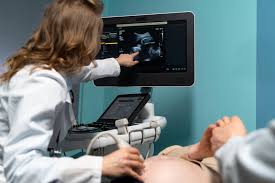
A technician applies gel on the skin and moves a handheld probe over the area. The sound waves create images that appear on a monitor.
After the Scan
The results are usually quick, and in most cases, you can continue your day as normal without restrictions.
Who Should Consider Ultrasound Scans?
- Pregnant women for prenatal monitoring.
- Individuals with abdominal pain or swelling.
- Patients with suspected gallstones, kidney stones, or liver disease.
- People with blood circulation issues.
- Athletes or individuals with musculoskeletal injuries.
How to Choose the Right Diagnostic Center
When selecting a diagnostic center for your scan, consider the following factors:
- Accreditation and Licensing – Ensure the facility is certified by health authorities.
- Technology and Equipment – Look for centers with updated ultrasound machines.
- Qualified Technicians and Radiologists – Trained staff ensure accurate results.
- Accessibility and Location – Convenient location for easy access.
- Transparent Pricing – Clear pricing structure with no hidden costs.
Why Accessibility Matters in Healthcare
Affordable diagnostic services bridge the gap between patients and timely medical care. When ultrasounds are accessible at reasonable costs, more people are likely to seek preventive health checks, which reduces the risk of undetected diseases. Early diagnosis through sonography can lead to faster treatment, improved outcomes, and peace of mind for patients.
Final Thoughts on Affordable Ultrasound Services
Ultrasound scans are an integral part of preventive healthcare, pregnancy monitoring, and diagnostic imaging. With growing awareness, more people are seeking affordable ultrasound services that ensure both quality and accessibility. By choosing the right diagnostic center, patients can get accurate results without financial strain, making healthcare more inclusive and effective.
Frequently Asked Questions (FAQs)
1. What is the difference between an ultrasound and an X-ray?
An ultrasound uses sound waves, while an X-ray uses radiation. Ultrasounds are safer for pregnant women and children.
2. How long does an ultrasound scan usually take?
Most scans take between 15 to 30 minutes, depending on the area being examined.
3. Do ultrasound scans hurt?
No, they are completely painless. Some people may feel mild pressure when the probe is moved over the skin.
4. Can I eat before an abdominal ultrasound?
In many cases, fasting for 6–8 hours is recommended before an abdominal ultrasound to get clearer images.
5. How soon can I get my ultrasound results?
In most diagnostic centers, results are available within a few hours or the same day.
6. Are there any risks with repeated ultrasounds?
No, ultrasounds are considered safe even with multiple sessions since they do not use radiation.
7. Can men also have pelvic ultrasounds?
Yes, pelvic ultrasounds can be performed on men to check the bladder, prostate, or other pelvic structures.
8. Is an ultrasound covered by insurance?
Many insurance plans cover medically necessary ultrasounds, but it’s best to confirm with your provider.