How to Plan Day Trips from Marrakech for a Truly Immersive Experience
The vibrant “Red City” of Marrakech acts as a hypnotic gateway to the soul of North Africa, yet its true magic often lies just beyond the ancient ochre walls. For many travelers in 2026, day trips from Marrakech have become the definitive way to balance the high-octane energy of the medina with the profound, restorative silence of the Atlas Mountains and the Atlantic coast. As Morocco celebrates a historic surge in tourism—fueled by significant infrastructure upgrades and a national pivot toward sustainable, soulful luxury—the accessibility of the surrounding provinces has reached an all-time high. Choosing to step outside the city is not merely a logistical decision; it is an invitation to witness the “real” Morocco, where Berber traditions remain woven into the fabric of everyday life and the landscapes transition from lush river valleys to lunar desert plateaus in the span of a single afternoon.
Navigating the Diverse Terrain of the High Atlas and Beyond
The geography surrounding Marrakech is a complex tapestry of micro-climates and altitudes, each offering a distinct narrative for the curious explorer. According to Wikipedia, the High Atlas is the greatest mountain range in North Africa, acting as a dramatic weather barrier between the Mediterranean climate of the north and the Saharan influence of the south. This geographical reality makes day trips from Marrakech remarkably diverse. You can start your morning sipping mint tea in the verdant Ourika Valley, where the air is scented with wild thyme and lavender, and by midday find yourself at the foot of the snow-capped Jebel Toubkal in Imlil, the highest peak in the Arab world.
For those seeking a more cinematic escape, the journey southeast across the Tizi n’Tichka pass leads to the UNESCO World Heritage site of Ait Ben Haddou. This ancient earthen ksar is a masterclass in pre-Saharan architecture and has served as the backdrop for countless global film productions. However, the 2026 traveler is increasingly looking toward “underrated” gems like the Demnate region and the Imi n’Ifri natural bridge. These destinations offer a quieter, more authentic encounter with Morocco’s geological wonders, allowing for solitary walks through limestone caves and olive groves that feel entirely disconnected from the typical tourist circuit.
Quick Guide to Distance and Travel Times from Marrakech
| Destination | Travel Time (One Way) | Best Known For | Vibe |
| Ourika Valley | 60–90 Minutes | Riverside Dining & Waterfalls | Lush & Accessible |
| Agafay Desert | 45 Minutes | Sunset Dinners & Quad Biking | Rocky & Cinematic |
| Essaouira | 2.5–3 Hours | Coastal Medina & Seafood | Windy & Artistic |
| Imlil (High Atlas) | 90 Minutes | Berber Culture & Hiking | Alpine & Authentic |
| Ouzoud Falls | 2.5–3 Hours | Majestic 110m Waterfalls | Natural & Dramatic |
The Rise of Sustainable Tourism and Restorative Travel
The evolution of travel in 2026 has been marked by a significant shift toward environmental stewardship and social responsibility. According to recent research highlighted by Google News, the Moroccan government’s “Go Siyaha” initiative has successfully incentivized hundreds of eco-friendly tourism projects across the Al Haouz province. This means that many day trips from Marrakech now directly support rural cooperatives, solar-powered eco-lodges, and community-based irrigation projects. For the traveler, this translates to a more meaningful connection; your lunch in a Berber village is no longer just a meal, but a contribution to a local economy that prioritizes the preservation of ancestral heritage over mass-market exploitation.
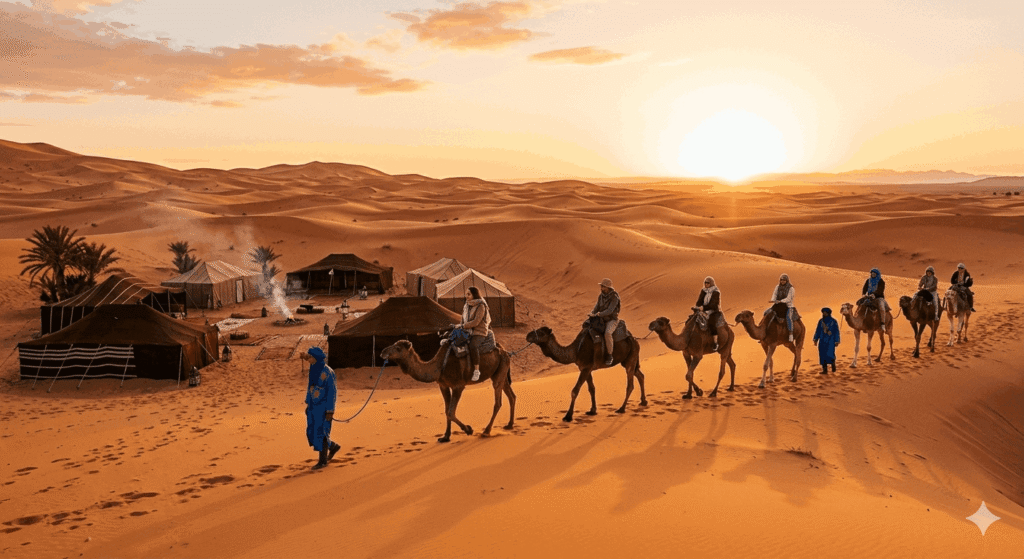
The Agafay Desert serves as a prime example of this “Soulful Luxury” trend. Often called the “Marrakech Desert,” Agafay is a rocky, undulating plateau that offers the visual drama of the Sahara without the ten-hour drive. In 2026, Agafay has become a hub for restorative travel, featuring high-end camps that utilize greywater recycling and 100% solar energy. Travelers can engage in “noctourism” sessions—professional stargazing with telescopes—or participate in workshops with local artisans. This focus on “low-impact, high-resonance” experiences is what professional analysts at Forbes identify as the future of elite travel, where the ultimate luxury is the combination of total privacy and a clear ecological conscience.
Essential Preparation and Cultural Etiquette for Rural Morocco
To maximize the impact of your day trips from Marrakech, thoughtful preparation is essential. The Moroccan landscape is one of environmental extremes; while the medina may be baking in the afternoon sun, the mountain passes of the High Atlas can be surprisingly chilly. A versatile layering system is the golden rule for any excursion. Breathable cotton or linen is ideal for the valleys, but a high-quality windbreaker or fleece is indispensable for sunset in the desert or hikes in Imlil. Furthermore, a traditional cotton “cheche” (scarf) is more than a souvenir; it is a vital tool that protects your face from wind-blown sand and provides a layer of warmth during early morning hot air balloon rides.
Equally important is an understanding of the unwritten social codes of the rural provinces. The Amazigh (Berber) people are legendary for their hospitality, and an invitation for tea is a cornerstone of their culture. When participating in these rituals, it is considered polite to accept at least one cup of the “Berber whiskey” (mint tea) as a sign of mutual respect. In 2026, as Morocco becomes more digitally integrated through the “Stay Cashless” initiative, travelers will find that many rural guides and artisans now accept digital payments; however, keeping small amounts of Moroccan Dirham for tipping and local markets remains a mark of a prepared traveler. By approaching these interactions with a blend of curiosity and modesty, you transform a standard tour into a genuine human exchange.
The Modern Traveler’s Checklist for Day Excursions
- Footwear: Sturdy, closed-toe walking shoes or light hikers are essential for the uneven paths of Ouzoud or Setti Fatma.
- Sun Protection: High-SPF reef-safe sunscreen, polarized sunglasses, and a wide-brimmed hat.
- Hydration: A reusable water bottle with a built-in filtration system to reduce plastic waste.
- Tech: A high-capacity power bank for your devices, as GPS and camera usage in remote areas can drain batteries quickly.
- Etiquette: Always ask for permission before taking photographs of local residents, especially in smaller villages.
Conclusion: Crafting Your Personal Narrative Outside the Red City
Securing a spot on the most sought-after day trips from Marrakech is an act of reclaiming your sense of wonder. Whether you are standing at the base of the thundering Ouzoud Waterfalls or watching the Atlantic mist roll over the ramparts of Essaouira, these excursions provide the necessary counterpoint to the vibrant chaos of Marrakech. As the nation moves toward its 2030 vision, the year 2026 stands as a unique moment where infrastructure is modern, but the ancient soul of the countryside remains untouched. The mountains are calling, the desert is waiting, and the coast is whispering; all that remains is for you to step into the 4×4 and let the horizon reveal itself.