
How Automated Server Provisioning Saves Time, Money, and Human Effort
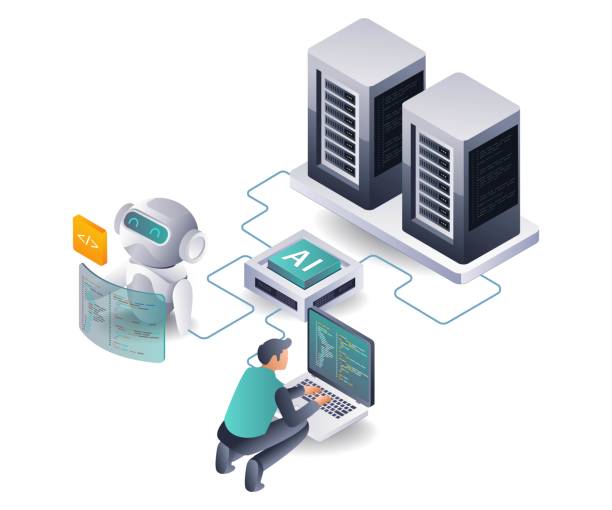
Modern businesses rely heavily on digital infrastructure. Applications, websites, AI systems, and cloud platforms all depend on servers that must be configured, deployed, and maintained efficiently. Traditional server setup methods often require significant manual work, technical expertise, and time. As technology continues to evolve, companies are shifting toward automated server provisioning to streamline infrastructure management.
Automated server provisioning allows organizations to create, configure, and deploy servers automatically using predefined scripts, templates, and intelligent tools. This approach eliminates repetitive manual tasks and ensures consistent server environments across development, testing, and production stages.
Platforms such as LastApp.ai demonstrate how automation and intelligent infrastructure management can simplify server provisioning while improving efficiency, scalability, and reliability.
Understanding Automated Server Provisioning
Automated server provisioning refers to the process of automatically setting up servers with the required operating systems, software packages, security settings, and network configurations without manual intervention.
Instead of spending hours configuring servers step-by-step, automation tools execute predefined instructions that instantly prepare servers for deployment. These instructions are often written in configuration files or scripts that define everything required for the server environment.
Key tasks handled by automated provisioning include:
- Installing operating systems
- Configuring server environments
- Deploying applications
- Setting up security policies
- Managing networking configurations
- Scaling infrastructure resources
With the help of automation, server environments become predictable, repeatable, and easier to manage.
Time Savings Through Automation
Manual server provisioning can take several hours or even days depending on infrastructure complexity. IT teams often spend significant time installing software packages, adjusting configurations, and troubleshooting setup issues.
Automated server provisioning dramatically reduces this time.
A fully automated workflow can deploy new servers within minutes. Once templates and configuration scripts are created, launching additional servers requires almost no human effort.
For example, a development team launching a new application environment may need multiple servers for backend processing, databases, and load balancing. Automation tools can deploy the entire infrastructure stack instantly.
This rapid provisioning accelerates:
- Product development cycles
- Software testing environments
- Application deployment timelines
- Infrastructure scaling during traffic spikes
As a result, businesses respond faster to market demands and reduce delays caused by manual setup processes.

Reducing Operational Costs
Infrastructure management can become expensive when organizations rely heavily on manual provisioning. IT teams spend valuable working hours on repetitive tasks such as system installation, patch updates, and environment configuration.
Automated server provisioning significantly lowers operational costs in several ways.
First, automation reduces labor requirements for infrastructure management. Engineers can focus on innovation, architecture design, and performance optimization rather than repetitive configuration tasks.
Second, automation minimizes errors that often occur during manual setup. Misconfigured servers can lead to downtime, security vulnerabilities, or system failures. Fixing these issues requires additional resources and financial investment.
Third, automated provisioning improves resource allocation. Intelligent infrastructure tools can dynamically create or remove servers depending on system demand. This prevents unnecessary cloud expenses caused by idle resources.
Platforms like LastApp.ai help businesses maintain cost-efficient infrastructure by simplifying automated provisioning and optimizing server usage.
Minimizing Human Error
Human error remains one of the biggest challenges in IT infrastructure management. A small configuration mistake can disrupt an entire application environment.
Manual server provisioning increases the likelihood of issues such as:
- Incorrect software installations
- Security misconfigurations
- Network setup errors
- Inconsistent environments
Automated server provisioning solves this problem by executing standardized configuration instructions every time a server is created.
Once automation scripts are properly tested and validated, each new server follows identical setup procedures. This ensures consistency across development, staging, and production environments.
Reliable automation leads to:
- Stable application performance
- Improved system reliability
- Fewer configuration-related failures
- Stronger security compliance
Consistency is especially critical for large-scale systems that operate across multiple cloud regions or environments.
The Role of AI Backend Provisioning
Modern infrastructure management is evolving beyond basic automation. Intelligent technologies now enhance automation processes through AI backend provisioning.
AI-driven provisioning systems analyze usage patterns, workload demands, and infrastructure performance in real time. Based on this analysis, automated systems adjust server resources dynamically.
Examples of AI-powered infrastructure improvements include:
- Predictive server scaling based on traffic trends
- Intelligent load balancing
- Automatic performance optimization
- Resource allocation adjustments during peak usage
AI backend provisioning allows infrastructure to adapt automatically without constant monitoring by engineering teams.
Solutions like LastApp.ai combine intelligent automation with backend infrastructure management, making it easier for businesses to deploy and scale applications efficiently.
Scalability for Growing Businesses
Business growth often brings increased digital traffic, larger databases, and expanding software systems. Infrastructure must scale quickly to support these changes.
Manual provisioning makes scaling slow and inefficient. Launching dozens or hundreds of servers manually can overwhelm infrastructure teams.
Automated server provisioning enables instant scalability.
Automation platforms can spin up multiple servers simultaneously whenever demand increases. This capability ensures stable performance during high-traffic periods such as:
- Product launches
- Marketing campaigns
- Seasonal shopping events
- Viral content surges
Once traffic levels return to normal, automated systems can remove unnecessary servers to control operational costs.
Scalable infrastructure ensures businesses maintain high availability and excellent user experience.
Improving Developer Productivity
Developers frequently require new environments for testing applications, debugging code, and running experiments. Waiting for infrastructure setup slows development progress.
With automated server provisioning, development teams can instantly create new environments whenever required.
Automation supports modern development workflows such as:
- Continuous integration (CI)
- Continuous deployment (CD)
- Microservices architecture
- Cloud-native application development
Fast environment setup allows developers to focus on building better software rather than managing infrastructure.
Platforms like LastApp.ai simplify backend management while enabling developers to launch server environments quickly and efficiently.
Future of Infrastructure Automation
The future of infrastructure management will continue to rely on intelligent automation. Cloud computing, containerization, and distributed systems require scalable and flexible server management strategies.
Automated server provisioning combined with AI backend provisioning will continue transforming how businesses manage infrastructure.
Benefits will include:
- Faster deployment cycles
- Self-optimizing server environments
- Reduced operational complexity
- Lower infrastructure costs
- Improved system reliability
As automation technology evolves, platforms like LastApp.ai will play a crucial role in simplifying backend infrastructure management for businesses of all sizes.
FAQ
What is automated server provisioning?
Automated server provisioning is the process of automatically setting up and configuring servers using scripts, templates, or automation tools without manual intervention.
How does automated server provisioning save time?
Automation eliminates manual setup steps, allowing servers to be deployed within minutes instead of hours or days.
What is AI backend provisioning?
AI backend provisioning uses artificial intelligence to analyze infrastructure usage and automatically optimize server resources, scaling, and performance.
Why is automated server provisioning important for businesses?
Automation improves efficiency, reduces costs, minimizes human errors, and allows infrastructure to scale quickly as business demands grow.
How does LastApp.ai support automated infrastructure management?
LastApp.ai simplifies backend management by combining automated server provisioning with intelligent infrastructure tools that help businesses deploy and scale applications efficiently.