

AI Furniture Visualizer: Transform Furniture Buying with Smarter Room Previews
Buying furniture is exciting, but it can also feel uncertain. A sofa may look perfect on a website, but will it suit your room? Will the color match your walls? Will the size feel too bulky or too small? These are the kinds of questions that make customers hesitate before making a purchase.
That is exactly where an ai furniture visualizer becomes powerful.
Instead of asking buyers to imagine how a product might look in their home, this technology helps them see it instantly in a realistic setting. It removes guesswork, builds confidence, and makes the shopping experience far more interactive. For furniture brands, retailers, and eCommerce platforms, this is no longer just a nice feature. It is becoming a serious sales tool.
In this article, we will explore how an ai furniture visualizer works, why it matters, and how it is changing the way people shop for furniture online.
What Is an AI Furniture Visualizer?
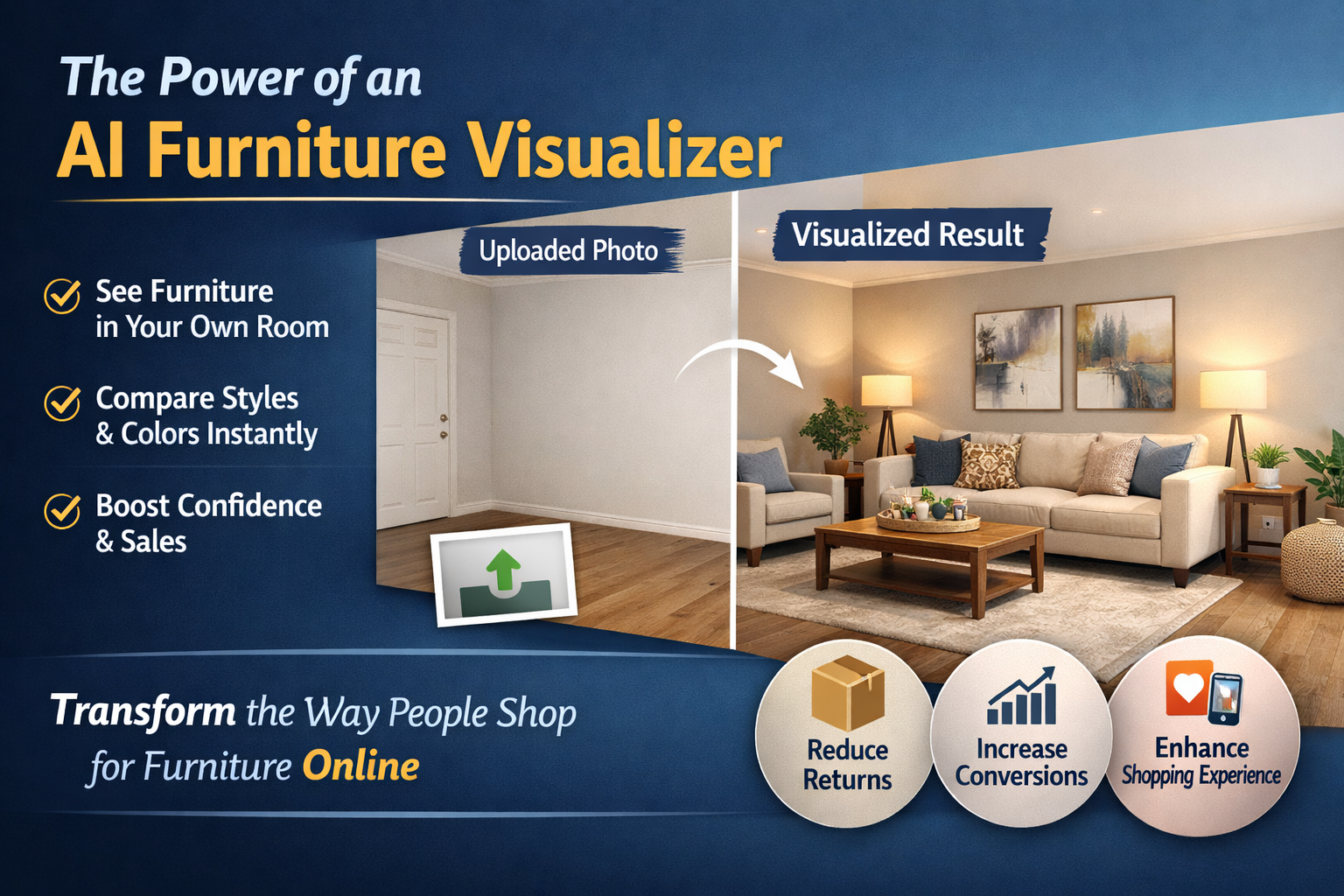
An ai furniture visualizer is a digital tool that allows users to place furniture products into room scenes using artificial intelligence. In many cases, customers can upload a photo of their own room or choose from a set of sample interiors. The tool then lets them preview how a chair, table, bed, or sofa will look in that space.
This goes beyond static product photos. Instead of showing furniture in only one styled catalog image, the visualizer helps shoppers interact with the product in a realistic and personal way.
For example, someone shopping for a dining table can upload an image of their dining room and instantly see whether the table fits the style and available space. A customer browsing for a new couch can compare multiple fabric colors without needing to visit a showroom.
This is where AI makes a real difference. It improves image placement, room understanding, and product adaptation, creating a more believable preview.
Why Customers Love This Technology
Furniture is a high-consideration purchase. People do not buy it casually. They think about design, comfort, size, color, price, and long-term use. Even when they love a product, uncertainty can delay or stop the sale.
An ai furniture visualizer solves that problem by giving customers visual clarity.
Here are some key reasons shoppers respond so well to it:
1. It reduces buying hesitation
When customers can see the product in a realistic setting, they feel more sure about their decision. This makes them less likely to keep delaying the purchase.
2. It makes online shopping more confident
Many people want the convenience of buying online but still worry about how the furniture will look in real life. A visualizer bridges that trust gap.
3. It creates a more engaging experience
Interactive tools naturally keep users on a website longer. Instead of passively scrolling, they actively explore products and combinations.
4. It helps users compare options faster
Customers can test different furniture pieces, finishes, and styles in the same room view, which makes decision-making easier.
How Furniture Brands Benefit from an AI Furniture Visualizer
For furniture businesses, this technology is not just about looking modern. It directly supports sales, customer experience, and conversion performance.
A strong ai furniture visualizer can help brands in several practical ways.
Higher Conversion Potential
When shoppers feel more confident, they are more likely to buy. Visualization helps reduce the uncertainty that often causes cart abandonment or delayed decisions.
Lower Product Return Risk
One of the biggest reasons for furniture returns is expectation mismatch. The product may be beautiful, but it may not suit the buyer’s room as expected. Better previews can help reduce that issue.
Better Product Discovery
Customers may explore more products when the experience is interactive. Someone visiting for a bed may also test side tables, lamps, or accent chairs once they start visualizing.
Stronger Brand Perception
Brands that offer a smoother and smarter buying journey often appear more premium, more innovative, and more customer-focused.
This is why platforms like Nirwana.ai are becoming relevant for furniture businesses that want to improve digital buying experiences and stand out in a competitive market.
How an AI Furniture Visualizer Works in Real Use
The process is usually simple from the customer’s perspective, which is one reason it works so well.
A typical journey looks like this:
Upload or Select a Room
The user either uploads a photo of their own room or selects from pre-designed room templates.
Choose a Furniture Product
They browse available items such as sofas, beds, chairs, coffee tables, or storage units.
Preview the Product in the Space
The ai furniture visualizer places the selected item into the room, allowing the user to see how it looks in context.
Adjust and Compare
The user may switch between different products, styles, colors, or sizes to compare what fits best.
This kind of smooth interaction feels natural and helpful. It turns shopping into an experience rather than just a catalog search.
Real Examples of Where It Makes the Biggest Impact
Not every furniture category benefits in exactly the same way, but some areas see especially strong value.
Living Room Furniture
Sofas, coffee tables, TV units, and accent chairs are highly style-sensitive. Customers want to know how everything works together in the same room.
Bedroom Furniture
Beds, side tables, wardrobes, and dressers often depend on layout and spacing. Visualization helps buyers feel confident before committing.
Dining Furniture
Dining tables and chair sets need to fit both space and aesthetic. A realistic preview helps customers avoid size or proportion mistakes.
Office Furniture
With more people improving home offices, buyers want to check how desks, ergonomic chairs, and storage pieces fit into their work area.
In all these cases, an ai furniture visualizer gives the buyer a stronger sense of fit, proportion, and design harmony.
Why This Matters for the Future of Furniture eCommerce
The furniture industry is becoming more digital, but traditional product pages still leave too much to imagination. Buyers today expect more than images and dimensions. They want confidence, personalization, and convenience.
That is why the ai furniture visualizer is quickly becoming one of the most valuable tools in modern furniture selling.
It supports the shift from simple online browsing to smarter decision-making. It helps businesses sell visually, not just descriptively. And most importantly, it aligns with how customers actually shop today: they want to see before they buy.
As technology improves, visualizers will likely become even more realistic, more seamless, and more integrated into everyday shopping journeys. Brands that adopt these tools early will have a stronger edge in building trust and increasing engagement.
Choosing the Right Visualization Solution
If a furniture brand wants to implement this technology, the best solution should be easy to use, visually realistic, and aligned with the customer journey.
A good ai furniture visualizer should offer:
Realistic product placement
User-friendly room upload or preset room options
Fast loading and smooth interactions
Clear product switching and comparison options
Easy integration into websites or digital catalogs
Solutions like Nirwana.ai are helping brands move in this direction by making furniture visualization more practical, modern, and conversion-focused.
Conclusion
Furniture buying becomes much easier when people can actually see what they are choosing. That is the true strength of an ai furniture visualizer. It removes doubt, improves confidence, and creates a much better shopping experience for both customers and brands.
For furniture businesses, this is more than a design feature. It is a smarter way to present products, support decisions, and drive better outcomes online.
As customer expectations continue to rise, tools like this will play a bigger role in how furniture is marketed and sold. If you want to create a more engaging and future-ready shopping experience, now is the perfect time to explore what an ai furniture visualizer can do for your business.