
AI Furniture Is Transforming Interior Design and Online Shopping
If you have ever tried buying a sofa online, you know the feeling. It looks perfect on the website. The color seems right. The size seems fine. But the big question remains: Will it actually look good in your living room?
That uncertainty is exactly where ai furniture is changing the game.
Instead of guessing, customers can now see how a piece of furniture fits, looks, and feels in their own space before making a purchase. For brands and retailers, this shift is not just a cool tech feature. It is a powerful sales tool that reduces hesitation and increases confidence. Let us explore how ai furniture is reshaping the furniture industry and why it matters more than ever.
What Is AI Furniture?
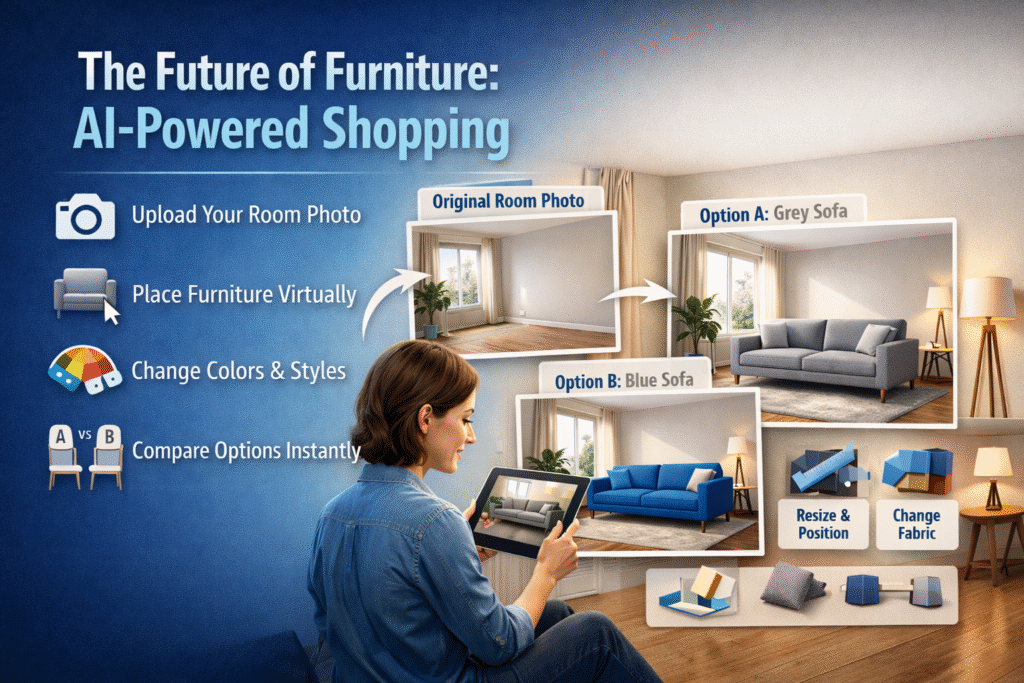
AI furniture refers to the use of artificial intelligence to design, visualize, recommend, or customize furniture for real-world spaces. It blends computer vision, machine learning, and 3D or 2D visualization to create realistic previews of furniture inside actual rooms.
Instead of relying only on studio photos, customers can:
- Upload a photo of their room
- Place furniture virtually in that space
- Adjust size, position, and orientation
- Change colors, materials, or finishes
- Instantly compare different styles
This creates a highly interactive experience that bridges the gap between imagination and reality.
Why AI Furniture Matters in Today’s Market
The furniture industry has always faced one core challenge: furniture is personal, large, and expensive. Customers hesitate because they fear making the wrong choice.
AI furniture directly addresses this hesitation.
1. It Removes Guesswork
When buyers can see a sofa in their exact living room, at true scale, with correct lighting and perspective, the decision becomes easier. They no longer need to “imagine” how it might look. They can see it.
This visual clarity significantly improves buyer confidence.
2. It Reduces Returns
Returns are costly for furniture brands. Shipping bulky items back and forth eats into margins. By using ai furniture visualization tools, customers make more informed decisions, which leads to fewer mismatched purchases and lower return rates.
3. It Speeds Up Decision-Making
Many sales are lost not because customers dislike a product, but because they delay the decision. AI-powered previews shorten that gap between interest and action. When the room visualization looks right, the purchase feels safer.
How AI Furniture Enhances the Online Shopping Experience
Online furniture shopping has grown rapidly, but it has always lacked physical interaction. AI bridges that gap in powerful ways.
Room-Based Visualization
One of the most impactful applications of ai furniture is allowing customers to upload a room photo and see furniture placed directly within it. This is far more persuasive than browsing catalog images.
For example, imagine a customer choosing between two dining tables. On a product page, they might look similar. But when placed in the customer’s own dining area, one might feel too large, while the other fits perfectly. That clarity drives action.
Smart Recommendations
AI can analyze user preferences, browsing behavior, room style, and even color themes to recommend suitable furniture options. Instead of scrolling endlessly, customers receive curated suggestions that match their taste and space.
This personalization makes the buying journey smoother and more enjoyable.
Material and Style Experimentation
Customers can experiment with finishes, fabrics, and color palettes in real time. Want to see how a beige sofa looks instead of grey? Or how walnut legs compare to black metal? AI furniture tools make these changes instantly visible.
That interactive exploration builds emotional attachment to the product.
How Furniture Brands Benefit from AI Integration
While customers enjoy the visual experience, brands gain serious competitive advantages.
Higher Engagement on Product Pages
Interactive visualization keeps visitors on the website longer. Instead of bouncing after viewing a few images, users spend time adjusting, testing, and exploring.
Longer engagement often correlates with higher conversion rates.
Stronger Brand Positioning
Brands that adopt ai furniture solutions position themselves as innovative and customer-centric. In a competitive market, technology-driven experiences stand out.
Companies like Nirwana.ai are helping furniture brands integrate advanced visualization tools directly into their websites. This allows brands to maintain their identity while offering cutting-edge experiences.
Better Data Insights
AI tools can track which products customers visualize most, what styles they prefer, and which configurations convert best. These insights help brands refine product development, marketing strategies, and inventory decisions.
AI Furniture and Interior Design Professionals
AI furniture is not only for e-commerce. Interior designers and architects are also leveraging AI tools to streamline workflows.
Faster Concept Presentations
Designers can quickly generate realistic previews for clients without creating full manual 3D models for every option. This speeds up approval cycles and reduces revision time.
Improved Client Communication
When clients see a realistic preview of how furniture will look in their home, misunderstandings decrease. AI-powered visuals help align expectations early in the process.
This leads to smoother project execution and stronger client satisfaction.
Real-World Example: From Hesitation to Purchase
Consider a mid-sized furniture brand selling modular sofas online. Before implementing AI visualization, customers frequently contacted support asking about size, scale, and compatibility with their rooms.
After integrating an ai furniture visualization tool, customers could upload room photos and see the modular setup in real scale. The brand noticed:
- Increased average time on product pages
- Higher add-to-cart rates
- Fewer size-related returns
By removing uncertainty, the technology directly impacted revenue.
Platforms like Nirwana.ai are helping brands deploy these solutions at scale, without requiring customers to download separate apps or complex software.
The Future of AI Furniture
The future of ai furniture goes beyond simple visualization.
We are moving toward:
- AI-generated room redesign suggestions
- Automatic space measurement using a single photo
- Intelligent layout optimization
- Hyper-realistic rendering that matches lighting conditions
As AI continues to evolve, furniture shopping will become less about browsing static catalogs and more about experiencing dynamic, personalized spaces.
Brands that adapt early will gain a major edge.
Is AI Furniture Just a Trend?
It might seem like a futuristic concept, but ai furniture is quickly becoming a standard expectation. Consumers are increasingly comfortable with AI-driven tools in other industries, from fashion try-ons to virtual car customization.
Furniture is simply the next logical step.
The brands that embrace this shift are not just adopting technology. They are reshaping how customers make decisions.
Conclusion
Buying furniture has always involved risk, imagination, and a leap of faith. AI furniture reduces that leap. It gives customers clarity, confidence, and control.
For brands, it means higher engagement, fewer returns, and stronger differentiation in a crowded market.
As visualization technology becomes more accessible and advanced, tools offered by companies like Nirwana.ai are making it easier than ever to bring AI-powered experiences directly into the furniture buying journey.
If you are in the furniture industry, now is the time to explore how AI can transform your customer experience. The future of furniture is not just beautifully designed. It is intelligently visualized.