
Complete Range of PPH Pipe Fittings by Petron Thermoplast
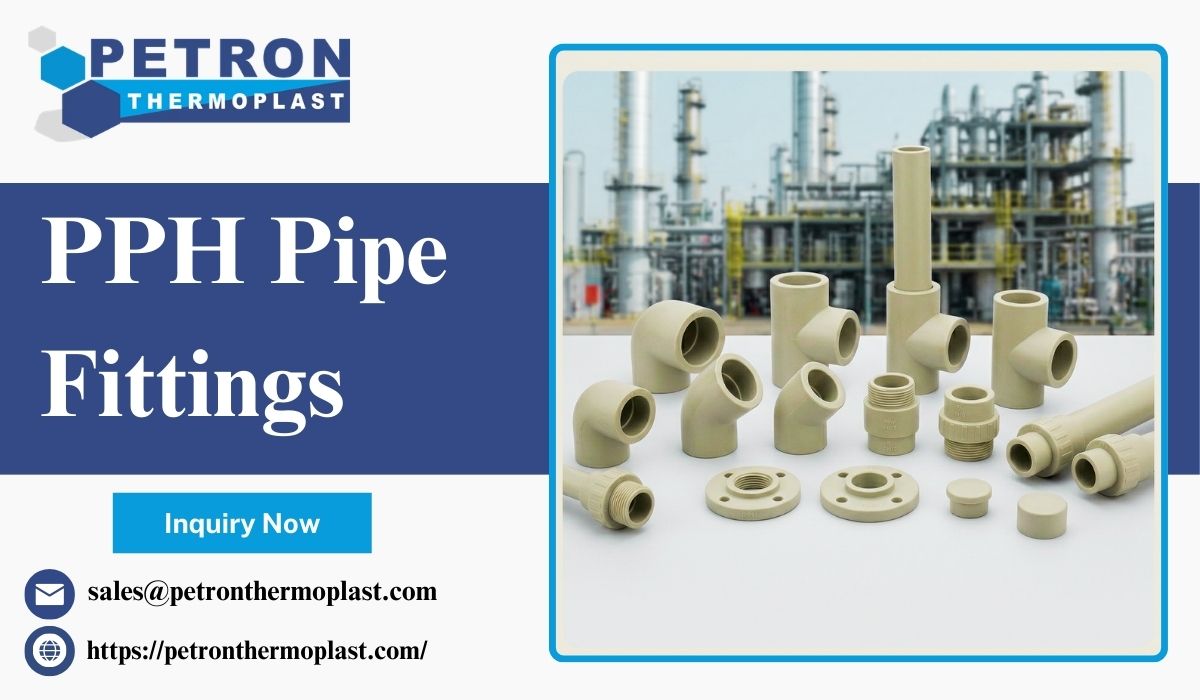
In modern industrial environments, where pipelines are exposed to aggressive chemicals, high temperatures, and continuous operational stress, selecting the right piping system is critical. Among advanced plastic piping materials, PPH pipe fittings stands out for its exceptional chemical resistance, mechanical strength, and long service life.
Recognizing the growing demand for reliable and high-performance piping solutions, Petron Thermoplast offers a complete range of PPH pipe fittings designed to meet the requirements of chemical plants, water treatment facilities, pharmaceutical units, and heavy engineering industries. This blog explores the features, benefits, applications, and technical excellence behind Petron Thermoplast’s comprehensive range of PPH (Polypropylene Homopolymer) pipe fittings.
Understanding PPH Pipe Fittings
PPH (Polypropylene Homopolymer) is a high-purity thermoplastic material known for its superior resistance to corrosive chemicals and excellent thermal stability. PPH pipe fittings are used to connect, redirect, control, and distribute fluids in industrial piping systems.
These fittings are manufactured to ensure leak-proof performance, dimensional accuracy, and long-term reliability in demanding environments.
Key Characteristics of PPH Material
- Excellent chemical resistance
- High purity and non-toxicity
- Good temperature tolerance
- High tensile strength
- Smooth internal surface
- Long operational life
Because of these properties, PPH fittings are widely preferred in critical industrial applications.
Why PPH Pipe Fittings Are Essential for Industrial Systems?
Industrial pipelines often carry acids, alkalis, solvents, and other aggressive media. Conventional metal systems are prone to corrosion, leakage, and frequent maintenance. PPH pipe fittings provide a reliable alternative.
- Outstanding Chemical Resistance
PPH fittings resist most inorganic acids, organic solvents, salts, and alkalis. This makes them ideal for:
- Chemical processing plants
- Electroplating units
- Fertilizer manufacturing
- Petrochemical facilities
Unlike metal components, PPH does not rust, pit, or degrade when exposed to harsh chemicals.
- High Mechanical Strength
PPH pipe fittings offer excellent impact resistance and structural stability. They can withstand internal pressure and mechanical stress without deformation, ensuring consistent performance.
- Long Service Life
With proper installation and maintenance, PPH fittings can operate efficiently for decades. Their durability reduces replacement frequency and lowers life-cycle costs.
- Smooth Flow and Low Pressure Loss
The smooth internal surface minimizes friction, preventing scale buildup and ensuring uninterrupted fluid flow with reduced energy consumption.
Complete Range of PPH Pipe Fittings by Petron Thermoplast
Petron Thermoplast manufactures and supplies a wide variety of PPH fittings to support complex industrial piping networks.
- Elbows
PPH elbows are used to change the direction of pipelines. Available in 45° and 90° variants, they ensure smooth flow redirection with minimal turbulence.
- Tees
PPH tees enable branching and distribution of fluid flow. Equal and reducing tees are available for flexible system design.
- Reducers
Reducers are used to connect pipes of different diameters. They help maintain pressure balance and optimize system performance.
- Couplings and Unions
Couplings and unions provide secure pipe connections and allow easy dismantling for maintenance.
- Flanges
PPH flanges facilitate strong and detachable connections with pumps, valves, and equipment. They ensure leak-proof joints in high-pressure systems.
- End Caps and Plugs
These fittings are used to close pipeline ends safely and prevent leakage.
- Customized Fittings
Petron Thermoplast also offers tailor-made PPH fittings based on client drawings, technical specifications, and project requirements.
This complete product portfolio enables engineers to design efficient and reliable piping systems for diverse industrial applications.
Advanced Manufacturing and Quality Control
Petron Thermoplast follows strict manufacturing standards to ensure consistent quality and performance.
High-Grade Raw Materials
Only premium-grade PPH resin is used, ensuring purity, strength, and chemical stability.
Precision Molding and Fabrication
Advanced molding and fabrication techniques guarantee:
- Uniform wall thickness
- Accurate dimensions
- Smooth surface finish
- Structural integrity
Rigorous Quality Testing
Each batch of fittings undergoes multiple inspections, including:
- Dimensional checks
- Pressure testing
- Leakage testing
- Visual inspection
- Material verification
These processes ensure that every fitting meets international quality standards.
Applications of PPH Pipe Fittings
Thanks to their versatility and durability, PPH fittings from Petron Thermoplast are used across multiple industries.
Chemical Processing Industry
Used in acid transfer lines, reactors, dosing systems, and effluent treatment pipelines.
Water & Wastewater Treatment
Applied in filtration systems, RO plants, and chemical dosing units.
Pharmaceutical & Biotechnology
Ensure contamination-free fluid handling in high-purity environments.
Power Plants
Used in cooling water circuits and chemical handling systems.
Food & Beverage Industry
Suitable for non-toxic and hygienic piping applications.
Electronics & Semiconductor Plants
Support ultra-clean chemical delivery systems.
Their wide applicability makes PPH fittings an essential component in modern industrial infrastructure.
Compliance with International Standards
For domestic and export markets, compliance with global standards is crucial. Petron Thermoplast manufactures PPH pipe fittings in line with:
- ISO quality management systems
- ASTM material standards
- DIN dimensional norms
- Industry-specific pressure ratings
This ensures compatibility with multinational engineering specifications and international EPC project requirements.
Advantages Over Metal and Other Plastic Fittings
PPH vs Metal Fittings
| Feature | PPH Fittings | Metal Fittings |
| Corrosion Resistance | Excellent | Limited |
| Weight | Lightweight | Heavy |
| Maintenance | Low | High |
| Cost | Economical | Expensive |
| Chemical Compatibility | High | Moderate |
PPH vs UPVC/CPVC
While UPVC and CPVC are widely used, PPH offers better chemical resistance in many aggressive environments and higher purity for sensitive applications.
Customization for Industrial Projects
Every industrial project has unique technical requirements. Petron Thermoplast provides customized PPH fittings based on:
- Pipe size and thickness
- Pressure rating
- Media type
- Operating temperature
- Connection method
- Filtration or reinforcement needs
This flexibility helps engineering firms optimize system performance and reduce installation challenges.
Export-Ready Packaging and Logistics
For international clients, Petron Thermoplast follows strict export packaging and logistics protocols:
- Moisture-resistant packaging
- Shock-protected cartons and pallets
- Proper labeling and documentation
- Compliance with international shipping norms
These practices ensure that products reach global destinations safely and in perfect condition.
Sustainability and Environmental Benefits
PPH pipe fittings contribute to sustainable industrial practices by:
- Reducing replacement frequency
- Minimizing leakage and wastage
- Supporting energy-efficient flow
- Being recyclable and eco-friendly
Their long lifespan also reduces overall material consumption, aligning with green engineering goals.
Why Choose Petron Thermoplast for PPH Pipe Fittings?
Petron Thermoplast has established itself as a reliable partner for industrial piping solutions by focusing on quality, innovation, and customer satisfaction.
Key Strengths
- Advanced manufacturing facilities
- Experienced technical team
- Comprehensive product range
- Custom fabrication capability
- Competitive pricing
- On-time delivery
- Strong after-sales support
These strengths make the company a preferred supplier for EPC contractors, OEMs, and multinational engineering firms.
Installation and Maintenance Best Practices
To maximize the performance of PPH pipe fittings, proper installation and maintenance are essential.
Installation Guidelines
- Follow recommended welding or joining methods
- Ensure proper alignment
- Avoid excessive mechanical stress
- Use compatible accessories
Maintenance Tips
- Conduct periodic inspections
- Check joints and seals
- Clean pipelines regularly
- Replace damaged components promptly
Proper practices ensure long-term system reliability and safety.
Future of PPH Piping Systems
With rising demand for corrosion-resistant and lightweight piping systems, PPH technology is gaining global acceptance. Innovations in material science, automated welding, and smart monitoring will further enhance the performance of PPH piping networks.
Industries are increasingly shifting toward advanced plastic systems, making PPH fittings a key element in future infrastructure projects.
Conclusion
The complete range of PPH pipe fittings by Petron Thermoplast offers a powerful combination of durability, chemical resistance, precision engineering, and cost efficiency. Designed for demanding industrial environments, these fittings support safe, reliable, and long-lasting pipeline systems.
From chemical plants to water treatment facilities and pharmaceutical units, Petron Thermoplast’s PPH fittings deliver consistent performance and global-standard quality. With customization options, export-ready logistics, and strong technical support, the company stands as a trusted partner for modern industrial projects.
If you are looking for high-performance PPH pipe fittings that meet international standards and ensure long-term value, Petron Thermoplast provides the complete solution your project needs.