

How Automatic Bagging Machines Improve Packaging Accuracy
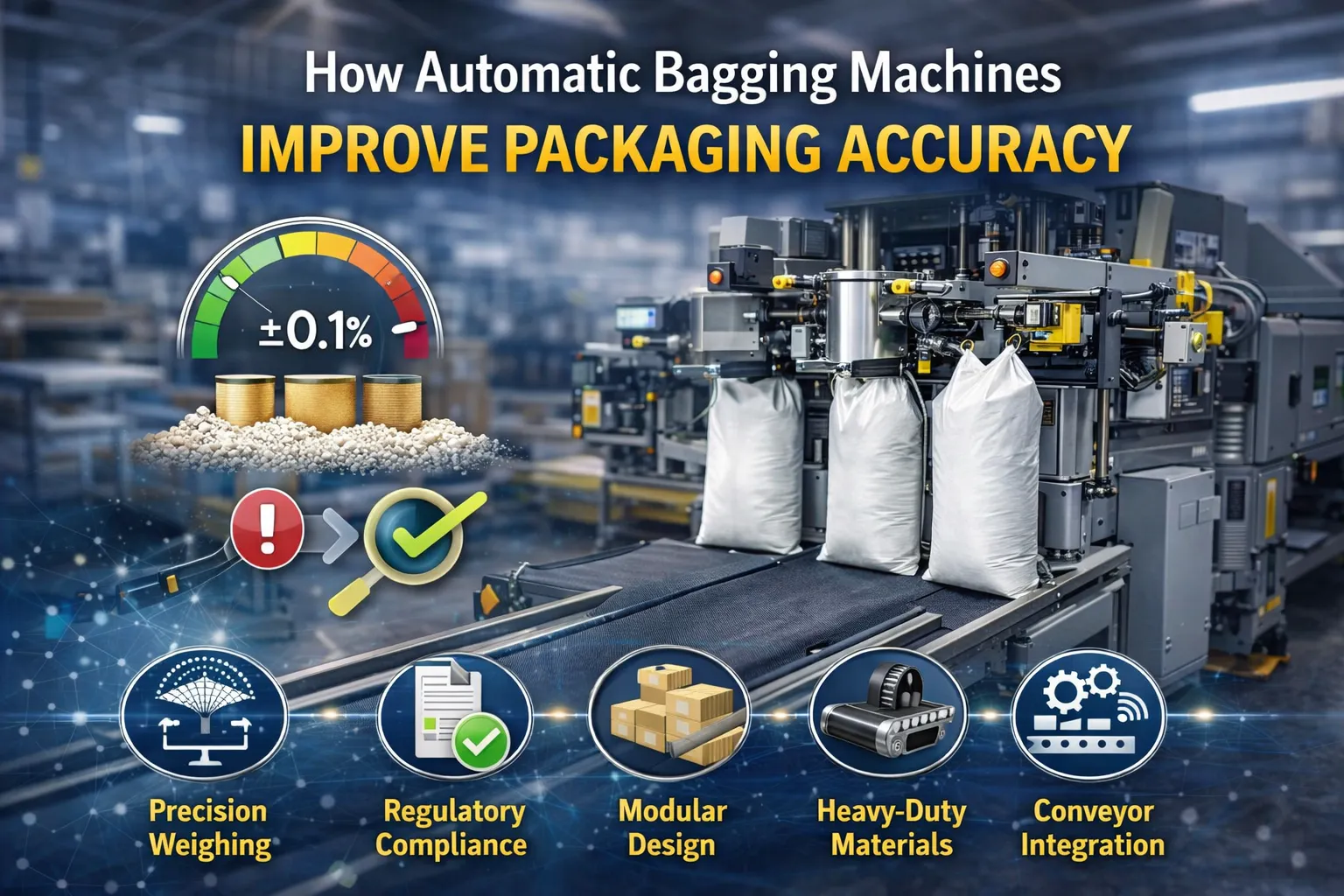
In bulk material industries, packaging accuracy directly impacts profitability, compliance, and brand trust. Even a small weight variation per bag — multiplied across thousands of units — can result in significant product loss or regulatory penalties.
That’s why modern manufacturers are upgrading to an automatic bagging machine to eliminate inconsistencies and gain full control over their packaging process.
For companies handling cement, fertilizer, grains, chemicals, or powders, accuracy is not optional — it’s a competitive advantage. This article explains how automation enhances filling precision, reduces product giveaway, and stabilizes production performance.
Why Packaging Accuracy Matters More Than You Think
In manual or semi-automatic systems, operators control filling duration and bag positioning. This introduces variables such as:
- Human reaction time
- Material flow inconsistency
- Operator fatigue
- Bag misalignment
Even minor deviations of 100–200 grams per bag can lead to:
- Increased raw material cost
- Compliance issues
- Customer dissatisfaction
- Rework and repackaging
Over time, these small inconsistencies compound into measurable financial losses.
How Automatic Bagging Machines Ensure Precision
Modern automated systems rely on intelligent weighing technology rather than human estimation.
1. Load Cell Weighing Systems
High-precision load cells measure weight in real time.
As the material fills the bag, sensors continuously monitor mass and signal the system to slow down or stop at the exact target.
This two-stage filling process typically includes:
- Fast filling phase – for bulk volume
- Fine filling phase – for precision adjustment
This ensures consistent bag weights across every production cycle.
2. Controlled Material Feeding
Different materials behave differently. Powders flow faster than granules, and moisture can affect density.
Automatic bagging machines regulate material feed using:
- Screw feeders
- Gravity gates
- Vibratory feeders
- Air-assisted systems
By adjusting feed speed during the final stage, the system prevents overfilling.
3. Dust-Control & Flow Stabilizatio
For industries like cement or chemicals, dust buildup can disrupt weighing sensors. Modern systems integrate dust collection and sealing mechanisms to maintain stable operation.
This not only protects accuracy but also improves workplace cleanliness.
Reducing Product Giveaway
Product giveaway happens when bags are consistently filled slightly above the declared weight to avoid underweight penalties.
For example:
If your target is 50kg per bag but actual average weight is 50.3kg, you lose 0.3kg per bag.
Across 10,000 bags daily:
0.3kg × 10,000 = 3,000kg lost per day.
An automatic bagging machine reduces this margin by maintaining tight tolerances — often within ±0.1%.
That difference alone can justify the investment.
Regulatory Compliance and Standardization
In many regions, packaged goods must comply with strict weight regulations. Automated systems help businesses:
- Maintain certified weight ranges
- Record data for audits
- Reduce inspection failures
- Improve traceability
Digital control panels allow operators to store recipes and pre-set weight targets for different product lines.
Accuracy Through Line Integration
Precision does not stop at filling. After weighing, the bag must move without spillage or distortion.
That’s why automated lines integrate bagging systems with conveyor solutions such as an automatic belt conveyor for smooth transfer to sealing and stacking:
This eliminates:
- Dropped bags
- Manual misplacement
- Weight shift after filling
Continuous flow protects both accuracy and packaging integrity.
Industries Where Accuracy Is Critical
Construction Materials
- Cement
- Dry mortar
- Tile adhesive
Small deviations significantly impact margins.
Agriculture
- Fertilizer
- Animal feed
- Grain
Weight accuracy ensures farmers receive consistent quantities.
Chemical & Mineral Processing
- Pigments
- Powder additives
- Fine chemicals
Precise dosing prevents costly waste.
Food Industry
- Sugar
- Salt
- Flour
Compliance and brand trust depend heavily on consistent net weight.
Comparing Manual vs Automatic Bagging Accuracy
| Factor | Manual System | Automatic System |
|---|---|---|
| Weight consistency | Variable | Highly precise |
| Operator influence | High | Minimal |
| Product waste | Higher | Reduced |
| Production speed | Slower | Faster |
| Data tracking | Limited | Available |
Automation removes guesswork and replaces it with measurable control.
Data Tracking & Process Optimization
Advanced automatic bagging machines provide digital data monitoring, including:
- Bag count
- Average weight
- Fill speed
- Error alerts
With production data available, managers can:
- Identify inefficiencies
- Predict maintenance needs
- Adjust settings for material changes
This level of control is impossible with manual packing.
Long-Term Cost Impact of Improved Accuracy
Improved packaging accuracy leads to:
- Lower raw material waste
- Fewer customer complaints
- Reduced repackaging costs
- Improved brand reputation
- Higher operational efficiency
Instead of compensating for errors with overfilling, automation allows exact measurement without financial risk.
Preparing for Smart Manufacturing
As factories move toward automation and Industry 4.0, packaging equipment must integrate seamlessly into digital production systems.
Modern machines from GLZON are designed to operate as part of a connected workflow, enabling continuous communication between weighing, conveying, and palletizing units.
Accuracy becomes part of a larger operational strategy — not just a single machine function.
Final Thoughts
Packaging accuracy directly affects your bottom line. Even minor inconsistencies can lead to significant financial losses over time. An automatic bagging machine eliminates human error, controls material flow, and ensures consistent weight performance across every bag.
When integrated with conveyor systems and digital monitoring, it transforms packaging into a precise, predictable, and scalable process.
For growing production facilities, improving packaging accuracy isn’t just about compliance — it’s about profitability, efficiency, and long-term operational stability.
