
Skid Steer vs Bulldozer: Key Differences Every Contractor Should Know
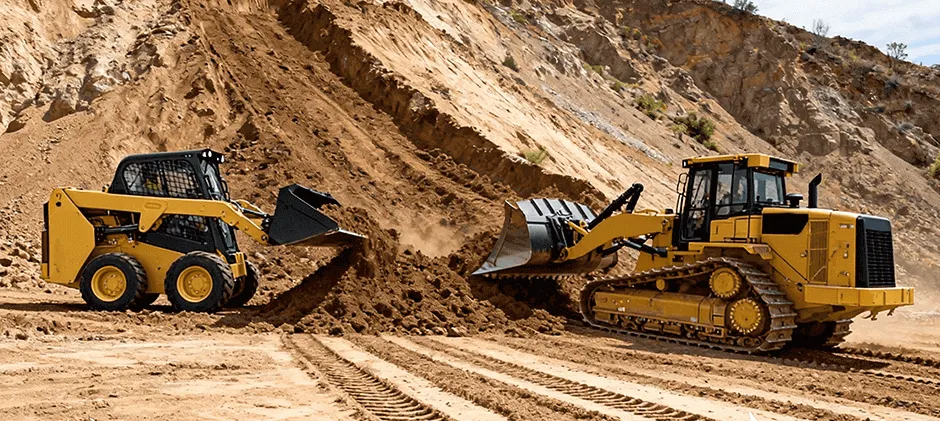
Contractors and construction professionals often face the decision of which equipment to use for different job sites. Two of the most common machines are skid steers and bulldozers. Both are essential for earthmoving and construction tasks, but they serve very different purposes. Understanding the skid steer vs bulldozer differences is crucial for efficiency, safety, and cost management.
Choosing the right machine for a project can save time, reduce expenses, and improve overall results. This guide explains the main differences between skid steers and bulldozers and helps contractors make informed decisions.
Size and Maneuverability
One of the first differences contractors notice is the size and maneuverability of the machines. Skid steers are compact and highly maneuverable, making them ideal for small or tight spaces. They can easily navigate residential sites, narrow paths, and urban construction areas. Their small footprint allows operators to work where larger equipment cannot fit.
Bulldozers, on the other hand, are larger and heavier. They are designed for large-scale earthmoving projects such as grading, leveling, and clearing land. Due to their size, bulldozers are less agile than skid steers, but they provide superior stability and traction on uneven terrain.
Power and Performance
When comparing skid steer vs bulldozer, power is a key factor. Bulldozers have more horsepower and larger blades, making them capable of pushing heavy materials, including soil, gravel, and debris. They are designed for high-power tasks that require strength and durability over extended periods.
Skid steers, while smaller, are versatile machines with sufficient power for medium-duty tasks. They excel at digging, lifting, and moving materials over short distances. Skid steers are often used for landscaping, small-scale excavation, and loading trucks. Their versatility comes from the ability to attach different tools and implements, such as buckets, augers, and pallet forks.
Versatility and Attachments
A major advantage of skid steers is their adaptability. Skid steers can accommodate a wide range of attachments, transforming the machine into a loader, grinder, or sweeper depending on the project needs. This versatility makes skid steers ideal for contractors who need one machine to perform multiple tasks efficiently.
Bulldozers, in contrast, are less versatile. They are primarily built for pushing and leveling materials. While some bulldozers can use specialized attachments like rippers or winches, their main strength lies in raw power and heavy-duty earthmoving rather than multifunctionality.
Terrain and Ground Conditions
The choice between skid steer vs bulldozer also depends on the terrain. Bulldozers perform exceptionally well on rough, uneven, or soft ground. Their wide tracks distribute weight evenly, preventing sinking and providing superior traction. This makes bulldozers perfect for construction sites with hills, mud, or loose soil.
Skid steers have wheels or tracks, but they are generally better suited for firm, flat surfaces. While tracked skid steers can handle softer terrain, they are still not as effective as bulldozers for large-scale land clearing or heavy earthmoving. Contractors should evaluate site conditions before deciding which machine to use.
Speed and Efficiency
For certain tasks, speed is a critical factor. Skid steers are faster and more agile on flat surfaces, allowing operators to complete small projects quickly. They are ideal for tasks that require frequent movement and precise maneuvering, such as grading driveways or moving materials in tight areas.
Bulldozers work at a slower pace but are more efficient for heavy-duty tasks. Their strength allows them to move large amounts of soil or debris in fewer passes, which is important for large construction projects. Contractors should weigh project size and workload when choosing between the two machines.
Cost and Maintenance
Cost considerations are important when comparing skid steer vs bulldozer. Bulldozers are significantly more expensive to purchase and maintain. Their larger engines and heavy-duty components require regular servicing, and repair costs can be high. Additionally, transporting bulldozers to different job sites often requires specialized trailers.
Skid steers are more affordable, both in initial cost and ongoing maintenance. Their compact size means lower fuel consumption, easier transport, and reduced repair expenses. Contractors who work on smaller projects or need a multi-purpose machine often find skid steers more cost-effective.
Ideal Use Cases
Understanding when to use each machine is key. Bulldozers are best for large-scale earthmoving, site preparation, and grading tasks. They are ideal for road construction, mining, and extensive land clearing.
Skid steers are better for smaller projects that require versatility and precision. Common applications include landscaping, small excavation, material handling, and urban construction projects where space is limited.
Safety Considerations
Both machines require trained operators, but skid steers offer better visibility and maneuvering in confined areas, reducing the risk of accidents in tight job sites. Bulldozers, while stable, require careful operation on slopes and rough terrain to avoid tipping hazards. Understanding the unique safety considerations of each machine is essential for protecting workers and ensuring project efficiency.
Conclusion
Choosing the right equipment is essential for project success. The comparison of skid steer vs bulldozer highlights key differences in size, power, versatility, cost, and ideal applications. Skid steers provide flexibility, speed, and multifunctional use, making them perfect for smaller jobs and tight spaces. Bulldozers offer unmatched strength, traction, and efficiency for large-scale earthmoving projects.
Contractors should consider project size, terrain, budget, and task requirements before deciding which machine to use. By understanding the differences, contractors can maximize productivity, reduce costs, and complete projects safely and efficiently.