

Automatic Conveyor vs. Flexible Conveyor: When Each Setup Makes Sense
Conveyors keep products moving through packaging, assembly, and shipping. Choosing the right system depends on how often the layout changes, the steadiness of the flow, and the type of items that move along the line. The two most common options are the automatic conveyor and the flexible conveyor. Each has clear strengths and limits that make sense for different operations.
What an Automatic Conveyor Does Best
Automatic conveyors use electric motors to power rollers or belts that move items from one station to the next at a set speed. Sensors along the line detect the product’s position, while control panels start or stop zones to maintain even spacing. The layout is fixed—each section is anchored to the floor or frame, wired into a control cabinet, and aligned to match nearby machines such as labelers, sealers, or sorters.
This setup is ideal for facilities that consistently handle the same products, such as packaging lines for bottled drinks, boxed snacks, or automotive parts.
Best use cases
- Production and packaging lines where boxes, trays, or parts move in a fixed order
- High-volume shipping centers with scanners and labelers that need timed gaps
- Automated sortation systems that rely on sensors and programmed speeds
Key advantages
- Consistent speed and spacing for predictable throughput
- Reduced manual handling, lowering strain and injury risk
- Easy integration with photo eyes, barcode readers, and sorters
- Lower long-term labor cost because the system runs with minimal supervision
Things to plan for
- Layout changes are expensive. Once installed, moving a section may require rewiring and re-leveling.
- Initial cost is higher because drives, controls, and safety devices come with the build.
- Regular preventive checks are needed on motors, belts, and photo eyes.
Where Flexible Conveyors Shine
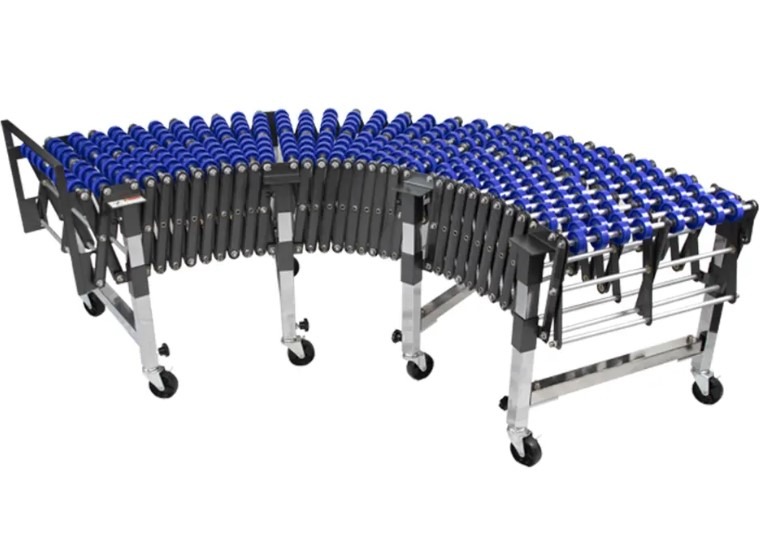
A flexible conveyor uses skate wheels or rollers on a frame that bends and stretches. Crews push, pull, and curve it to reach docks, trucks, or temporary lines. Sections expand to handle surge volume, then collapse for storage. Height adjusts for docks and tables, casters lock for safety, and guards guide cartons through gentle bends without lifting or long setups.
Best use cases
- Truck loading and unloading at docks with shifting trailer positions
- Seasonal e-commerce peaks when temporary lanes need quick setup
- Small warehouses that reconfigure space often
- Backup lines during maintenance or overflow work
Advantages
- Portable and adjustable, it bends into curves or straight runs
- Fast setup with no tools; only one or two workers needed
- Lower upfront cost than fixed systems
- Ideal for short runs and manual loading zones
Things to plan for
- Speed depends on push force or gravity so that flow may vary.
- It’s not meant for heavy automation; sensors and drives are limited.
- Regular checks on casters, wheels, and locking pins keep it safe.
Flexible conveyors are most effective when layout agility and quick response times are more important than full automation.
How to Decide
Choosing between automatic conveyors or flexible conveyors starts with facts, not guesses. Follow these steps to match the system to your real workflow:
- List product details. Write down exact item sizes, weights, and bottom surfaces. A 20-pound box with a flat bottom moves well on rollers. Small pouches or poly mailers may need a belt to keep them stable.
- Map your layout. Draw where items start, stop, and transfer. Mark zones that never change, such as packaging or sealing stations, and zones that shift frequently, like dock doors or temporary work cells.
- Track your volume. Count cartons per hour and note peak days or months. If output is steady year-round, a fixed line makes sense. If holiday or harvest spikes double volume, portable sections help.
- Plan labor use. Decide if workers should load and push products or if the system should move items on its own. Automated flow reduces lifting, but it requires sensors and controls.
- Check budget and timing. Add costs for installation, power, and training. Include setup days so you know when production can restart.
When 80% of daily work follows the same path, automatic conveyors pay off with consistent speed and fewer manual touches. If layouts change weekly, or trucks and pallets shift with seasons, flexible conveyors give quick setup, adjustable curves, and easy storage between peaks. Many facilities use both automation for fixed lines and flexible units near docks or overflow zones, to keep product moving in every season.